“You just inject it into your stomach” ... Even a female reporter weighing in the 50-kg range got a Mounjaro prescription in just two minutes [The Shot That Changed the World 1]
- Input
- 2026-11-12 05:00:00
- Updated
- 2026-11-12 05:00:00
It was a revolution. Weight that once took fasting, running and plenty of effort to lose began to come off with a single injection. When the obesity drug Mounjaro arrived in South Korea last August, it upended the weight-loss landscape. But revolutions have a downside. Neighborhood gyms were pushed to the brink of closure, while hair and muscle loss along with the pounds became new concerns.[The Shot That Changed the World]will take a five-part look at how obesity drugs have changed Koreans’ bodies and daily lives, as well as the industries affected—for better and for worse.
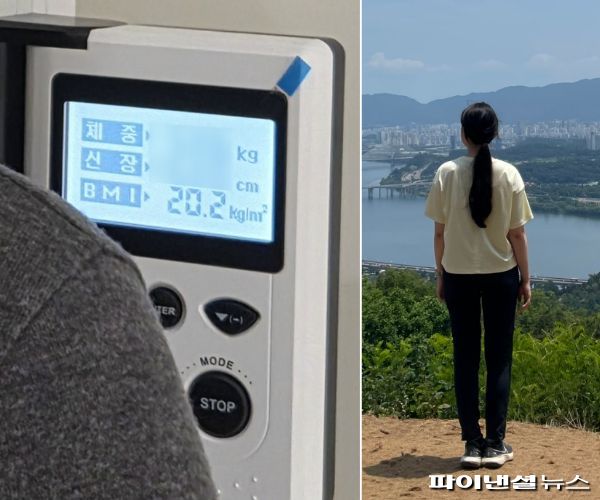
[Financial News]“Have you used it before? If not, you can start with the lowest dose, 2.5.”That was the doctor’s first question to the reporter, who had finally taken a seat in the consultation room after a long wait. The doctor did not ask her height, weight or whether she was of childbearing age. The reporter’s BMI was 20.2 kg/m2, far from the criteria for an approved Mounjaro prescription, yet less than five minutes passed between entering the consultation room, paying the bill and receiving a prescription. It was a moment that confirmed the claim that “anyone can get a Mounjaro prescription.”
“Is this your first time?” ... The doctor who didn’t ask about height, weight or childbearing status
On the morning of the 1st,the so-called “mecca for obesity drugs”was A Clinic in Seoul’s Jongno District, which I visited.Even on a Sunday, about 50 peoplewere packed into a waiting room of roughly 15 pyeong. Unable to get a seat, people stood shoulder to shoulder beside the reception kiosk, waiting for their names to be called.
Some visitors turned away when a staff member said, “Even with an appointment, you’ll have to wait at least 30 minutes.” The reporter had also booked an appointment the day before, but it did no good. After standing for a full 40 minutes or so, her name was called and she took a seat in the waiting area. She waited another 10 minutes or so before finally entering the consultation room. By then, her appointment time had passed by about an hour.Once the reporter entered the consultation room, the doctor asked why she had come to the clinic and whether she had used the medication before.When she said she had never had a Mounjaro injection, the doctor replied, “Then you can start with the lowest dose, 2.5.” The doctor added, “It varies from person to person, but you could lose between 4 and 12 kg.” That was the end of the medical questioning.The doctor did not ask the reporter, a woman of childbearing age, whether she was pregnant or planned to become pregnant.Mounjaro is not recommended for pregnant women.
The doctor then picked up a Mounjaro pen from the desk, held it against their own abdomen to demonstrate how to inject it, and ended the consultation, saying, “There’s a pharmacy next door, so you can go there.” When asked whether there was anything to watch out for, the doctor replied,“Stop taking it if severe vomiting occurs during treatment.”The doctor also added the advice, “Eat plenty of healthy fats.”
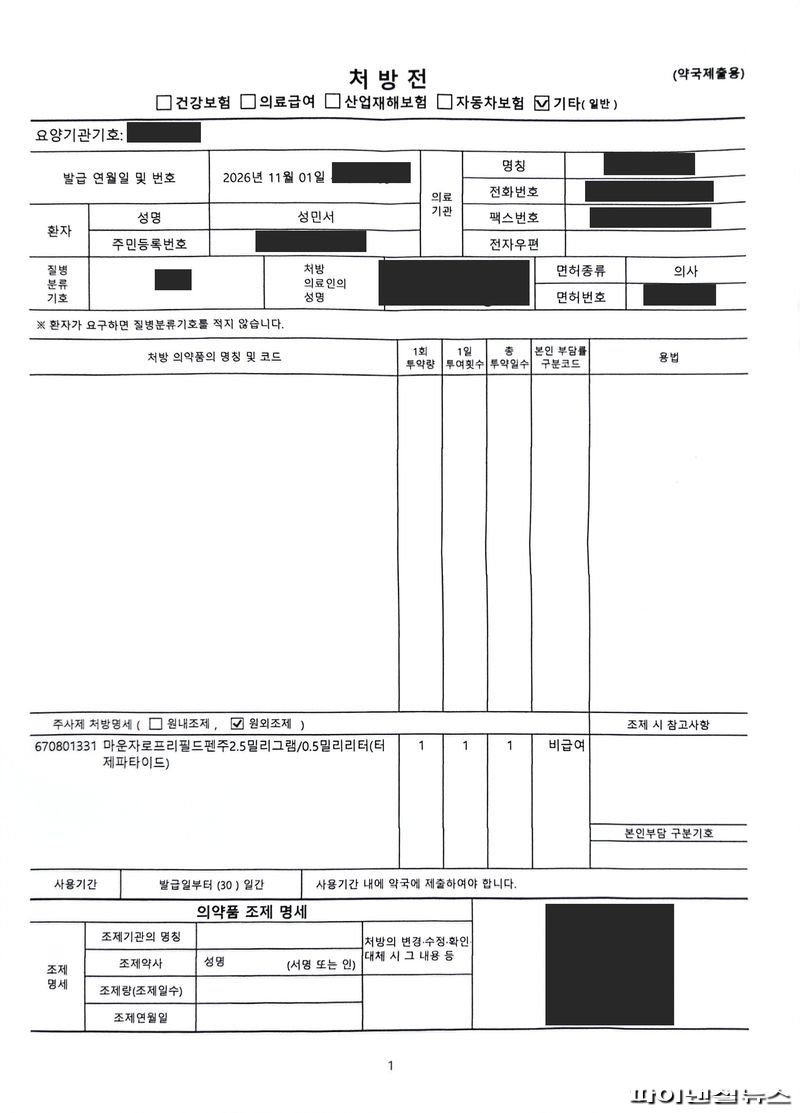
The consultation lasted about two minutes. The reporter paid the 10,000-won consultation fee at the front desk and was handed a prescription right away. It took less than five minutes to get a prescription for Mounjaro 2.5 mg.
Another clinic followed its “BMI measurement” rule, but prescriptions were still possible below its threshold
At another “mecca,” Clinic B, one subway stop away,the situation was a little different. Unlike Clinic A, where people streamed into a cramped space without letup, the waiting area was quiet, with only about 10 people waiting.When the reporter explained why she had come, a staff member looked her over and said that her BMI had to be measured firstbefore proceeding.The body-composition test showed a BMI of 20.2 kg/m2. The staff member said, “As a rule, we don’t prescribe if your BMI is below 23 kg/m2,” and told the reporter she could not register. When she asked whether she could at least have a consultation, the answer was a firm “No.”
However, the BMI threshold of 23 kg/m2 that Clinic B cited as its “rule” is still far from the approval criteria set by the Ministry of Food and Drug Safety. The MFDS specifies that Mounjaro is for people with a BMI of 30 kg/m2 or higher, or a BMI of 27 kg/m2 or higher if they have a comorbidity such as hypertension, diabetes or dyslipidemia.Prescriptions like these fall outside the MFDS-approved criteria, but cannot be called illegal.That is because the MFDS approves medicines by setting criteria for the patients for whom each drug is suitable, but doctors are not required to follow those criteria when prescribing.The issue of prescribing outside the approved criteria was also raised at the National Assembly Health and Welfare Committee’s comprehensive audit on the 27th of last month. In response, Minister of Health and Welfare Jeong Eun-kyeong said she would “bring obesity drugs into the managed-benefit review system and consider them.” Managed benefits are a system that brings non-covered items with a high risk of excessive use under government oversight.
Professor Jang Hyung-woo: “No benefit from taking it below a BMI of 25 kg/m2”
Experts pointed out that while it is not possible to prevent people who are not obese from taking Mounjaro, the medical benefits are unclear.
Professor Jang Hyung-woo of the Department of Thoracic and Cardiovascular Surgery at Seoul National University Bundang Hospital explained the prescribing criteria: “Based on the evidence, a BMI of 27 kg/m2 is the right threshold; even if you make an allowance, it would be 25 kg/m2, the cutoff for obesity. Considering only the medical evidence, it should be used when it can make patients healthier and thereby reduce complications or cardiovascular mortality. Below a BMI of 25 kg/m2, that benefit is unclear.”
[email protected] Seong Min-seo, Kim Hee-sun Reporter