“Worst in 50 Years: Is a ‘Black Monday’ Coming?” ... Retail Investors Fear the Open as Intel Plunges 30%
- Input
- 2026-11-02 07:04:55
- Updated
- 2026-11-02 07:04:55
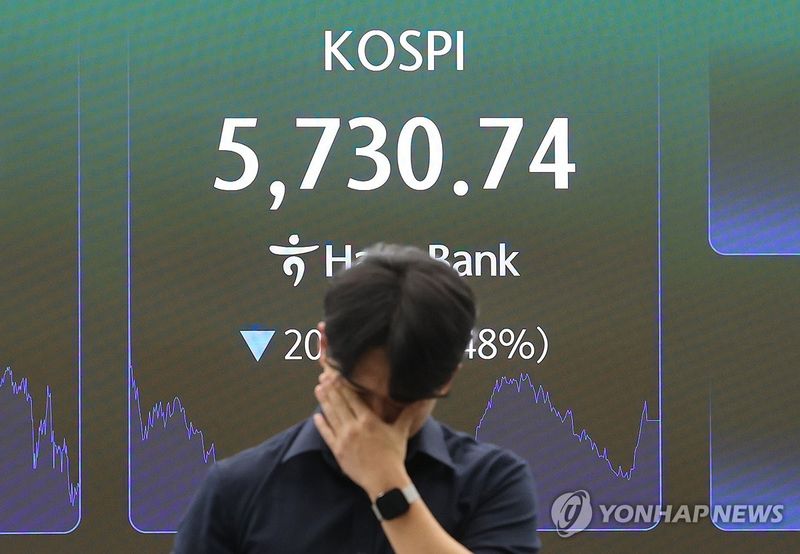
[Financial News] A succession of shocks from U.S. Big Tech is fueling concerns about a “Black Monday.” After Alphabet saw the largest-ever wipeout in market capitalization last week, Intel shares plunged nearly 30% on the 30th of last month (local time), raising fears that Samsung Electronics and SK hynix—the domestic market’s flagship stocks and semiconductor sector’s top two—could also take a direct hit.
Intel’s “Bloody Friday”: Shares plunge 28.6% in a single day ... New York semiconductor index down 7.2%
On the 30th, Intel shares closed down 28.58% in New York trading, marking the company’s worst single day in more than 50 years, dating back to the 1970s. In the wake of the drop, Intel lost more than $146 billion (about 210 trillion won) in market capitalization in a single day. Its earnings outlook deteriorated sharply as a slump in its core PC market coincided with the shutdown of its semiconductor plant in Israel.
Intel forecast fourth-quarter revenue of $15 billion to $16 billion, well below the market estimate of $17.1 billion. The company cited slowing PC demand as the reason for its weak guidance.
The Intel shock spread across the semiconductor sector. The PHLX Semiconductor Sector (SOX) plunged 7.20%, while Nvidia (down 4.22%), Micron Technology, Inc. (down 5.30%) and AMD (down 10.88%) all fell sharply. The Nasdaq Composite Index dropped 2.86% and the S&P 500 Index fell 1.82%.
Alphabet had also seen $475 billion wiped from its market capitalization in a single day after reporting third-quarter earnings on the 29th, as AI-related stocks continued to struggle. With concerns growing that AI investment costs are outpacing returns, Alphabet shares fell about 13% last week alone and about 19% over the month of October. It was the stock’s worst monthly performance since its 2004 listing.
Intel Shock Deals Direct Blow to Samsung Electronics and SK hynix ... How Much Will It Affect the KOSPI?
News of Intel’s plunge tormented retail investors throughout the weekend. Even on the Alphabet shock alone, the KOSPI closed at 5,730.74 on the 30th of last month, down 206.92 points (3.48%). A sell-sidecar was triggered during the session, and foreign investors were net sellers of 1.617 trillion won worth of shares that day.
That day, Samsung Electronics closed at 225,000 won, down 3.02% from the previous session, while SK hynix ended at 1,418,000 won, down 7.08%. With the U.S. semiconductor index’s drop of more than 7% added to the mix, further selling pressure is likely to hit Samsung Electronics and SK hynix at the start of trading on the 2nd. In particular, with Intel directly citing weaker PC demand and memory maker Micron also falling by more than 5%, concerns about slowing DRAM demand could come to the fore as well.
There are also concerns about whether the KOSPI can hold above the 5,500 level this week. The closing level of 5,469.47 on the 26th of last month is being cited as the first support level, and some observers say the index could slide to the 5,300 level if that support breaks.
There are also many potential market-moving events this week. Earnings announcements are scheduled one after another, in U.S. local time: Apple on the 2nd, AMD on the 3rd, and Arm and Qualcomm on the 4th. The U.S. midterm elections on the 3rd and the October jobs report on the 6th are also seen as factors that could determine the market’s direction. If semiconductor earnings disappoint in succession, the “AI bubble” narrative is likely to regain traction, further increasing volatility in Samsung Electronics and SK hynix.
[email protected] Kim Hee-sun Reporter