Rural migrants down 20.9% in four years; Jeju offers integrated support through settlement
- Input
- 2026-11-01 18:29:01
- Updated
- 2026-11-01 18:29:01
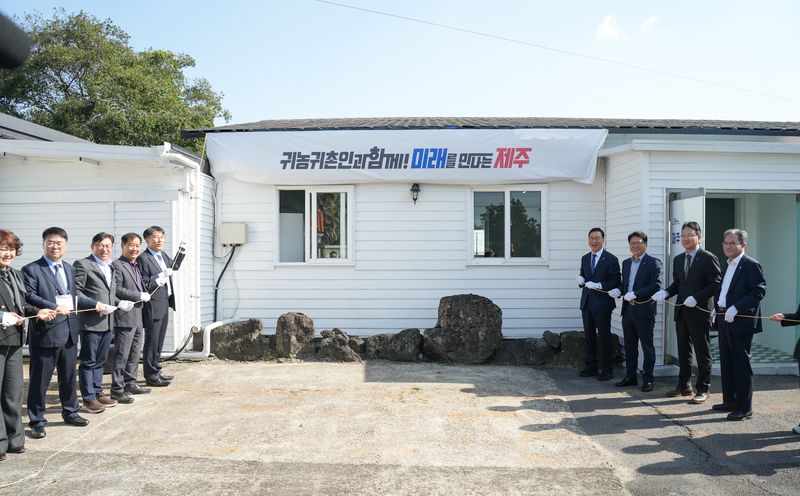
【Financial News, Jeju = Reporter Jeong Yong-bok】 As the number of people moving to rural areas in Jeju has fallen by more than 20% in four years, a hub offering integrated support—from preparation for moving to farming or rural areas to follow-up assistance after settlement—has opened. Its core mission is to link support systems previously split among different administrative agencies and help people returning to farming or rural areas settle securely and integrate into local communities.
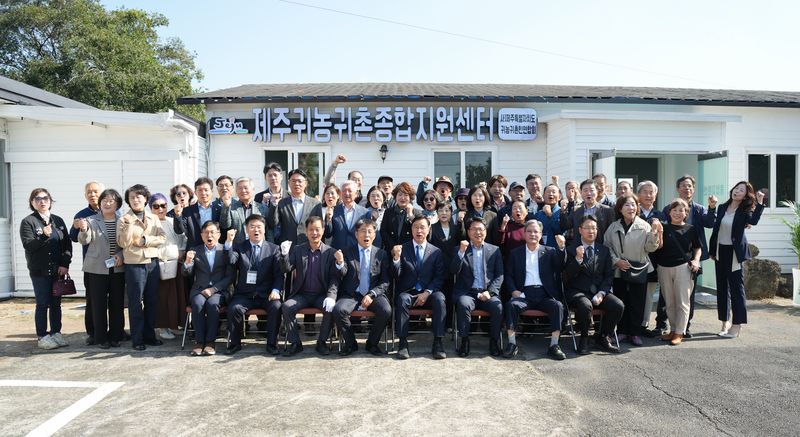
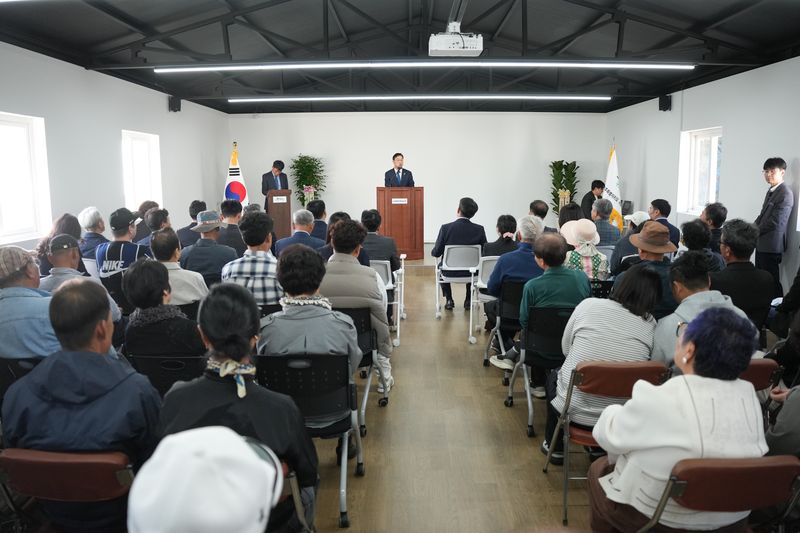
According to the Jeju Special Self-Governing Province on the 1st, the province held the opening ceremony for the Jeju Special Self-Governing Province Comprehensive Support Center for Returning to Farming and Rural Areas in Pyoseon-myeon, Seogwipo City, on October 31, and began operations. About 150 people attended, including Jeju Governor Wi Seong-gon, Lee Chun-hyeop, head of the National Agricultural Cooperative Federation’s Jeju Regional Headquarters, center director Ko Hui-gwon, people returning to farming or rural areas, and local residents.
The center’s launch comes amid a decline in the number of people returning to farming or rural areas in Jeju. According to the “2025 Status of People Returning to Farming, Fishing and Rural Areas in North Jeolla, South Jeolla and Jeju” report released in September by the Honam Regional Data Office of the Ministry of Data and Statistics, 9,731 people moved to rural areas in Jeju last year, down 609 (5.9%) from 10,340 the year before.
The number of people moving to rural areas in Jeju fell for four consecutive years, from 12,307 in 2021 to 11,767 in 2022, 10,690 in 2023, 10,340 in 2024 and 9,731 in 2025. That was a decline of 2,576 (20.9%) compared with 2021.
Jeju’s downward trend is clear even compared with other regions. Last year, the number of people moving to rural areas rose 7.5% from the previous year in South Jeolla Province and 1.7% in North Jeolla Province, while it fell 5.9% in Jeju.
The number of households moving to rural areas also declined. Last year, Jeju had 7,386 such households, down 5.3% from the previous year. There were also just 137 households returning to farming, a 2.1% decrease year on year. However, the number of people returning to farming who actually worked in agriculture rose 2.1% to 147, a different trend from the household figures.
Small households and job-driven moves are characteristic of rural migration in Jeju. Last year, single-person households accounted for 76.3% of households moving to rural areas in Jeju. The most common reason for moving was employment, cited by 31.7% of all such households. Housing was cited by 19.3% and the natural environment by 8.5%.
In North and South Jeolla provinces, family was the most common reason for moving to rural areas, while in Jeju, jobs emerged as the most important reason for relocating. This is why support for moving to rural areas needs to address not only farming skills training but also post-settlement issues, including income sources and living conditions.
Jeju is restructuring its support system for people returning to farming or rural areas to reflect these regional characteristics. Until now, related responsibilities were divided among several agencies, including Jeju City, Seogwipo City and the Jeju Agricultural Research and Extension Services, while support was concentrated on the initial stages of the move. Concerns have been raised that the existing system has limited capacity to provide ongoing support for issues after settlement, such as farm management, relationships with local residents and adjustment to daily life.
The newly opened Comprehensive Support Center for Returning to Farming and Rural Areas will serve as an integrated hub linking these functions. It will offer people hoping to move to farming or rural areas policy information and counseling tailored to their individual circumstances. The center will help them experience and adapt to rural life through staged training, agricultural skills guidance, hands-on farm operations and programs that let them try living in rural areas in advance.
After people have settled, the center will also pursue activities to foster understanding and cooperation between existing local residents and those who have moved to farming or rural areas through community integration initiatives. Its main responsibilities will also include surveys and public outreach related to these moves, as well as identifying new policy priorities.
The arrival of new residents in Jeju’s rural areas can invigorate the population structure and local economy. But building relationships with existing residents, securing a stable income and adapting to local life remain challenges that must be addressed to support lasting settlement. The need for a support system that takes jobs, housing and community relationships into account together is growing, particularly because many households moving to rural areas consist of one person and relocate for employment.
For the center to fulfill its role, a monitoring system is also important to establish how securely people who receive counseling and training go on to settle in local communities. The assessment should look beyond the number of initial counseling sessions to whether people remain settled for a certain period, take part in community integration initiatives and adapt to the local community.
Jeju Governor Wi Seong-gon said, “The Jeju provincial government will systematically help people returning to farming or rural areas get the support they need to settle, with the center at the heart of these efforts, and strengthen a one-stop support system to reduce administrative costs and save time.”
He added, “I hope the Comprehensive Support Center for Returning to Farming and Rural Areas, which opened today, will become a focal point where people returning to farming or rural areas and local residents share their experiences and wisdom and grow together.”
[email protected] Jeong Yong-bok Reporter