[Exclusive] A ‘Second Guryong Village’ Must Be Prevented, Yet Firefighting Water Budget Is Cut for Second Straight Year
- Input
- 2026-11-02 14:44:12
- Updated
- 2026-11-02 14:44:12
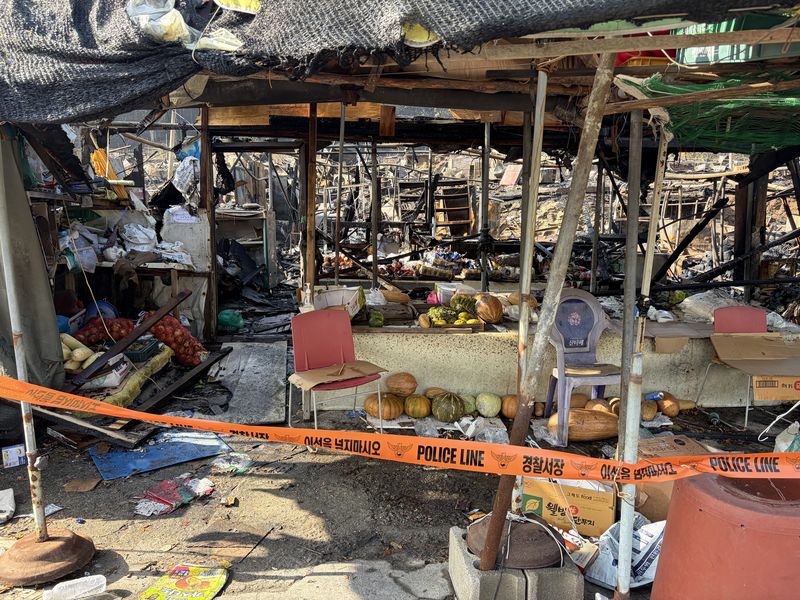
[Financial News] As the importance of securing firefighting water came into focus following a major fire that broke out on the 27th of last month in Guryong Village, Gangnam District, Seoul, it has emerged that the Seoul Metropolitan Government has cut its budget for installing and repairing firefighting water facilities for the second consecutive year. The budget for improving conditions along fire engine routes was also sharply reduced this year, while repairs to firefighting water facilities over the past three years fell 468 short of the original plan. With fire-prone areas scattered throughout Seoul, the combination of budget cuts and delayed repairs is raising concerns about the management of firefighting infrastructure needed to prepare for major fires.
According to a preliminary review report on the revenue and expenditure budget proposal of the Seoul Fire and Disaster Headquarters, released by the Seoul Metropolitan Council on the 2nd, this year’s Seoul budget for installing and repairing firefighting water facilities is 7.842 billion won, down 1.227 billion won (13.5%) from 9.069 billion won in 2024. This marks a second consecutive annual decline, following last year’s 8.942 billion won.
The budget for improving conditions along fire engine routes also fell sharply. It dropped 56.6%, from 608 million won in 2024 to 264 million won last year, and was cut further to 25 million won this year. That amounts to a decline of about 95.9% in two years.
Firefighting water facilities are essential infrastructure that supplies water to fire engines when a fire breaks out. If hydrants and other related facilities do not function properly, replenishing fire engines with water may be delayed and hamper firefighting operations. Major fires in particular require large volumes of firefighting water over extended periods, making routine inspections and prompt repairs essential.
The problem is that even the existing repair plans for firefighting water facilities have not been properly carried out. According to the Seoul Metropolitan Council’s “Review Report on the 2024 Fiscal Year Settlement of the Fire and Disaster Headquarters,” only 773 of 979 planned repairs were completed in 2022, 786 of 886 in 2023, and 1,058 of 1,220 in 2024. Of the 3,085 repairs planned over the three years, 2,617 were actually completed—468 (15.2%) fewer than originally planned.
At the time, the Seoul Metropolitan Council noted that some waterworks offices were prioritizing other tasks, such as repairing aging water-supply valves, pushing repairs to firefighting water facilities down the list. This revealed a structural problem in which such repairs are being crowded out by work on other facilities.
The fact that fire-prone areas are scattered throughout Seoul is also fueling concern. Seoul has 19 designated fire prevention reinforcement zones in total, with densely packed wooden-building areas such as Guryong Village accounting for the largest share, at 10. They are followed by market areas (6), factory-concentration areas (2), and a warehouse-concentration area (1). Buildings are densely packed in these areas, creating a high risk that flames will spread quickly to neighboring structures if a fire breaks out. In particular, some parts of densely packed wooden-building areas and traditional markets are difficult for fire engines to access, making rapid initial suppression and a reliable supply of firefighting water important.
Given that securing firefighting water was also difficult during last month’s fire in Guryong Village, calls are growing to inspect how firefighting infrastructure is being managed in fire-prone areas. Observers say it is necessary to ensure that aging facilities and delayed repairs do not affect the response to actual fires, as both repair work on firefighting water facilities and the related budget are being reduced.
Lee Yong-jae, a professor in the Department of Fire Safety Management at Kyungmin University, said, “Because flames can spread quickly in fire-prone areas, it is important to thoroughly check routinely that firefighting water facilities are working properly,” and stressed, “Emergency firefighting equipment must not only be installed; its water pressure and supply volume must also be checked continuously to ensure there are no problems with initial fire suppression when an actual fire breaks out.”
The Seoul Metropolitan Government was asked about the reasons for cutting the budget for installing and repairing firefighting water facilities, but no specific answer was received.
[email protected] Lee Dong-hyuk Reporter