Seoul launches winter fire-safety measures, distributing automatic fire extinguishers to 2,000 vulnerable households
- Input
- 2026-11-01 14:52:12
- Updated
- 2026-11-01 14:52:12
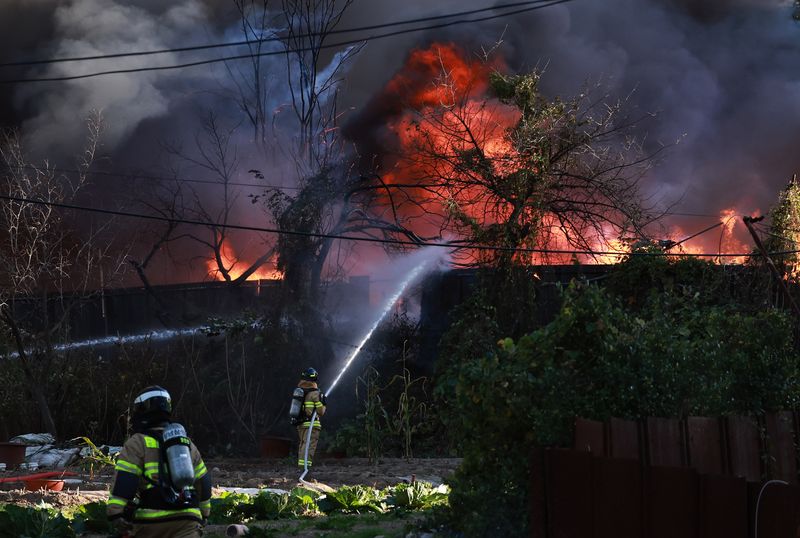
The Seoul Metropolitan Fire and Disaster Headquarters said on the 1st that it would implement its “2026–2027 Winter Fire Safety Measures” for four months, from this month through February next year.
A total of 27,777 fires occurred in Seoul over the past five years (2021–2025), including 7,522 winter fires (27.1%). That was the highest number of fires of any season. Carelessness was the leading cause, accounting for 4,112 fires (54.7%), followed by electrical factors, which caused 1,990 fires (26.5%). The two causes together accounted for 81.1% of all fires.
The city will first distribute automatic fire-extinguishing devices to 2,000 households without sprinklers where people particularly vulnerable to fire, including children, older adults living alone and people with disabilities, reside. The devices automatically release extinguishing agents when they reach a certain temperature, helping to put out fires in their early stages. The city will inspect the condition of firefighting equipment and evacuation and fire-protection facilities at 1,000 multi-unit residential buildings without sprinklers.
Factories and warehouses will be surveyed in phases according to their fire risk. Joint inspection teams that include district-office building officials and outside experts will check 22 items, including firefighting and alarm systems and hazardous materials management. At logistics facilities, inspectors will focus on whether sprinklers can operate properly, whether evacuation routes are clear and whether electrical facilities have defects.
The city will focus on improving emergency response conditions in areas that are difficult for fire engines to access or where firefighting water is hard to secure. It will inspect the operating condition of 60,192 firefighting water supply facilities and 2,579 emergency firefighting units, and take insulation measures to prevent freezing. The city plans to address factors that hinder fire engine response, including habitual illegal parking, through consultations with relevant agencies.
The city will deploy five new high-performance water tanker trucks by the end of this month to respond to fires in high-rise buildings. They can discharge water at pressures of up to 40 kg/cm2. It will conduct intensive inspections of firefighting equipment and evacuation and fire-protection facilities at 2,771 facilities used by large numbers of people, and take action under relevant laws if violations are found.
The city will inspect hazardous materials management at self-service gas stations that operate 24 hours a day and check whether bathhouses that are at least 30 years old are handling hazardous materials without authorization. It will encourage the activities of volunteer fire brigades at traditional markets and conduct on-site inspections and meetings at 576 construction sites with a total floor area of at least 2,000 m2.
The city will conduct joint inspections of fire safety, electrical and gas systems in residentially vulnerable areas, including neighborhoods of single-room dwellings. At facilities for people with disabilities and older adults, it will hold evacuation drills that take into account the needs of people with limited mobility, such as wheelchair users and people who use beds.
Medical institutions, including general hospitals and long-term care hospitals, will conduct fire drills led by facility staff. For medical institutions required to install firefighting equipment, including sprinklers, by the end of this year, the city plans to verify that the equipment is installed by the statutory deadline.
Hong Young-geun, chief of the Seoul Metropolitan Fire and Disaster Headquarters, said, “In winter, even a small act of carelessness can lead to a major fire, so it is important to identify risks in advance.” He added, “This winter, we will thoroughly implement fire-safety measures that work in practice on the ground and strengthen field-oriented safety management so that citizens can get through the winter safely.”
[email protected] Lee Seol-yeong Reporter