Autumn Wildfire Prevention: 10 Firefighting Helicopters to Receive Priority Dispatch; Patrols in High-Risk Areas to Triple
- Input
- 2026-11-01 13:36:00
- Updated
- 2026-11-01 13:36:00
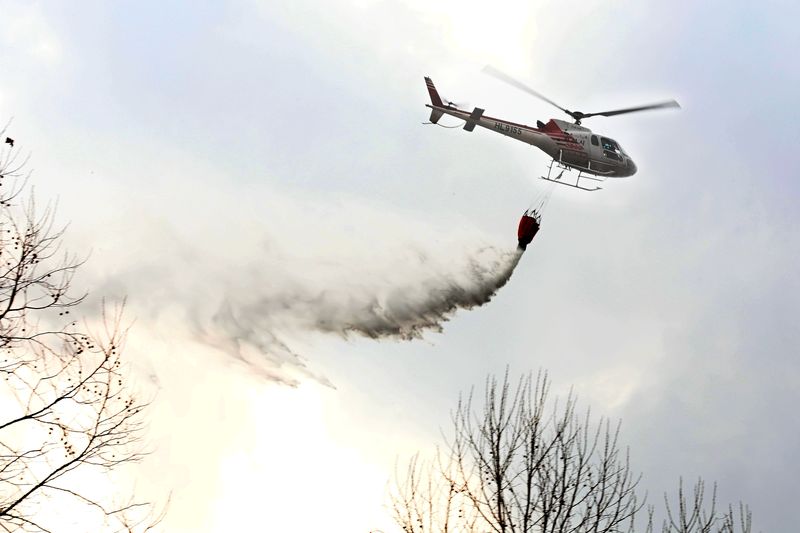
[Financial News] To prepare for the risk of autumn wildfires, the National Fire Agency (NFA) will designate 10 of the 34 firefighting helicopters nationwide as priority-dispatch helicopters for wildfires and progressively increase the deployment of national firefighting resources if a major wildfire breaks out. When weather advisories for dry conditions or strong winds are issued, it will increase preventive patrols in wildfire-prone areas from once to three times a day and strengthen the joint-dispatch system with the Korea Forest Service and local governments.
The NFA announced that it will implement its 2026 Autumn Wildfire Prevention and Response Plan, which includes these measures, for 45 days from November 1 to December 15.
The plan consists of three key strategies: strengthening wildfire prevention activities, bolstering preparedness for an all-out response, and establishing wildfire response readiness. It is based on the assessment that wildfires could grow into major blazes if dry weather and strong winds coincide with illegal burning of agricultural waste or garbage, carelessness by people entering forest areas, and other factors.
The NFA will first step up inspections of illegal burning in areas near forests and strengthen preventive patrols from 6 to 8 p.m., a time when wildfire risk is high. When dry-weather or high-wind advisories are issued, patrols will increase to three times a day. If the wildfire crisis alert is raised to the Alert level or higher, the NFA will also conduct monitoring using firefighting drones.
In coordination with volunteer fire brigades, the NFA will also promote safety at homes near forests and run wildfire-prevention campaigns for households that use wood-burning boilers.
When a wildfire breaks out, the joint-response system among relevant agencies will be activated from the moment a report is received. If a fire is reported at a facility near a forest, the NFA will request a joint response from the Korea Forest Service and local governments so that firefighting forces and wildfire suppression resources can be dispatched together. The agencies will also share situational information in real time to prevent flying embers from starting fires elsewhere.
The NFA will also strengthen its aerial response capabilities. It will designate 10 of the 34 firefighting helicopters nationwide for priority dispatch to wildfires and operate 9 helicopters for nighttime wildfire response. If wildfire risk rises, the 119 dedicated wildfire special response unit and provincial and municipal special response units will be pre-positioned in vulnerable areas.
The 323 specialized wildfire engines currently in service, along with firefighting helicopters and other available resources, will also be deployed promptly according to the size of a wildfire and the risk of its spreading.
The NFA will also expand joint drills in preparation for major wildfires. It will hold response drills at least once per fire station, with the participation of the Korea Forest Service, local governments and police, to review each agency’s duties and procedures for mobilizing firefighting resources. On-site evacuation drills involving residents of villages near forests will also be held.
The NFA plans to issue fire-risk alerts at three levels—Caution, Alert and Serious—in coordination with weather advisories. If a major wildfire breaks out, it will progressively increase the deployment of national firefighting resources through three stages, taking into account access to the scene and response times.
NFA Commissioner Choi Yong-cheol said, “Autumn wildfires can develop into major disasters when dry weather and strong winds coincide, even if they start with a minor act of carelessness. When a wildfire breaks out, we will work closely with relevant agencies from the outset and do our utmost to protect people’s lives and property by mobilizing all available firefighting resources.”
[email protected] Lee Bomi Reporter