“Don’t Even Want a Photo with Russia” ... Group of Twenty (G20) Fails to Issue Joint Statement or Take Group Photo
- Input
- 2026-11-01 14:24:17
- Updated
- 2026-11-01 14:24:17
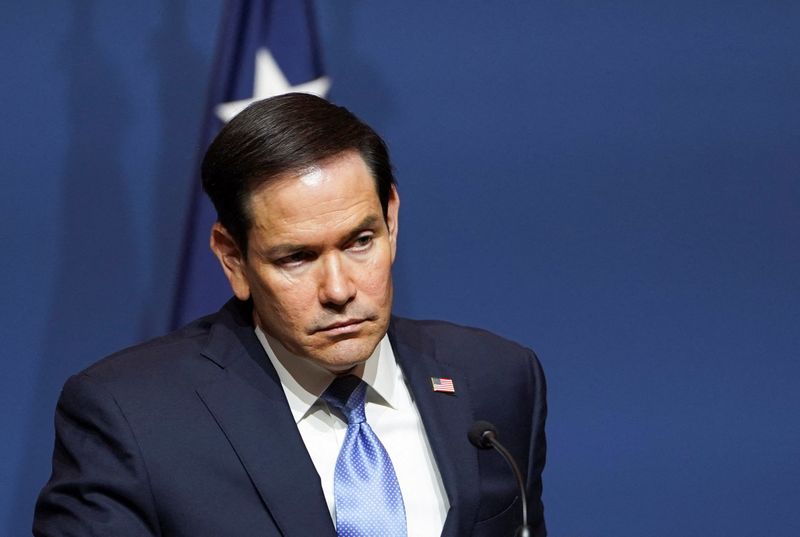
According to major foreign media outlets on the 31st (local time), differences between Russia and the other participating countries over the war in Ukraine came into particularly sharp relief, scuttling a joint statement. Polish Foreign Minister Radoslaw Sikorski told the Associated Press that “the failure to reach agreement was expected,” adding, “With wars underway and the parties to those wars sitting together at the conference table, it was very difficult to agree on a common position.”
U.S. Secretary of State Marco Rubio called for unity when he opened the meeting the previous day, but ultimately canceled the customary group photo of foreign ministers. European diplomats opposed Russian Foreign Minister Sergey Lavrov taking part in the photo, saying they would either stay away or leave during the shoot. German Foreign Minister Johann Wadephul told reporters, “There will be no group photo with Minister Lavrov and our European partners under any circumstances,” adding, “because relations with Russia are not normal.”
Nevertheless, Rubio defended the U.S. president’s decision that day, saying, “President Donald Trump believed it was important for Russia to participate in G20 discussions.” He said, “I don’t think that simply meeting someone gives that person legitimacy or means agreeing with everything they do. Everyone wants an agreement to end the war. How can you reach an agreement without meeting the other side?”
Participants said that, because the differences were so great, a plan to issue a chair’s statement instead of a joint statement had in fact been in place for a long time. The issues on which the countries disagreed reportedly included the war in Ukraine, the war with Iran, U.S. tariffs and China’s actions in the South China Sea. Participants said, “Russia took a particularly hardline position on Ukraine and was likewise opposed to Poland joining the G20.” They added that “the U.S. government’s decision not to invite South Africa, a G20 member, to this meeting despite objections from other countries also provoked a backlash.”
Some partners within the G20 whose positions were similar to those of the United States issued a joint statement on AI, but disagreements over terminology also surfaced in the statement itself. In the joint statement released after Rubio met with foreign ministers from the Asia-Pacific region, each passage referring to “superintelligence (SI)” was marked with an asterisk (*), linking to a footnote explaining that “in Australia, India and Japan, this refers to artificial intelligence (AI).” In this connection, President Trump said in his address to the UN General Assembly in September this year that “we have decided to use the term SI instead of AI,” and had instructed that the term be used as a requirement.
[email protected] Hong Chae-wan Reporter