Jeju to design seven services under its Basic Society model, targeting implementation in 2028
- Input
- 2026-11-01 12:45:07
- Updated
- 2026-11-01 12:45:07
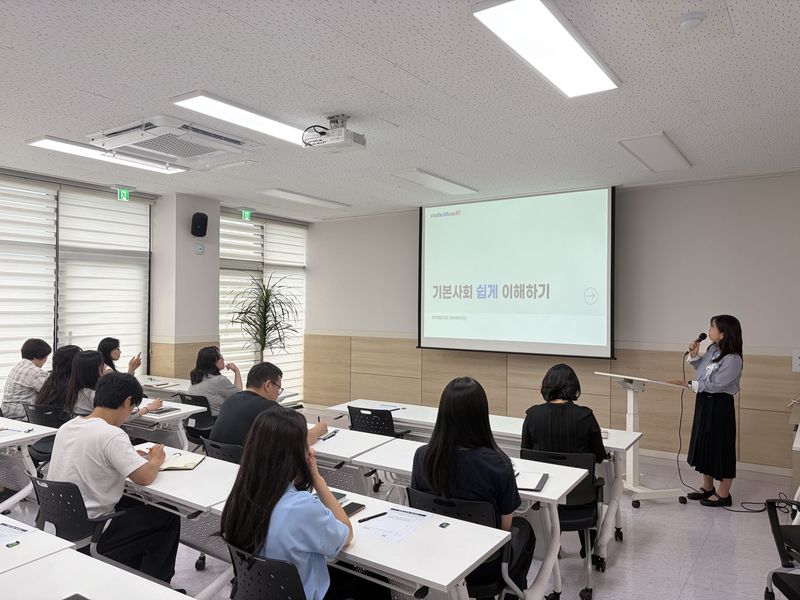
【Financial News, Jeju = Jeong Yong-bok, reporter】 Jeju has begun designing a “Jeju-style Basic Society” that brings together seven services supporting residents’ basic needs—including income, care, healthcare and housing—under a single policy framework.
According to Jeju Special Self-Governing Province on the 1st, a policy forum on “Realizing a Jeju-style Basic Society” will be held at 2 p.m. on the 9th on the third floor of the Jeju Sun Hotel. About 100 people are expected to attend the event, hosted and organized by Jeju Province, including residents, members of the Jeju Special Self-Governing Provincial Council, officials from the Ministry of the Interior and Safety, experts in Basic Society and representatives of related organizations.
Eun Min-su, a member of the presidential Committee for Basic Society and president of the Korea Human Resource Development Institute for Health and Welfare, will give a presentation at the forum on “The Core Values of Basic Society and the Policy Direction for Basic Society in Jeju.” Experts in Basic Society, artificial intelligence (AI) and the social and solidarity economy will then discuss policies and implementation plans suited to the Jeju region.
Basic Society is a policy concept that guarantees people stable access to essential services for life, such as income, housing, healthcare and care. It addresses not only cash assistance for specific groups but also access to public services needed in daily life and the level of coverage they provide.
Jeju Province is developing related policies centered on seven basic services—income and jobs, care, healthcare, housing, transportation, labor and culture—as well as the energy sector.
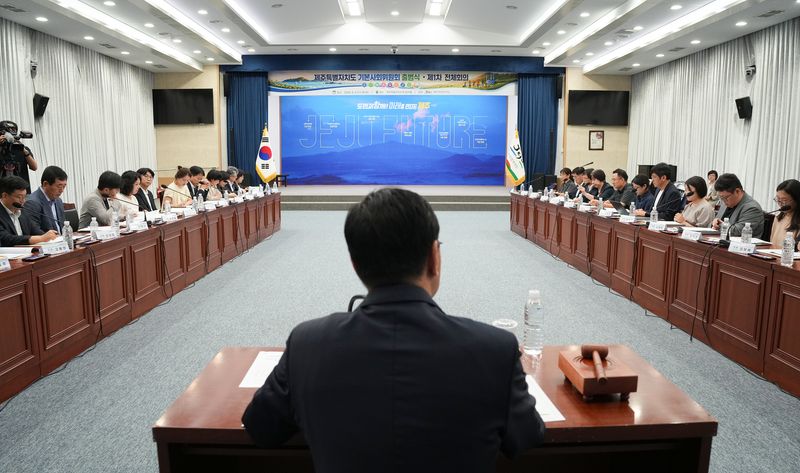
Earlier, on September 2, Jeju Province launched the Committee for Basic Society under the direct authority of the provincial governor and held its first plenary meeting. The committee, chaired by Jeju Governor Wi Seong-gon and comprising 30 members—eight ex officio and 22 appointed—will review and coordinate key policies and the comprehensive plan. A separate Basic Society Promotion Task Force was established to oversee policy development and interdepartmental work.
Policy development will proceed in stages. This year, priority tasks will be identified by gathering residents’ views and assessing existing programs. In 2027, a five-year comprehensive plan will be drawn up following surveys of residents’ awareness and policy needs, public deliberation and other steps. The target year for the full-scale implementation of policies in each sector is 2028.
Jeju Province is also collecting residents’ views on Basic Society policies through its website from September 14 through the 30th. Residents can freely suggest ways to address inconveniences in daily life, shortcomings in existing support programs and services they newly need.
The province is also examining the eligibility criteria and provisions of existing policies, as well as how services are delivered, and comparing them with the services residents actually need. The plan is to distinguish areas where existing programs need to be linked or improved from those requiring new policy initiatives.
Key considerations for a Jeju-style Basic Society include the island’s regional characteristics and access to everyday services. Access to healthcare and transportation in townships and island areas, care for older people, housing and jobs for young people, and returning the benefits of renewable energy resources to local communities are among the areas requiring concrete policy design in Jeju.
Ways to connect Jeju’s resources, including wind and sunlight, to residents’ basic needs are also under discussion. At a Basic Society policy forum held by the Jeju Special Self-Governing Provincial Council on September 28, Kang Nam-hoon, vice chair of the presidential Committee for Basic Society, proposed drawing up policies suited to Jeju by looking to examples of basic income and social-service provision using shared assets.
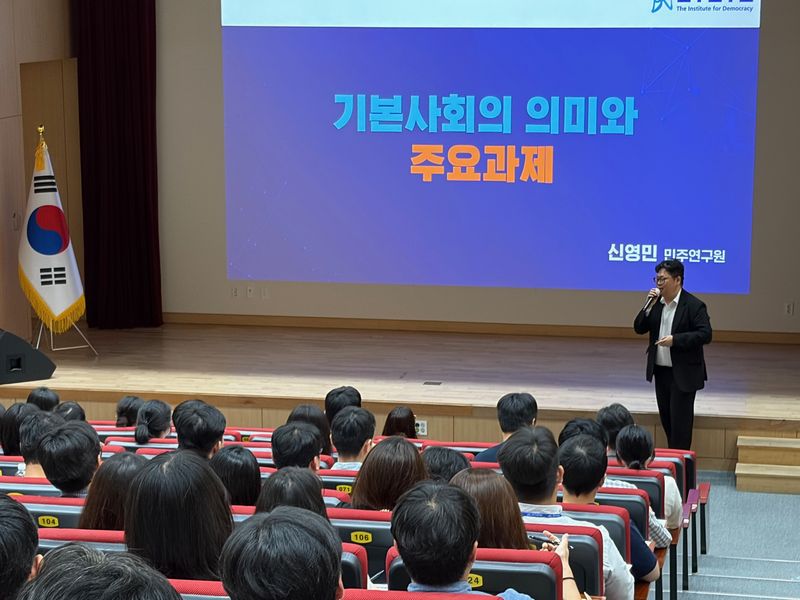
How to balance the universality of policies with support tailored to specific groups is also a challenge. In July, the Jeju Special Self-Governing Provincial Council’s Budget and Accounts Special Committee raised the question of how programs targeting particular age groups and social groups—such as basic services for young people, jobs for middle-aged and older people, and integrated care—would fit with the universal vision of Basic Society.
For a Jeju-style Basic Society to become actual policy, this means examining not only how it differs from existing welfare programs but also who qualifies for support, the level of support, and the administrative and financial burden.
Efforts are also underway at the national level to institutionalize Basic Society policies. In April, the government launched the presidential Committee for Basic Society and has since discussed policy initiatives through 13 expert committees and three special committees: Rural Basic Income, Sunshine and Wind Income, and Local Governments for Basic Society.
Jeju Province plans to use the views presented at the forum to identify Basic Society policy initiatives and draw up a comprehensive plan. It will continue discussions with experts in each field and gather residents’ views to develop concrete ways to ensure the policies can be implemented.
Go Min-jeong, head of Jeju Province’s Basic Society Promotion Task Force, said, “We will faithfully reflect the views of experts and residents and flesh out a policy direction for a Jeju-style Basic Society that residents can experience in their daily lives.” She added, “As this is an opportunity to work together to develop policies needed in residents’ lives, I ask for your interest and participation.”
[email protected] Jeong Yong-bok Reporter