Aging homes make up 31.3% of Jeju housing... resident-request fire inspections to be piloted next year
- Input
- 2026-11-01 12:28:18
- Updated
- 2026-11-01 12:28:18
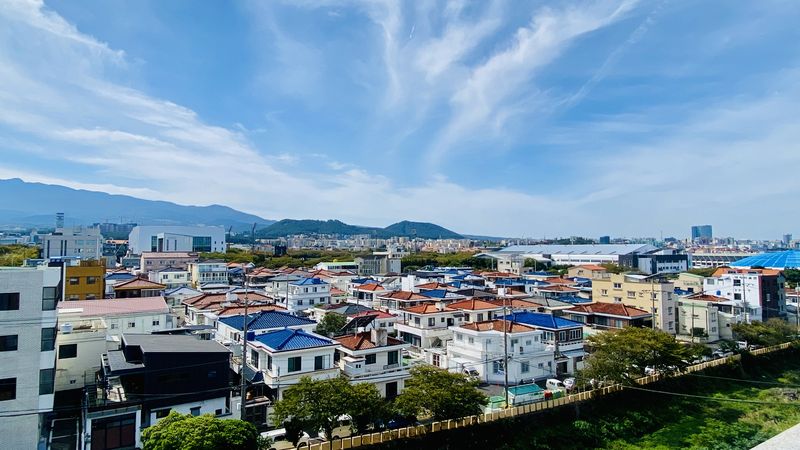
【Financial News, Jeju — Reporter Jeong Yong-bok】At least three out of every 10 homes in Jeju were built over 30 years ago, data showed. Jeju, where the share of aging homes is higher than the national average, is set to become a pilot area next year for a new prevention program that allows residents to request fire-safety inspections themselves.
According to the Ministry of the Interior and Safety and the National Data Agency on the 1st, as of 2025, aging homes built at least 30 years ago accounted for 31.3% of all housing in Jeju. That was 0.7 percentage points above the national average of 30.6%. Jeju’s share of aging homes rose 2.3 percentage points in one year, from 29.0% in 2024.
The aging of Jeju’s housing stock is also reflected in the types of homes. In 2024, detached houses accounted for 64.4% of the 76,145 aging homes in the province. That was 24.5 percentage points higher than the 39.9% share of detached houses among aging homes nationwide.
This underscores the need for prevention systems suited to detached houses, alongside fire-safety measures focused on aging multi-unit housing. On-site inspections that take building structures and residents’ characteristics into account are particularly important for aging detached homes in rural and mid-mountain areas.
In the “Measures to Strengthen Fire Safety Management for Aging Homes,” announced jointly by relevant ministries on September 22, the government designated Jeju and Incheon as pilot areas in 2027 for the “Resident-Requested Fire Safety Inspection System.”
The resident-request system allows residents to apply for fire-safety inspections themselves if they consider one necessary. It is intended to encourage voluntary participation by residents in addition to inspections led by authorities.
The government plans to include aging multi-unit housing without sprinklers among those required to undergo electrical safety inspections starting in 2027. The inspections will go beyond existing checks of electrical wiring to cover everyday electrical fire risks, including possible overloading of outlets and power strips. A joint inspection system for the electrical and fire safety sectors will also be established.
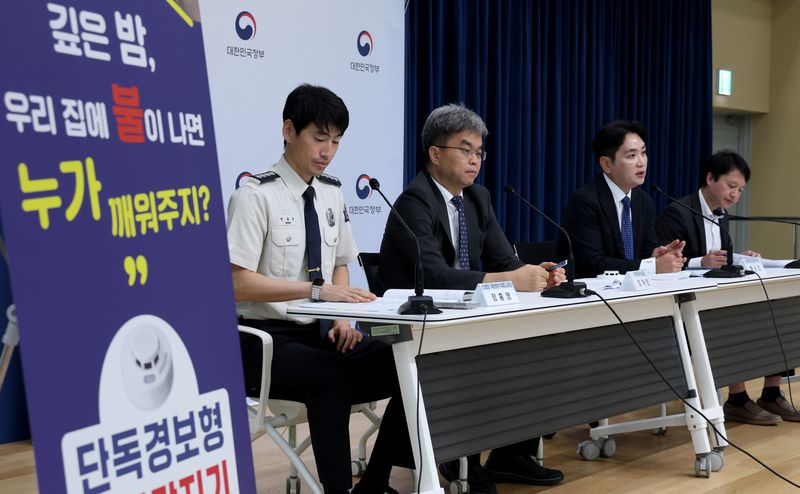
Distribution of stand-alone smoke alarms to help detect fires early will also be expanded. The government estimates that about 8.97 million households nationwide need smoke alarms. It is revising its support system to extend distribution beyond the 4.53 million fire-vulnerable households already eligible for support to include 4.44 million ordinary households.
A stand-alone smoke alarm detects smoke produced in the early stages of a fire and sounds an alarm. According to government data, 72% of deaths in residential fires were caused by asphyxiation from smoke inhalation. That is why detecting a fire quickly and evacuating promptly are important to reducing casualties.
On-the-ground efforts to prevent residential fires are also continuing in Jeju.
According to the Jeju Special Self-Governing Province Fire Safety Headquarters, Jeju’s volunteer fire brigades carried out 951 home safety inspections last year and provided home fire-safety equipment to 4,350 households, among other activities. How to coordinate the upcoming resident-request system with existing fire equipment distribution programs is also seen as a local challenge.
The government has designated the period from the 1st through February 28 next year as its winter fire-safety measures period, and will conduct joint inspections with relevant agencies and operate a 24-hour incident-response system.
Over the past five years, fires nationwide during winter averaged about 11,000 a year, accounting for 28% of all fires. The government plans to identify and address risks in advance, focusing on fire-vulnerable facilities such as aging homes, traditional markets and long-term care hospitals.
In Jeju, it is important to coordinate the selection of homes for inspection—taking into account the high share of aging detached houses—with the distribution of fire-safety equipment and support for people who may have difficulty evacuating, such as older adults. Ahead of next year’s pilot of the resident-request system, work remains to flesh out a management framework covering inspection staff and budgets, as well as follow-up improvements after an application is made.
[email protected] Jeong Yong-bok Reporter