Probe of Chief Justice Cho Hee-dae set for approval on the 12th... “Personnel and budget powers are key to judicial independence” [Seocho Crossroads]
- Input
- 2026-11-01 14:17:03
- Updated
- 2026-11-01 14:17:03
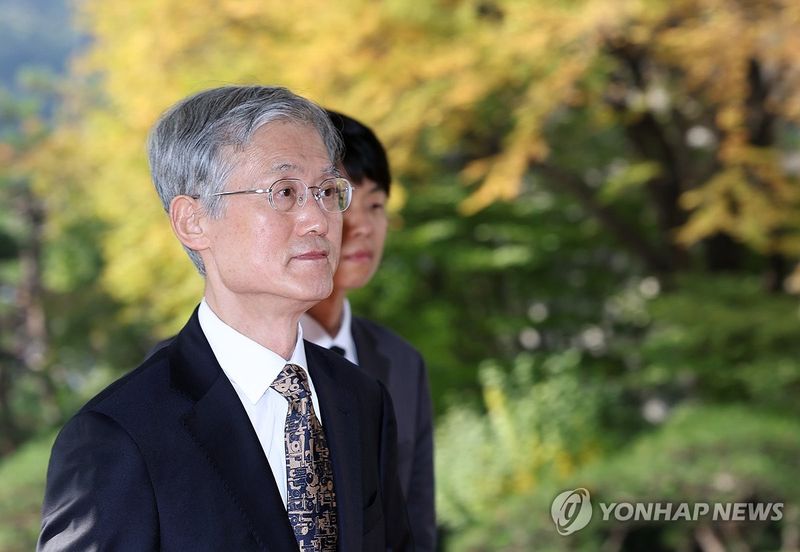
According to legal circles and other sources on the 1st, the Democratic Party plans to submit a request for a parliamentary investigation to the plenary on the 5th and have the investigation plan approved as early as the 12th. Park Sung-joon, the party’s senior spokesperson, told reporters after a Supreme Council meeting on the 30th of last month that the purpose and scope of the investigation had been clearly defined, saying, “We will focus on Chief Justice Cho’s actions during the insurrection on December 3, 2024.” The party’s argument is that there was clearly a late-night meeting, but it was not adequately investigated. There is no precedent for the National Assembly conducting a parliamentary investigation targeting a chief justice.
Chief Justice Cho was the subject of a criminal complaint alleging that he played a key role in an insurrection because he convened a meeting of senior Supreme Court officials immediately after the declaration of emergency martial law on December 3. The Special Prosecutor’s Team for Insurrection (Special Prosecutor Cho Eun-seok) declined to indict him in December last year, finding no evidence that the meeting had been held to prepare martial law measures. The Second Comprehensive Special Counsel (Special Prosecutor Kwon Chang-young) also dismissed the case last June, having found no new facts. The Supreme Court has repeatedly stated that it viewed the martial law declaration at the time as highly unconstitutional.■ “Judicial independence rests on authority over appointments and budget planning”Article 61 of the Constitution grants the National Assembly the power to investigate state affairs. However, Article 8 of the Act on the Inspection and Investigation of State Administration prohibits the exercise of investigative powers for the purpose of intervening in the prosecution of cases under investigation or trials in progress. In other words, a parliamentary investigation intended to intervene in or influence an individual trial may violate this provision.
Some argue that the ruling party’s very rationale of “judicial administration” as a subject for investigation gets the law wrong. A legal scholar who previously worked as a government official said, “Judicial independence basically means that the judiciary has authority over appointments and budget planning.” The scholar added, “The ruling party says that judicial appointments and the like fall within the so-called sphere of judicial administration, and that this judicial administration is subject to parliamentary investigation. That claim stems from a poor understanding of legal theory.”
Some say the National Assembly’s authority itself needs to be reconsidered. A law professor said, “It is not reasonable to say that the National Assembly, which represents the so-called ‘will of the people,’ can do everything.” The professor added, “The basic model of a legislature has traditionally been a bicameral system, with an upper house where the ‘will of the state’ gathers and a lower house where the ‘will of the people’ gathers.” The professor pointed out, “Trying to intervene in everything in the name of the so-called ‘will of the people’ undermines democracy, including the separation of powers.”■ “Why hold the chief justice responsible for lower court rulings?”There has been particular backlash within the judiciary against efforts to hold the chief justice to account for lower court rulings. The Democratic Party has raised Chief Justice Cho’s responsibility while taking issue with the ruling by Criminal Division 7 of the Seoul High Court, presided over by Judge Koo Hoe-geun, which acquitted Seoul Mayor Oh Se-hoon on the 23rd of last month. Calls for impeachment were even made during the National Assembly’s audit of the Legislation and Judiciary Committee on the 26th of last month.
Noh Gyeong-pil, head of the National Court Administration and a Supreme Court justice (23rd class at the Judicial Research and Training Institute), drew a clear line during the audit that same day, saying, “The panel independently determines guilt or innocence and the sentence based on the evidence and facts, and neither the Supreme Court—including the chief justice—nor the National Court Administration is involved at all.” He added, “I do not think it is appropriate to speak of what the judiciary under Cho Hee-dae has done.” A senior judge criticized the idea, saying, “The notion that a high court presiding judge would decide a case at the chief justice’s direction is something one would expect only in the Yushin era.”
The People Power Party denounced the move as “crude political violence.” Floor leader Jeong Jeom-sig wrote on Facebook, “The real aim is petty retaliation for the ruling overturning and remanding President Lee Jae Myung’s election law violation case with an opinion that he was guilty.” A parliamentary investigation can be initiated at the request of at least one-quarter of the Assembly’s members, and the investigation plan is finalized by a plenary vote. With a majority of seats, the Democratic Party can pass it on its own. The Supreme Court issued no separate statement.
[email protected] Kim Dong-gyu Reporter