Eyes on U.S. midterm elections and jobs data... “Focus on macro factors rather than earnings” [Weekly Stock Market Outlook]
- Input
- 2026-11-01 16:54:11
- Updated
- 2026-11-01 16:54:11
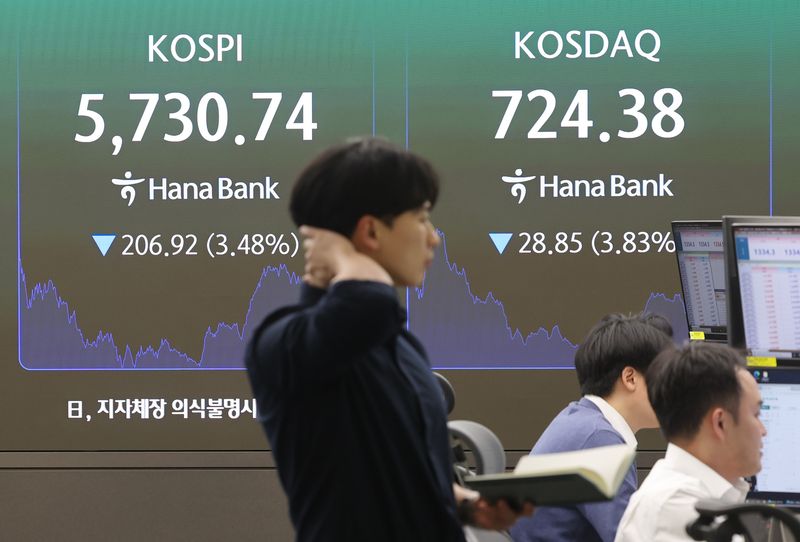
[Financial News] After rebounding above the 6,000 mark on SK hynix’s earnings announcement, the KOSPI fell late last week amid disappointment over Samsung Electronics’ shareholder returns and weak results from global Big Tech companies. This week, the market is expected to gauge whether the index can regain the 6,000 mark ahead of the U.S. midterm elections and the release of key economic data. Securities firms have put this week’s expected KOSPI range at 5,700–6,500 points.
According to the Korea Exchange on the 1st, the KOSPI rose 180.44 points (3.25%) last week (October 26–30), from 5,550.30 to 5,730.74. It climbed as high as 6,012.44 on the 28th of last month, recovering the 6,000 mark, but then fell for two consecutive sessions, giving back some of its gains. Over the same period, institutions and other corporations were net buyers in the securities market, purchasing 2 trillion 540.3 billion won and 750.1 billion won, respectively. Individuals and foreign investors, by contrast, were net sellers, selling 3 trillion 21.2 billion won and 270.3 billion won, respectively.
Last week, the market attempted a rebound led by semiconductor stocks after SK hynix’s third-quarter earnings, which exceeded market expectations, and its large-scale shareholder return plan improved investor sentiment on the 28th of last month. But the market fell in the latter part of the week. When Samsung Electronics did not disclose details of its shareholder return plan in its third-quarter earnings announcement on the 29th of last month, the market expressed disappointment. Results from U.S. Big Tech companies were mixed, and concerns about the profitability of AI investments also resurfaced.
Market watchers believe investors should focus on macroeconomic factors rather than corporate earnings this week. The U.S. midterm elections scheduled for the 3rd (local time) are seen as a major variable. Analysts say that if the Democrats win majorities in both the House and Senate, they could hamper the Trump administration’s efforts to advance its policies. The possibility that military tensions between the United States and Iran could escalate after the election and intensify inflationary pressure is also seen as a risk to watch.
U.S. economic indicators are also in focus. By local time, the U.S. October Institute for Supply Management (ISM) manufacturing Purchasing Managers’ Index (PMI) is due on the 2nd, followed by the October jobs report on the 6th.
Lee Kyung-min, a researcher at Daishin Securities, said, “Volatility stemming from geopolitical risks and economic indicators after the midterm elections needs to be watched carefully,” and forecast, “The Federal Reserve’s concerns about inflation remain, so escalating tensions between the United States and Iran could stoke concerns about further monetary tightening.” He added, “Although macro factors have had a relatively limited impact recently, stronger-than-expected employment and price pressures could increase stock market volatility.”
In South Korea, the Korea Exchange’s release that day of a list of companies with low price-to-book ratios (PBRs) has drawn attention to whether companies that have remained undervalued for a long time will continue to strengthen shareholder returns through measures such as higher dividends and share buybacks. The exchange published for the first time that day a list of 151 companies that had ranked in the bottom tier for PBR over the past three years.
Na Jeong-hwan, a researcher at NH Investment & Securities, said, “Being identified as a low-PBR stock is expected to carry a stigma, so efforts to strengthen shareholder returns are likely to increase around the release of the list,” adding, “It is worth watching for re-rating opportunities among companies that are actively pursuing shareholder returns and value-up policies despite being undervalued.”
[email protected] Im Sang-hyeok Reporter