Ammonia leak at Seogwipo Port... Roads and pedestrian access restricted over residual gas
- Input
- 2026-11-01 12:12:53
- Updated
- 2026-11-01 12:12:53
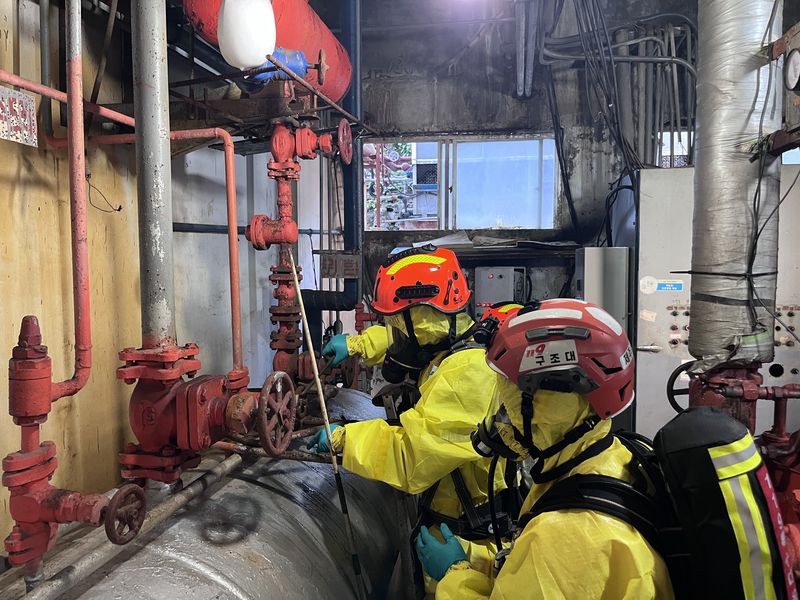
【Financial News, Jeju = Reporter Jeong Yong-bok】 On the 1st, the second day of the accident, roads and pedestrian access in the area were restricted after ammonia gas leaked from a seafood cold-storage warehouse near Seogwipo Port continued to register at high concentrations inside the facility even after the pipes were shut off. As firefighters continued efforts to remove the residual gas, investigators began looking into how pressure rose in the refrigeration system and the state of safety management for hazardous gases.
According to the Jeju Special Self-Governing Province Fire Safety Headquarters and Seogwipo City on the 1st, the city sent a safety alert by text message at around 9:19 a.m., announcing that it was restricting vehicle and pedestrian access from Chilsimni Bridge near the Seogwipo Fisheries Cooperative to the Seogwipo Disabled Persons’ Center. Nearby residents were urged to take a detour around the area and refrain from outdoor activities.
Earlier, at 8:26 p.m. on October 31, Seogwipo City also announced safety measures taken in response to the ammonia leak near Seogwipo Port and urged residents and tourists to exercise caution. Safety measures that began on the day of the accident were thus expanded the following day to include restrictions on nearby roads.
The accident came to light at around 12:27 p.m. on October 31, after a passerby reported a foul odor near Seogwipo Port. Firefighters arrived at the scene about 10 minutes later, determined that ammonia-related work had been underway at a nearby seafood cold-processing plant, and immediately asked that the work be stopped. They set up a perimeter to establish a safety zone.
A chemical response vehicle from the Special Rescue Response Team, along with the Yeongsan River Basin Environmental Office, the Korea Gas Safety Corporation and other relevant agencies, was then deployed to identify the leak and shut off the pipeline valves and ventilate the facility. Officials from the Yeongsan River Basin Environmental Office also arrived at the scene at around 2:20 p.m. that day and began measuring gas concentrations.
However, ammonia continued to be detected inside the facility even after all the valves had been shut off. In particular, after high concentrations of residual ammonia were detected in the machine room at around 5:38 p.m. on October 31, safety measures continued for an extended period.
Firefighters are using a blower and hoses to direct the remaining ammonia gas into a water tank, where it is absorbed by the water. They are also continuing to measure concentrations to confirm that the gas has been completely removed and to control access to the site.
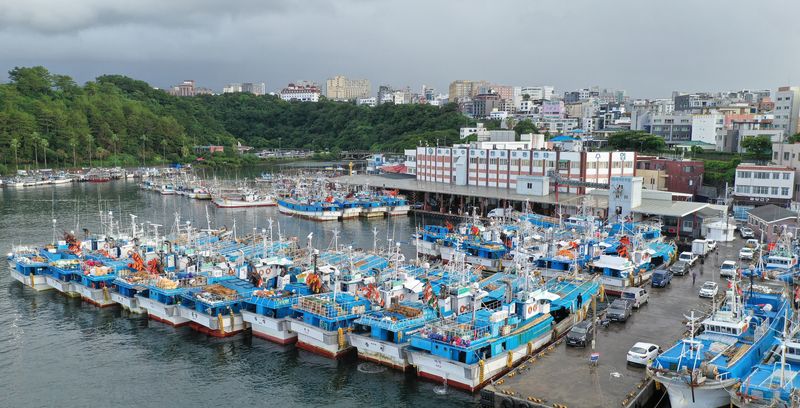
No casualties have been reported so far. The company involved told firefighters that the gas appeared to have leaked as pressure was released through piping connected to an external condenser after pressure in the ammonia refrigeration system rose abnormally.
Police and firefighters are investigating the exact circumstances of the leak based on the company’s account. The cause of the pressure increase inside the system, the operating condition of the pressure-regulating device and the safety of the pipes have yet to be determined.
Ammonia is used as a refrigerant in industrial refrigeration and cold-storage systems. Exposure to high concentrations of the gas can damage the eyes, skin and respiratory system, and in severe cases can lead to serious health effects, including pulmonary edema.
On October 1, chlorine gas was also released at Grand Josun Jeju in the Jungmun Tourist Complex in Seogwipo, an accident that sent 59 people, including guests and employees, to the hospital. The cause was determined to be a problem in the mixing of pool disinfectant.
As hazardous gas accidents have occurred repeatedly in the Seogwipo area within a month, the importance of safety management at facilities that use chemicals, a coordinated response by relevant agencies when accidents occur, and the prompt provision of information to nearby residents is once again coming into focus.
Police and firefighters are investigating the exact circumstances of the accident while continuing to remove residual gas and take safety measures at the site with the relevant agencies.
[email protected] Jeong Yong-bok Reporter