“Desserts shine, alcoholic beverages dim” ... Food industry sees widening divide ahead of year-end peak season
- Input
- 2026-11-01 12:40:07
- Updated
- 2026-11-01 12:40:07
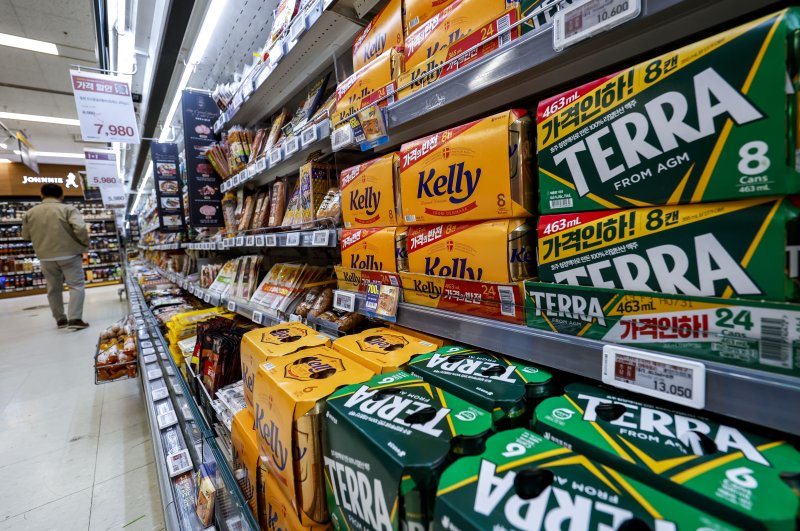
[Financial News] Expectations for an economic recovery in the food industry are rising ahead of year-end, but the divide between sectors is widening. Structural changes in drinking culture have left the alcoholic beverage sector in a deep slump, while the dessert and fresh food sectors are expected to benefit from the year-end peak season.
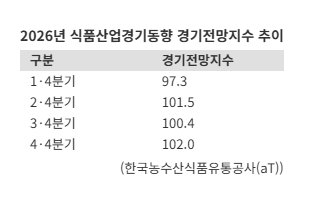
On the 1st, according to the Food Industry Business Survey by the Korea Agro-Fisheries & Food Trade Corporation (aT), the Food Industry Business Outlook Index for the fourth quarter of this year stood at 102.0, up 1.6 points from 100.4 in the previous quarter. The index is based on 100: a reading above 100 means more companies expect business conditions in the following quarter to improve from the previous quarter, while a reading below 100 means more expect them to worsen. The survey covered 1,514 food and beverage manufacturers nationwide.
The outlook index fell as low as 97.3 in the first quarter of this year amid a downturn, but has remained above 100 for three consecutive quarters, from the second quarter (101.5) through the fourth quarter (100.4), continuing its recovery.
Seasonal factors driving increased consumption are cited as the reason companies expect business conditions to recover in the fourth quarter. The year-end peak season spanning November and December, the Christmas season, and winter breaks at schools of all levels are among the timely boosts to dining out and food consumption that are believed to have lifted companies’ expectations.
However, fortunes vary sharply by sector.
The dessert market has shown the most notable growth. The business outlook index for rice cake, bread and snack manufacturing came in at 116.2, the highest of all sectors. The spread of home-party culture, together with the trend toward dessert consumption, is expected to concentrate demand at year-end. Aquatic plant products manufacturing (111.4), associated with health foods and fresh foods, also posted a high index, with favorable conditions expected.
By contrast, a cold spell is forecast for the alcoholic beverage sector, even as it approaches the year-end peak season. Fermented alcoholic beverage manufacturing scored just 65.4, pointing to a sharp deterioration, while distilled alcoholic beverage manufacturing also fell below the benchmark, at 90.5.
This is attributed to a decline in alcohol consumption itself as excessive company dinners and large year-end gatherings become less common and a drinking culture that values individual preferences takes hold.
In response, the alcoholic beverage industry is pursuing low-cost, high-efficiency marketing strategies while maintaining contact with consumers. This contrasts with the large-scale promotional campaigns companies used to mount ahead of year-end.
HiteJinro Co., Ltd. is cutting logistics costs for imported beer by contract-manufacturing Kirin Ichiban Shibori canned products domestically in collaboration with Japan’s Kirin. Lotte Chilsung Beverage Co., Ltd. has relaunched its once-popular brand Captain Q. OB Beer plans to target the market with its new soju brand Challang.
An industry official said, “In the past, company dinners and alcoholic beverages were at the center of year-end consumption, but lately there has been a clear shift toward desserts and home parties,” adding, “Companies that target changing consumption trends will reap the rewards in the form of actual improvements in performance.”
[email protected] Kim Seo-yeon Reporter