Gangwon Province expands new designations of Rural Vitality Promotion Zones, leveraging farmland exemptions
- Input
- 2026-11-01 09:34:02
- Updated
- 2026-11-01 09:34:02
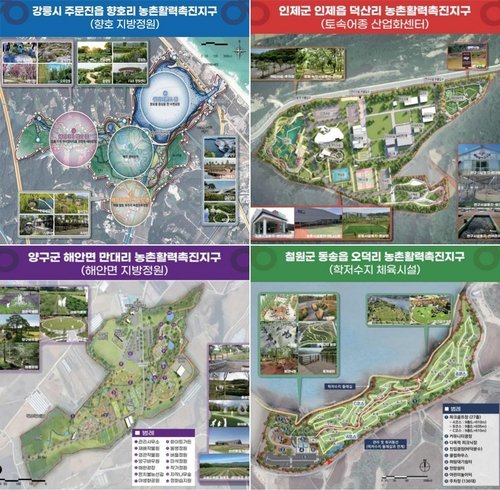
【Financial News, Chuncheon = Kim Gi-seop】Gangwon State is beginning the process of making next year’s first designations under the Rural Vitality Promotion Zone system, which has shortened the time required to lift agricultural promotion area status by an average of at least seven months.
According to Gangwon State on the 1st, the province will accept applications from cities and counties for next year’s first round of Rural Vitality Promotion Zone designations from the 2nd through January 29 next year. The project departments of each city and county will draw up basic plans, which their coordinating departments will compile and submit to the province. The new zones are expected to be designated and publicly announced in the first half of next year.
Since the system was introduced in June 2024, 20 zones in 12 cities and counties, covering 294 hectares (including 175 hectares of agricultural promotion areas), have been designated as promotion zones. Agricultural promotion area status has already been lifted for 65.5 hectares in eight of these zones, allowing projects to gain momentum.
Four zones in three counties, including Yeongwol County, Pyeongchang County and Hwacheon, applied for in this year’s second round are due to be reviewed by the Comprehensive Plan Deliberation Committee at the end of this month. If these zones are also designated, the cumulative total will rise to 24 zones in 13 cities and counties, covering 354 hectares (including 224 hectares of agricultural promotion areas).
The Rural Vitality Promotion Zone is a farmland special provision under the Gangwon Special Act that allows the provincial governor to directly lift agricultural promotion area status within a 4,000-hectare limit. With the minimum area requirement for designation eliminated last year, applications can now be made for small-scale projects as well as priority projects under the Ninth popularly elected term. However, to prevent haphazard development and encourage planned development, the province recommends setting the area at 10,000 square meters or more.
Eligible areas are places where rural vitality and spatial regeneration are needed to address population decline and regional imbalance. They must need improved transport access or have the potential to attract private investment, and must also demonstrate public value by contributing to community development. Under a provincial ordinance, eligible targets also include projects that use farmland with unfavorable farming conditions or idle land, as well as areas requiring improvement to prevent disasters and calamities.
Once cities and counties finalize basic plans after gathering residents’ opinions, the province designates and publicly announces the promotion zones following consultation with the Farmland Management Committee and review by the Comprehensive Plan Deliberation Committee. The zones are then developed after the cities and counties draw up implementation plans and obtain provincial approval. The province is conducting joint consultations with permitting departments, including those responsible for land and the environment, to improve the quality of city and county project plans.
Kim Dong-sik, head of Gangwon Province’s Agricultural Policy Division, said, "With the minimum area requirement gone, even small-scale priority projects can now apply, and the time it takes to lift agricultural promotion area status has in fact been cut by more than seven months. The purpose of the farmland special provision is not to use up 4,000 hectares within three years, but to streamline procedures so that city and county projects to combat local depopulation and long-term strategic projects can break ground even a day sooner." He added, "We will closely support the entire permitting process, from zone designation through groundbreaking."
[email protected] Kim Gi-seop Reporter