Rubio: “We will resolve South Korean lawmakers’ visa issue through bilateral talks”
- Input
- 2026-11-01 08:54:43
- Updated
- 2026-11-01 08:54:43
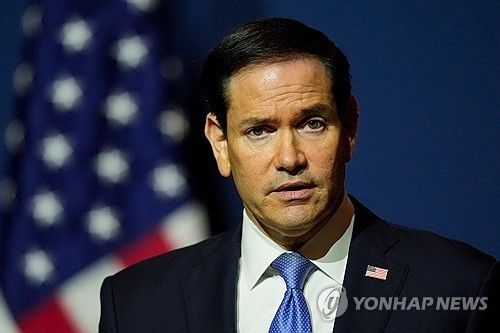
On the 31st (local time), Rubio met with reporters in Atlanta, Georgia, during the G20 foreign ministers’ meeting. Asked about concerns that the visa issue involving South Korean lawmakers could heighten tensions in South Korea-U.S. relations, he replied, “We will resolve the visa issue.”
“There was a visa issue involving one specific individual, and I think it was related to actions from maybe a couple decades ago,” he said. He emphasized, “We will resolve that issue through bilateral talks, not at a press conference.”
The controversy began in early October. Jung Chung-rae, a lawmaker who previously led the Democratic Party, applied for a visa to coincide with the National Assembly’s audit schedule for the Foreign Affairs and Unification Committee, but its issuance was delayed. Jung ultimately changed the audit destination to Europe. The controversy intensified when Jin Sung-joon, the National Defense Committee chair from the same party, applied for an official visa (A-2), was notified that it had been denied, and then received the visa.
Rubio’s reference to “actions decades ago” appears likely to allude to Jin’s record of being sentenced in 1991 to three years in prison and three years’ suspension of qualifications for violating South Korea’s National Security Act. The U.S. side, however, has not disclosed the reason for the denial.
Jin applied for a visa on October 12 and was notified of the denial on the 28th. After submitting additional documents, including the judgment in the earlier case, at the U.S. side’s request, he received his visa on the 31st. The four-member National Defense Committee delegation visiting the United States to visit the U.S. Pacific Command in Hawaii from November 1 to 5 consisted of Jin, lawmakers Kim Byung-joo, Lim Jong-deuk and Chun Ha-ram.
The other three visas were reportedly issued without any problems. Foreign Minister Cho Hyun has also said a request would be made to the U.S. side so lawmakers’ visas could be issued promptly.
This foreign ministers’ meeting comes ahead of the G20 summit, to be held in Miami, Florida, on December 14–15.
[email protected] Seung-hyun Ahn Reporter