“You Can’t Just Import Japanese Products”—Advice for South Korea’s Senior Market [Interview]
- Input
- 2026-11-01 17:00:00
- Updated
- 2026-11-01 17:00:00
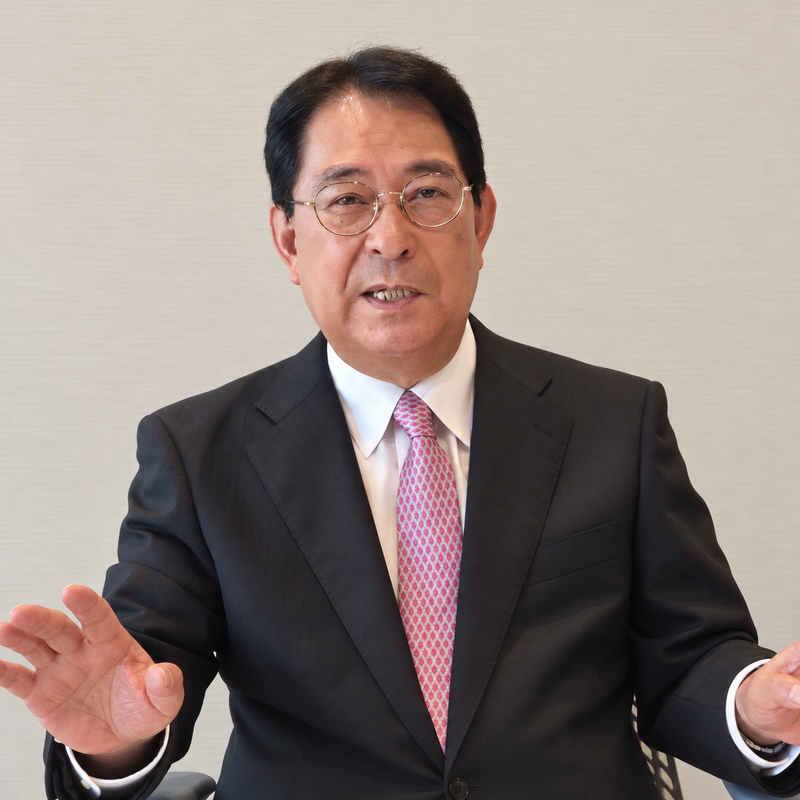
Hiroyuki Murata, president of Murata Associates (Photo) told Financial News in Marunouchi, Tokyo, Japan, on the 21st of last month that business opportunities in South Korea’s senior market had grown as the older population increased and income levels rose. However, he stressed that companies should find out what customers actually want before entering the market, saying, “There have been cases of great success in Japan, but there have also been a great many failures.”
Hiroyuki Murata, president of Murata Associates, is considered a pioneer in Japan’s senior business sector. He has analyzed the consumer behavior of middle-aged and older people and used his findings to help companies develop products and services. Notable examples include bringing the U.S. women-only fitness brand Curves to Japan and supporting the development of NTT DoCoMo’s senior-friendly mobile phone, the Raku-Raku Phone. As a specially appointed professor at Tohoku University, he has championed “smart aging”—continuing to learn and grow as one gets older. He will deliver the keynote address at the 2026 fn Senior Industry Conference in Seoul on the 12th.■ From middle-aged adults to older consumers: South Korea’s market has changedMurata compared the present with around 2005, when his book “Senior Business” was translated and published in South Korea. Interest was high then, with repeated requests for lectures and media interviews, but it did not last. He recalled, “People I met in South Korea told me, ‘Older people in Korea have no money.’” The baby-boom generations in South Korea and Japan were also reaching retirement at different times. In Japan, the Dankai generation, born between 1947 and 1949, was approaching retirement, while South Korea’s first baby-boom generation, born between 1955 and 1963, was still middle-aged in 2005, at 42 to 50 years old.
Now South Korea’s baby boomers, too, are entering old age. They will be 63 to 71 years old this year. The older population has also grown. According to Statistics Korea’s “2025 Statistics on the Aged,” the share of South Korea’s population aged 65 or older rose from 9.0% in 2005 to 20.3% in 2025. Murata said that, combined with rising income levels, these demographic changes had created better conditions for senior businesses to grow in South Korea.
Japan’s experience, however, shows that businesses should not expect consumer spending to rise simply because the older population is growing. Murata said that seniors’ spending power in Japan was under pressure as the country shifted from deflation to inflation and the yen weakened.
Having substantial assets does not necessarily mean having money to spare for spending. Unlike assets, cash income available to spend each month is limited. Rather than assuming that people with assets will buy expensive products, businesses should consider whether customers feel those products offer value for their price, he explained.
Differences in lifestyle matter just as much as financial means. Even people of the same age want different products depending on whether they are still working or retired, caring for a parent or living alone. He stressed that businesses should look for opportunities in the anxieties, dissatisfaction and inconveniences arising from changes in people’s physical condition, family relationships and lifestyles, rather than grouping customers by age.■ 30-minute workouts and everyday discounts: Give customers a reason to chooseMurata identified health, money and preventing isolation as key concerns for older people. In health, he cited the U.S. women-only fitness brand Curves, which he helped bring to Japan. It is not a facility exclusively for seniors, but it has been well received by middle-aged and older women in Japan.
He said that middle-aged and older women exercise to remain independent in old age. Women who have struggled while caring for elderly parents, he explained, do not want to place the same burden on their own children. Murata said, “Children have their own lives,” and highlighted the desire to live independently rather than rely on one’s children.
Curves reduced the barriers middle-aged and older women felt when using fitness facilities. He explained, “A regular gym visit can take around two hours, but at Curves, you’re done in 30 minutes,” adding, “You can do cardio and strength training together.” He also cited its convenient location near home and the fact that, when the business was introduced in Japan, its fees were lower than those of regular gyms.
In women-only spaces, customers could work out without worrying about men watching them and chat comfortably with one another. He said this approach suited middle-aged and older women in Japan. He added that after the business launched in Japan in 2005, growing demand driven by an aging population went hand in hand with the expansion of its locations.
In finance, he said businesses need ways to attract customers beyond interest rates. Inflation is now changing how older people in Japan manage their financial assets as well. When deposit rates fail to keep pace with rising prices, money loses value in real terms, prompting some older Japanese people to shift their assets from deposits to stocks. Murata introduced SBI Shinsei Bank’s “Bright 60,” saying, “It’s difficult to stand out on interest rates alone, because many banks offer similar rates.”
It is a membership service that customers aged 60 or older who hold an account can join for free. They can sign up without having to meet any separate high-asset requirement, and receive benefits such as preferential deposit rates and fees based on the top customer tier, as well as offers from partner companies for travel, accommodation and health checkups. According to the bank, the service had more than 190,000 users as of September 27.
Murata said it would be difficult for competing banks to copy the service quickly because building a network of partner companies and assembling a variety of benefits takes time. Asked whether the arrangement also benefits the bank, he explained how the partnerships work: partner companies offer discounts in exchange for the opportunity to promote their products and services to bank members, while the bank focuses on its core business of finance.■ Parents struggling with smartphones: Connecting families through the familiar TVFor preventing isolation, he cited “Chikaku,” a video-calling service that helps parents and children who live apart communicate. The service is provided by Japanese startup Chikaku in partnership with NTT DoCoMo.
Murata noted that older people who use smartphones may find them harder to operate as they age. They may stop using them if their cognitive, visual or hearing abilities decline, or if handling the device becomes difficult. Even when children contact their parents by regular phone, it can be hard to assess their physical condition.
Chikaku makes use of the TV, which parents are familiar with. Children use a smartphone and parents use a TV to see each other and talk. Murata explained, “You can use a TV easily without using a computer or smartphone.” He stressed that parents can stay in touch with their families without having to learn how to use a new device.
He also described a case in which a daughter noticed something unusual in her mother’s movements on video and advised her to see a doctor. The mother had complained of back pain over the phone, but her daughter could not tell how she was doing. Later, while watching video, the daughter noticed that her mother’s right foot moved abnormally when she stepped forward. The mother was diagnosed with spinal stenosis at the hospital.
However, he did not believe AI could take on the role of family members. Citing “AI daughters” that some companies are envisioning, Murata said businesses should distinguish the savings in labor costs from what parents actually want. Parents may want to communicate with their own children, rather than talk to AI, he explained.
He advised companies to first find out what actual users want when bringing a business to South Korea. Citing Curves, Murata explained that the customer base for the same service can differ from country to country. In Japan, the brand is particularly popular with older women, while its users in South Korea tend to be younger. The Curves Japan website also says that people in their 50s and 60s make up the largest user group.
He stressed, “Even if a product or service is already well made, you need to consider whether it suits customers in South Korea,” adding, “You shouldn’t assume you can simply import good products from Japan.”
[email protected] Seo Hye-jin Reporter