Financial Markets Bet on U.S. Economic Slowdown ... Is AI the Culprit(?)
- Input
- 2026-11-01 04:43:55
- Updated
- 2026-11-01 04:43:55
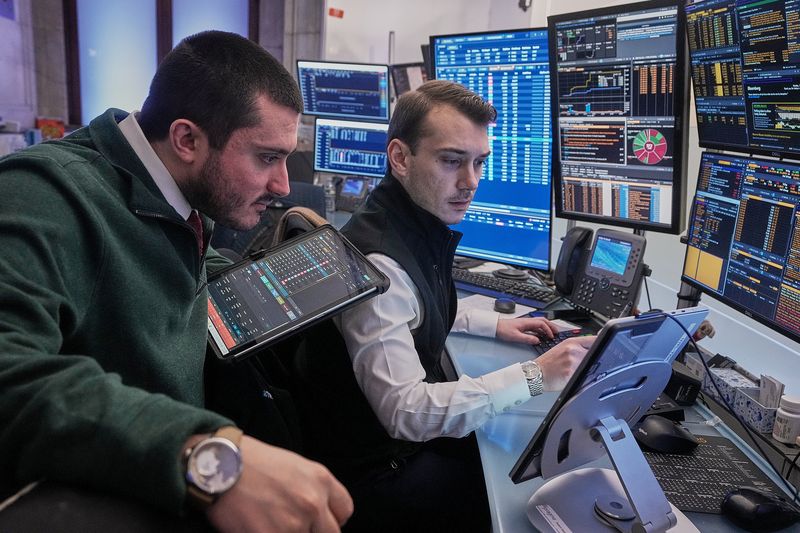
Investors have begun betting on slower U.S. economic growth. Concerns about the artificial intelligence (AI) theme have led to expectations of slower U.S. growth.
The Financial Times (FT) reported on the 31st of last month (local time) that financial markets are forecasting slower growth despite stronger-than-expected U.S. gross domestic product (GDP) growth. The U.S. GDP growth rate for the third quarter, announced on the 29th by the Bureau of Economic Analysis (BEA) under the United States Department of Commerce, came in at 3.4%, above the market forecast of 3.2%, but financial markets’ outlook for U.S. growth is weakening.
AI earnings shock pulls the trigger
Third-quarter earnings announcements from AI-related stocks pulled that trigger.
Quarterly free cash flow (FCF) at Meta Platforms, Alphabet, and Amazon turned negative. Alphabet’s quarterly FCF has been negative only once before since its 2004 listing. Intel also poured cold water on semiconductor stocks with a disappointing quarterly earnings outlook.
As stock markets plunged, led by technology shares, investors began turning back to bonds, a safe-haven asset. Some see this as a temporary phenomenon, while others believe a more fundamental shift is beginning.
Money Moves from Stocks to Bonds
Indicators of financial markets’ growth outlook have shifted direction over the past two weeks. The yield on 10-year U.S. Treasuries, adjusted for inflation, fell to 2.58% last week, its lowest level since early September. Yields on five- and 30-year Treasuries also fell by similar amounts, reaching their respective lows since September. A months-long selloff in Treasuries has turned into buying.
Treasury yields, which move inversely to prices, fall when slower growth is expected because investors sell stocks and move into bonds. The same pattern is repeating, with investors selling stocks heavily last week. Though less pronounced than this summer’s trend, it means investors are rushing to buy Treasuries to diversify their exposure to AI-related risks.
Bill Campbell, a portfolio manager at DoubleLine, said, “Markets had been betting on strong growth amid AI and expectations of easing tensions in the Middle East, but are now reassessing some of those growth projections.”
Priya Misra, a portfolio manager at J.P. Morgan Asset Management, noted, “There is no economic data showing slower growth, but the market is forward-looking,” adding, “A reassessment of AI means a reassessment of the growth outlook.”
Overreliance on AI Spending
Economists have criticized the U.S. economy for becoming overly reliant on the AI boom.
Vincent Reinhart, chief economist at BNY Investments, said, “The components of growth are cause for concern,” adding, “There is too much reliance on technology spending. This is a global phenomenon, not just a U.S. one.” He added, “It’s not only technology skeptics who are concerned.”
Some are concerned that the AI boom is overheating the economy and that its cooling could trigger a recession.
Robert Sorkin, chief U.S. economist at PGIM, called it a “so-called fat-tail environment,” warning that “economies that become this overheated often end in recession.”
He said PGIM had put the probability of a recession at 10% at the start of the year and raised it to 20% a month ago, adding, “Given the trend over the past few weeks ... it has probably risen to 25% now.”
Slowing Growth May Be a Kind of Illusion
However, some say the slowdown may be a kind of illusion.
Jason Granet, BNY’s chief investment officer (CIO), noted that growth is generally measured year over year, and that base effects could create the illusion of relatively slower growth this year because macroeconomic indicators and related spending surged abnormally amid last year’s AI boom. He stressed, “The growth-rate figures may appear to have slowed,” but “that alone cannot be taken as a sign that the economy’s underlying condition has become more fragile.”
[email protected] Song Kyung-jae Reporter