Giving up on Vietnam’s university entrance exams in 10th grade to prepare for Korean universities... “Wearing a Korea University varsity jacket is my lifelong dream” [On-the-Ground Report]
- Input
- 2026-11-01 08:00:00
- Updated
- 2026-11-01 08:00:00
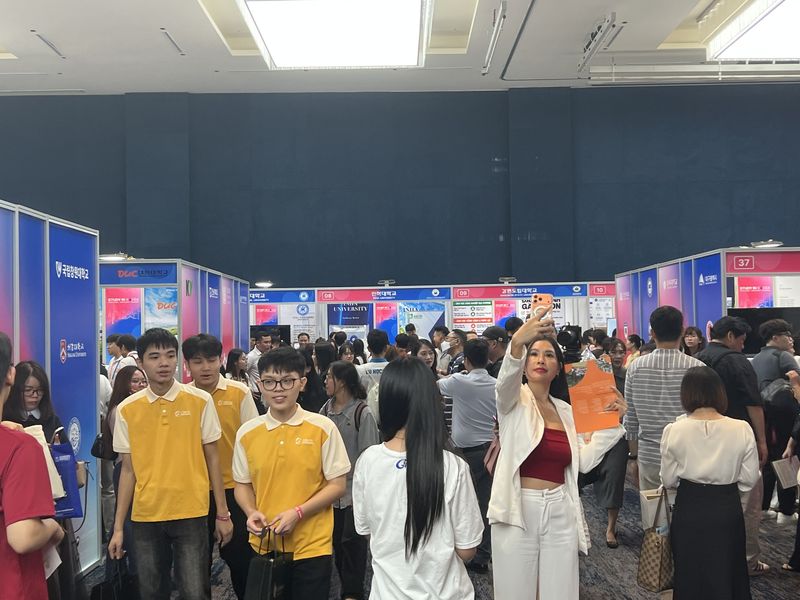
Lin said, “Before attending, I had already made a list of the five universities I wanted to visit.” She added, “A university’s name recognition matters, but I’m focusing on things like a well-structured academic curriculum and international opportunities such as exchange programs in the United States and Japan.” Yoon Ji-seong, a section chief at Kyung Hee University’s Institute of International Education, said, “Because students came thoroughly prepared, they asked questions that went beyond basic admissions information and delved into each school’s distinctive features and international programs.”
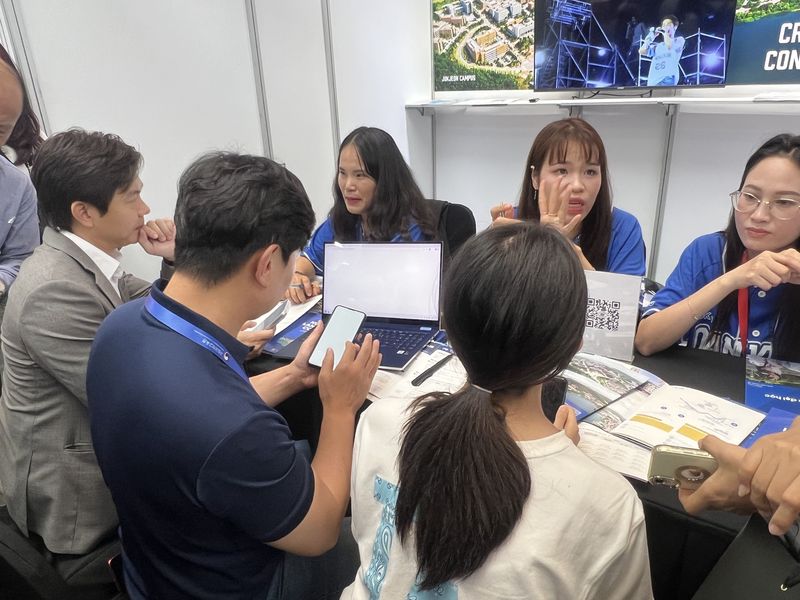
In a clear sign that students are starting to study abroad at a younger age, the fair saw a noticeable increase in 10th- and 11th-grade high school students accompanied by their parents, unlike in the past, when groups led by study-abroad agencies made up the bulk of attendees.
A parent, Ms. Ran, said, “I’m looking at universities with strong law and psychology programs for my daughter, who has long wanted to study in Korea, ever since middle school. My niece chose to study in Korea instead of attending a prestigious Vietnamese university and was very pleased, saying that ‘campus life broadened her horizons.’ That led me to decide to actively support my daughter’s dream.”
Another parent, Ms. Jjang, said, “I believe my child can grow into a global talent in Korea, which offers not only geographic proximity and excellent public safety, but also strengths in semiconductors and AI and cultural influence, including producing Nobel Prize in Literature laureates.” Her daughter, Chau Anh, is enrolled in the Korean-language class at the Hanoi University of Foreign Languages-affiliated High School for the Gifted. Chau Anh mentioned that “more than 25% of students in the Korean-language class aim to attend a Korean university.” Having already earned Level 6 on the Test of Proficiency in Korean (TOPIK) and aiming to attend Korea University, Chau Anh said, “My dream is to ride the Seoul subway wearing a Korea University department varsity jacket.”
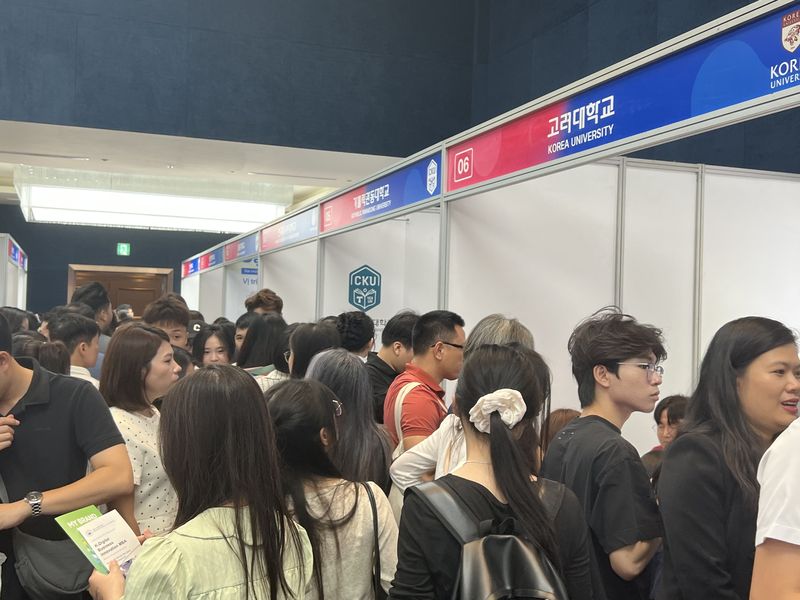
Mr. Song, who runs a study-abroad agency in Vietnam, said, “A degree from a Korean university is now a credential that gives graduates a competitive edge not only in Korea and Vietnam but also when they move to a third country.” He explained, “The Korean Wave used to be a major influence, but these days most students start preparing in earnest from 10th grade to pursue clear career goals.”
He added, “Admissions strategies are diversifying, with students opting to skip language-training programs and go straight into undergraduate programs, or preferring international studies programs where all classes are taught in English. The majors they apply to are also expanding beyond Korean language and literature and media to include a wider range of fields such as engineering and design.”
Universities have stepped up their competition to attract students in response to this trend. Jo Hong-seon, administrative office chief at Kunsan National University’s Institute of International Education, said, “We plan to make a more active effort to increase the number of Vietnamese students, which currently stands at around 57. We are also building a locally tailored support system in earnest, including by directly hiring Vietnamese administrative staff.” An official at Pusan National University likewise said, “Until last year, the preference for universities in Seoul was overwhelming, but as Busan’s competitiveness as a city has come into focus recently, interest in and inquiries about Pusan National University have also been increasing. Vietnamese students now rank seventh among all international undergraduates and second among graduate students, and their share is growing rapidly.”
Seoul National University has also made a concerted effort to attract Vietnamese talent. Yoo Su-im, an official with Seoul National University’s International Cooperation Support Division, said, “At the fair, students actively asked about the proportion of classes taught in English and popular majors such as business administration and communication.” She predicted, “With scholarship programs for talent from developing countries well established, the number of Vietnamese students is likely to continue rising steadily.”
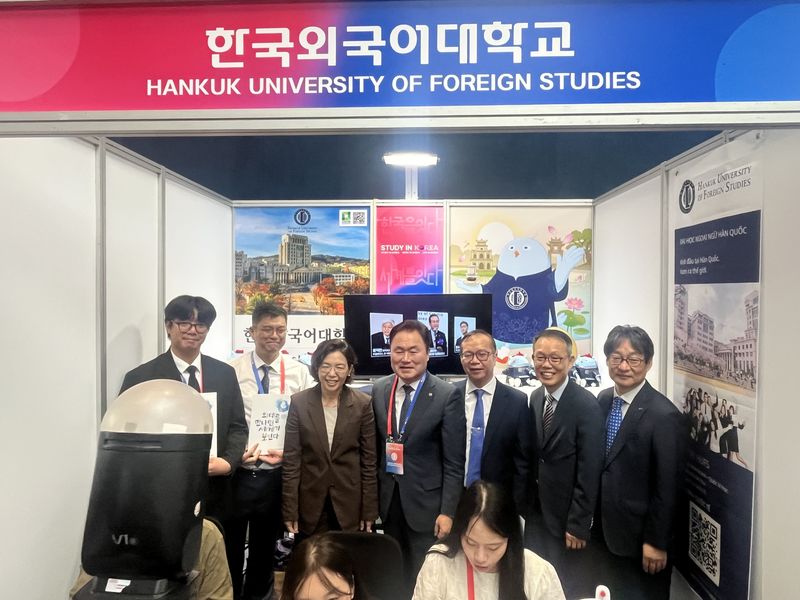
University leaders also made personal visits to the fair, showing particular interest in attracting Vietnamese students. They included Hankuk University of Foreign Studies President Kang Ki-hoon and The Catholic University of Korea President Choi Jun-gyu.
As part of his strategy to attract Vietnamese students, Hankuk University of Foreign Studies President Kang Ki-hoon highlighted the university’s strengths in 45 languages and area studies. He outlined a plan to “support employment at global companies such as ASML and TSMC through interdisciplinary education combining engineering fields like AI and semiconductors with foreign languages, and to nurture global bio-business talent at the Songdo campus opening next year.” He added, “Beyond increasing the number of international students, we will further strengthen the quality and competitiveness of our education,” and said, “We will actively support them throughout the entire process, from their studies to finding jobs and settling in Korea.”
President Kang identified Vietnam as a key strategic region for HUFS and plans to accelerate exchange and cooperation with leading local universities, using the HUFS International Institute for Strategic Studies (HIIS), which the university is seeking to establish early next year, as a springboard. The university plans to pursue “2+2” programs with institutions including the Vietnam Academy of Diplomacy, the University of Languages and International Studies at Vietnam National University, Hanoi, and the University of Social Sciences and Humanities at Vietnam National University, Ho Chi Minh City, aiming to serve as a bridge between the two countries.
President Kang said, “I want to recruit talented Vietnamese students and help them become people who play an important role in Korea-Vietnam relations.” He added, “HUFS will further develop the exchanges and cooperation between Korea and Vietnam that it has fostered over the years, and fulfill its role as a bridge between the two countries more wholeheartedly than any other university.”
Meanwhile, alongside the study-abroad fair, the employment hall hosted career and job counseling booths run by Korean companies operating in Vietnam, giving students a chance to explore career paths and job opportunities after studying in Korea. It also held a special lecture on finding employment in Korea. The embassy held a briefing on study visas as well.
Kim Hyun-dong, director of the Hanoi Korean Education Center, said, “We will ensure the fair is substantive, so that it gives students an opportunity for growth and career planning and serves as a chance for universities in both countries to foster outstanding talent and expand educational cooperation on an ongoing basis.”
[email protected] Kim Jun-seok Reporter