21 Months Become a Time for “Real Growth,” Not an Obligation or a Pause, as Young People Tune In to the World
- Input
- 2026-11-01 10:11:14
- Updated
- 2026-11-01 10:11:14
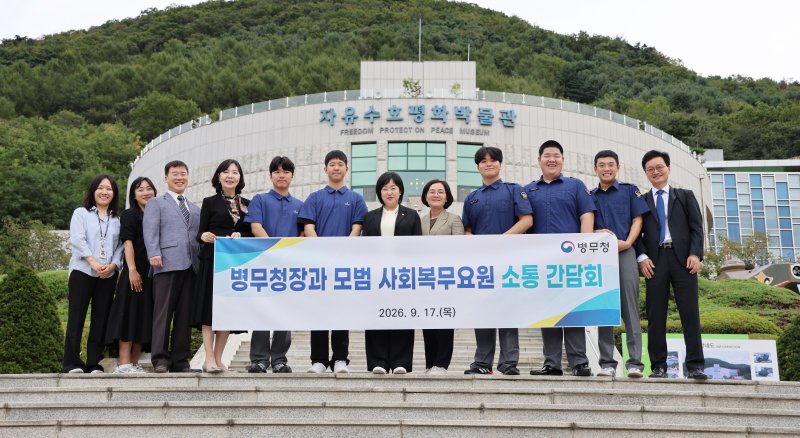
According to the MMA on the 1st, the “program for assigning personnel to service institutions related to their majors,” introduced in 2020, is transforming military service into “a time when social contribution and personal growth coexist” by combining it with big data on young people’s occupational preference profiles.
The program reflects an innovative approach that minimizes the time needed to adjust to the workplace and maximizes service expertise by matching personnel with institutions based on their majors and aptitudes. Its central aim is to improve the quality of social services nationwide while giving individuals the opportunity to apply their majors directly in practice during their service.
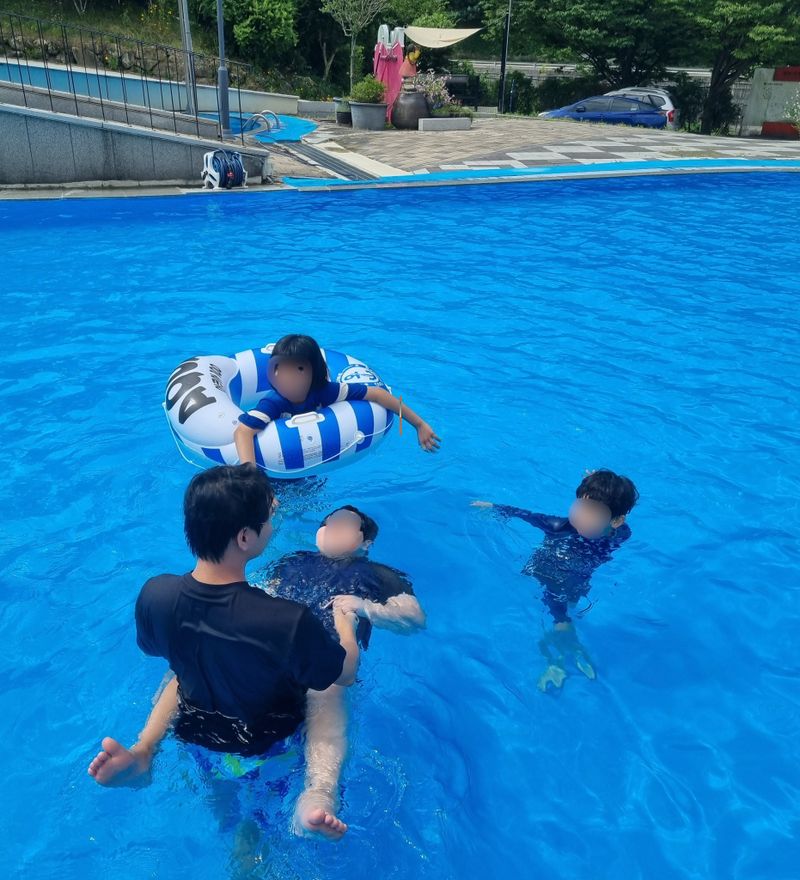
According to the MMA’s matching guidelines for each field, △ in “welfare” (social welfare facilities), personnel who majored in areas such as social welfare, aging, children, disability and rehabilitation are placed, with the “Social” occupational preference type matched to the field. △ The “education” field (education offices, special-needs schools, etc.), favored by young people, mainly takes in graduates who majored in education, elementary and secondary education, or special education, and is linked to “Social” and “Artistic” aptitudes.
In addition, △ the “public health” field (public health centers, quarantine stations, etc.) is matched with personnel who majored in public health, quarantine or life sciences, while △ the “medical care” field (hospitals, regional public medical centers, etc.) is linked to majors in medicine, dentistry, Korean medicine, pharmaceuticals (pharmacy) and nursing, drawing on “Social,” “Enterprising” and “Conventional” aptitudes. Other matches include △ culture with majors in culture, museum studies and archaeology; △ environment with majors in environmental studies, green space, landscape architecture and forestry; and △ safety with majors in firefighting, disaster prevention, disaster management, transportation and policing. Placements are matched to both majors and occupational preference types.
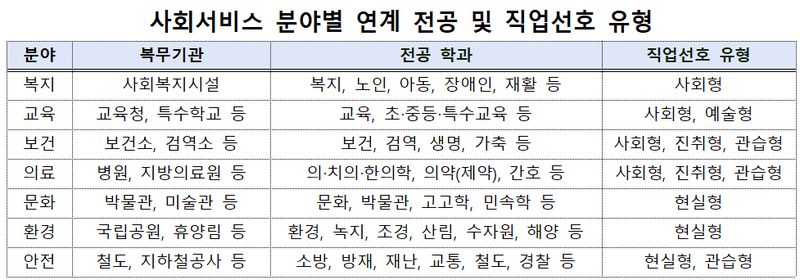
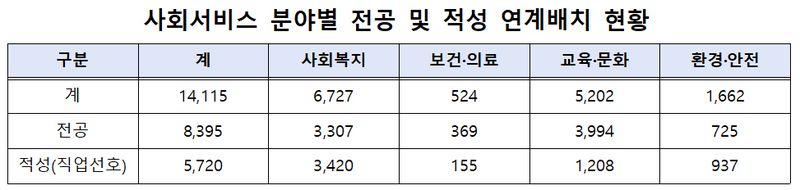
The story of Kim Min-su, a social service worker serving in a special-needs class at Namwon Noam Elementary School after choosing it in line with his “Social” result on an occupational preference test, is also deeply moving. Early in his service, when a child suddenly ran out through the school gate, Kim instinctively chased after the child, thinking the behavior was dangerous. He gained a profound insight from the homeroom teacher’s advice: “Some children need you to go up close and soothe them, while for others, watching from a distance is what really helps.” Afterward, Kim quietly waited by the school gate for the child to move at their own pace. He said, “It was a shining moment that taught me, in life, the precious value that even helping requires a distance suited to the other person’s pace.”■ Major- and aptitude-based matches surpass 14,000; satisfaction ratings of 9 or higher out of 10The policy achievements of the program linking service placements to majors are also borne out by the data. Since the program began, a total of 8,395 people have been assigned to placements related to their majors. Education and culture (3,994 people) and social welfare (3,307 people) account for a large share, supporting the conclusion that the program has taken hold successfully. In addition, at least 5,720 personnel have benefited from tailored matches through big-data matching based on aptitude (occupational preference), introduced last year. The cumulative total of matches stands at 14,115.
In a detailed satisfaction survey conducted by the MMA among personnel assigned to placements linked to their majors and aptitudes, as well as staff at those service institutions, the “alignment between major and work” category received an exceptionally high score of 9 or higher out of 10, demonstrating the tangible impact experienced in the field. This suggests that both social service personnel and their service institutions are seeing positive effects from the program.
The MMA plans to continue improving the program’s effectiveness by further strengthening the links between social service personnel’s duties and their majors, and by ensuring that their service experience can serve as a stepping stone to a successful transition into society.
[email protected] Lee Jong-yoon Reporter