“I invested 100 million won, but 26 million vanished even after the index recovered” ... The trap in ‘this’ that retail investors flocked to [Money Signal]
- Input
- 2026-10-31 17:00:00
- Updated
- 2026-10-31 17:00:00
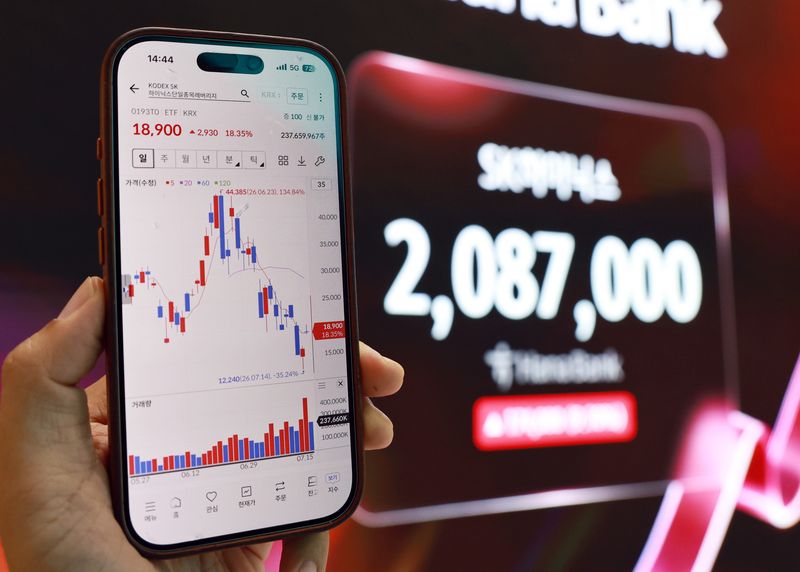
[Financial News] 100 million won, saved by setting aside part of each paycheck and scrimping. For some, it is savings embodying a decade of hard work; for others, it is their child’s college tuition and the last lifeline to count on in retirement.
Suppose you put this hard-earned money into the stock market and lost 30%. Your 100 million won would shrink to 70 million in an instant. It would be agonizing, but you would not yet give up hope, believing that if the stock market rebounded to its original level (its previous high), your principal would recover, too.
But then something so unreal happens that it makes you doubt the numbers on the ticker. Even though the stock index has fully recovered to its pre-drop level, your account still shows a huge loss of more than 25 million won.
How on earth can this happen? The answer lies in the structural trap of leveraged exchange-traded funds (ETFs), which individual investors have recently been rushing into like moths to a flame in hopes of recouping their losses.
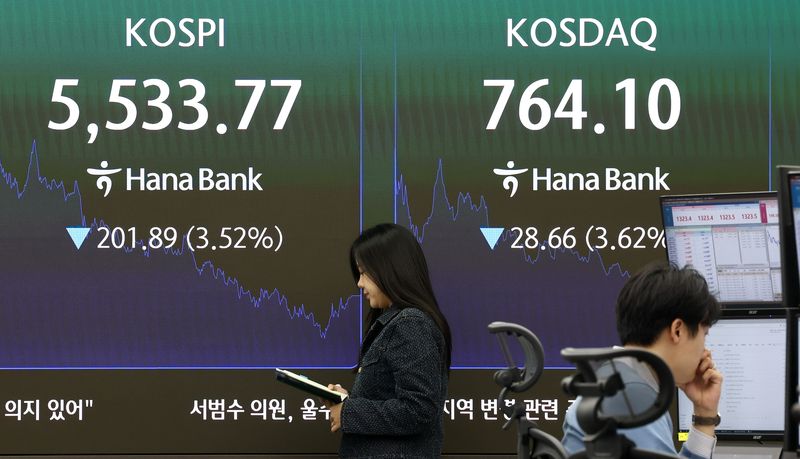
According to the financial investment industry on the 31st, individual investors’ net ETF purchases totaled about 5.5 trillion won in October. That was a staggering four times the amount in September. The destination for the money was clear. The ETF with the highest net purchases by individual investors was KODEX Leverage, which alone drew about 830 billion won. Combined net purchases of leveraged ETFs betting 2x on a rebound in the KOSPI and KOSDAQ came close to 1.8 trillion won. As stock prices plunged, risky bets piled up as investors sought to recover their losses in one fell swoop by using even higher leverage.
But leveraged ETFs have a painful trap hidden in them. What these products track is not ‘cumulative returns over the long term’ but strictly ‘the returns from one day to the next.’
Let’s examine the danger of ‘volatility drag’ with some concrete numbers. An investor puts 100 million won into a daily 2x leveraged product. If the market plunges 30% on the first day, the 2x leveraged product theoretically falls 60, cutting the 100 million won to 40 million.
Now suppose the index surges about 42.86% the next day. It makes up all of the first day’s loss (-30%) and returns exactly to its starting point (100). Should the leveraged investor’s account then be worth 100 million won, too? No. The 2x leveraged product rises by 85.72%—twice the index’s gain—based on the 40 million won left over from the previous day. Even after adding an 85.72% gain to 40 million won, the account is worth only about 74.29 million won.
The market has returned perfectly to where it started, but an investor in a 2x leveraged product has effectively watched 25.7% of their principal (about 25.71 million won) vanish into thin air while sitting still. The more stock prices swing up and down, the more ‘compounding’s revenge’ eats away at your principal day after day.

U.S. financial authorities have also continued to warn about this risk. In a notice, the U.S. Securities and Exchange Commission (SEC) pointed out that “the longer the investment period and the greater the volatility, the more actual returns can diverge completely from a simple twofold multiple of the underlying index’s cumulative return.” It also cited a real-world case in which an index rose 2% over four months while a leveraged ETF tracking it at 2x fell 6%.
Of course, leveraged ETFs are not necessarily bad products. If the market moves strongly in one direction without falling, they can deliver overwhelming returns compared with conventional products. The problem is indiscriminately piling into 2x leverage out of impatience to recoup losses during extreme roller-coaster conditions like those in the KOSPI in October, when it rises 3% one day and plunges 3% the next.
When your principal is cut in half, you need a 100% return—not 50%—to get it back. If you double your investment risk to recover lost money and get out of sync with the market one more time, your account will be left permanently unable to recover.
The stock market can attempt a V-shaped rebound at any time. But there is no guarantee that your account will recover along with it. On the last day of October, what individual investors making indiscriminate leveraged bets should remember is not the ‘multiple’ of their expected returns, but the ‘amount of loss they can afford to bear’ to protect their family’s livelihood in a market crash.
[email protected] Jeon Sang-il Reporter