“My stomach had been hurting for three years...” ... 18-cm “stone baby” found inside 42-year-old woman [Warning Signs]
- Input
- 2026-10-31 16:00:00
- Updated
- 2026-10-31 16:00:00
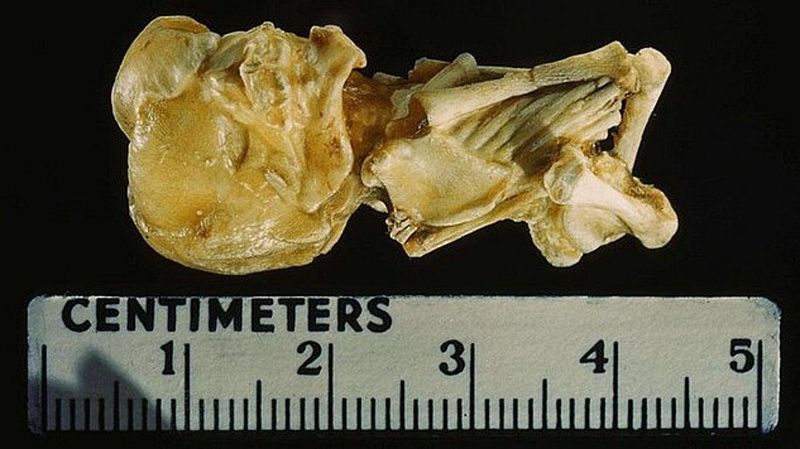
[Financial News] A 42-year-old woman had been suffering from unexplained abdominal pain for three years. Shockingly, the identity of the huge 18-cm mass pressing on her abdomen was a “fetus” that had hardened like stone. It was an extremely rare medical mystery: a fetus that implanted outside the uterus, in the abdominal cavity, died and then calcified like a fossil inside the mother.
The international journal International Medical Case Reports Journal recently reported a remarkable surgical case involving a 42-year-old woman living in Somaliland. Three years earlier, she had experienced pregnancy symptoms and distinct fetal movements. But at some point, the baby stopped moving, and her growing belly suddenly receded. After going untreated for three years because of poor medical conditions, she finally went to the hospital when she felt a dull pain pressing on her lower abdomen and a heavy mass.
What confounded the medical team were the test results. Her human chorionic gonadotropin (hCG) level was negative, and an ultrasound showed that her uterus was empty. But the abdominal computed tomography (CT) scan revealed an unbelievable sight: a huge mass measuring 18 cm in her abdominal cavity, with a human skull, spine and ribs fully hardened inside it.
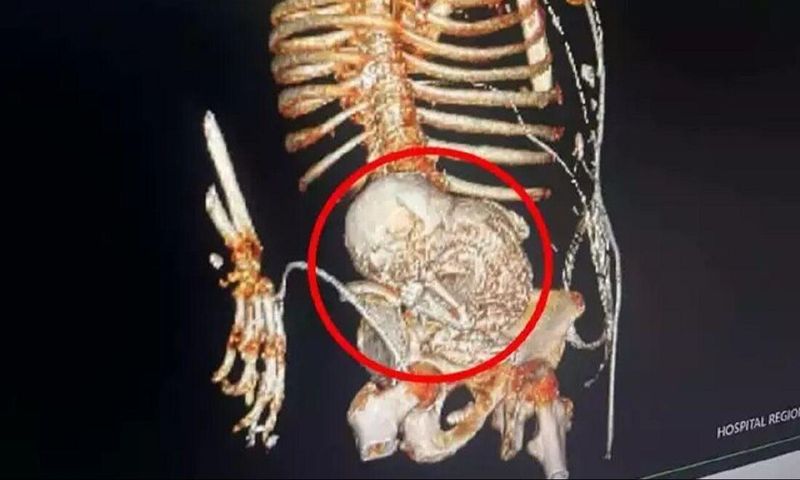
The diagnosis was “lithopedion” (Lithopedion), also known as a “stone baby,” a condition spoken of almost like legend in the medical community. It occurs when a fetus dies during an abdominal pregnancy and, because it is too large to be absorbed by the mother’s body, is left in place. The mother’s immune system recognizes the dead fetus as a foreign body and coats it in calcium to prevent infection, hardening it like stone in a bizarre defensive response. Only around 300 cases have been reported in medical literature over the past 400 years.
Under general anesthesia, the medical team removed the 18-cm calcified fetus, which was adhered to the peritoneum at the back of the pelvis, through open surgery. There was no damage to surrounding organs, and the woman was completely free of the terrible abdominal pain that had plagued her for three years. The researchers warned that anyone with a history of pregnancy loss who can feel an abnormal abdominal mass should immediately undergo a thorough gynecological examination to check for complications of ectopic pregnancy.
[email protected] Jeon Sang-il Reporter