U.S. Lifts Entry Denial for Rep. Jin Sung-joon; Embassy in Korea Belatedly Issues Visa
- Input
- 2026-10-31 10:14:50
- Updated
- 2026-10-31 10:14:50
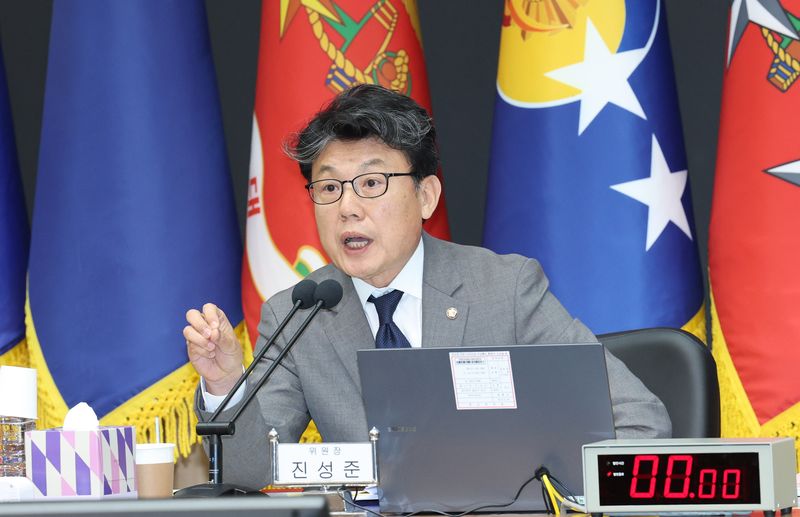
Chairman Jin said earlier that morning, “I just received an entry visa from the U.S. Embassy in the Republic of Korea.” He added, “I am glad that the U.S. State Department has, belatedly, issued an official visa (A-2) to the chair of the National Defense Committee of the National Assembly of the Republic of Korea.”
He also said, “I will depart as scheduled, hold thorough discussions with the U.S. military’s top brass, including the commander of U.S. Pacific Command, on strengthening security cooperation between our two countries and ways to develop our forward-looking alliance, with the national interests of the Republic of Korea at the center, and return.”
Earlier, Foreign Minister Cho Hyun said he would ask the U.S. side to take corrective action over the refusal to issue a U.S. visa to Chairman Jin. On the morning of the 29th, before departing for the United States to attend the Group of 20 (G20) Foreign Ministers’ Meeting, Minister Cho told reporters at Incheon International Airport, in response to a question about the U.S. visa denial for Rep. Jin, that it was “undesirable” and that he “intend[ed] to request the U.S. side to issue the visa swiftly.”
On the 30th, local time, Minister Cho visited Atlanta, Georgia, and met with U.S. Secretary of State Marco Rubio.
Minister Cho also recently pledged during a parliamentary audit by the National Assembly’s Foreign Affairs and Unification Committee to send the U.S. side a letter protesting the denial of a U.S. visa to former party leader Jung.
The reasons why U.S. visa issuance was put on hold for former party leader Jung and Chairman Jin have not been clearly disclosed.
Jung’s record of activities such as occupying the U.S. Embassy in his youth became an obstacle, while recent remarks by Chairman Jin criticizing General Xavier T. Brunson, commander of U.S. Forces Korea, and other comments appear to have been an issue.
The possibility was raised that Chairman Jin’s record of being sentenced in 1991 to three years in prison and three years’ suspension of qualifications for violating the National Security Act may have influenced the decision. The U.S. side reportedly asked Chairman Jin to submit the court ruling from that case. His side is said to have submitted the documents.
With his visa issued, Chairman Jin is scheduled to join the National Defense Committee delegation to the United States and visit U.S. Pacific Command from November 1 to 5.
The delegation is composed of Chairman Jin, who will lead it; Rep. Kim Byung-joo, the Democratic Party’s committee secretary; Rep. Lim Jong-deuk, the People Power Party’s committee secretary; and Rep. Chun Ha-ram of the Reform Party. The delegation has also finalized meetings with key figures, including U.S. Navy Admiral Samuel Paparo, commander of U.S. Pacific Command.
[email protected] Kim Kyung-soo Reporter