“Excellent homegrown Seed technology moves from the lab to industry” ... Fast-track technology commercialization gets underway
- Input
- 2026-10-31 08:46:24
- Updated
- 2026-10-31 08:46:24
In Korea, support linking research and development (R&D) with efforts to bring basic research results into industry is also gaining momentum. One example is the Next-Generation Promising Seed Technology Commercialization Fast Track Project, led by the Ministry of Science and ICT, the National Research Foundation of Korea (NRF), and the Korea Institute for Science and Technology Commercialization. The project aims to rapidly advance outstanding research results generated through basic research under the leadership of researchers, develop them to a level that companies can use, and connect them to technology transfers and commercialization.
Particular attention is being paid to the “intra-ministerial relay” approach. The Fast Track Project links the NRF, which supports basic and original research, with the Korea Institute for Science and Technology Commercialization, which supports commercialization-focused research, to support follow-up technology development and commercialization of outstanding research results. A key feature is the support system it has established to help research results move beyond papers and patents, cross the “Death Valley” of the technology commercialization process, and reach industry.
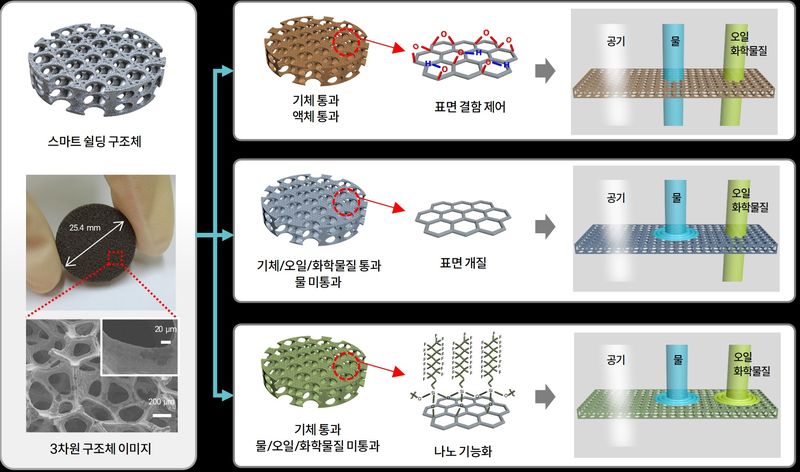
One notable example of the project’s achievements is “technology for commercializing Smart Shield products.” Developed to overcome the limitations of existing Gore-Tex-type materials, this homegrown foundational technology selectively allows gases to pass through while controlling the passage of specific substances—such as water, oil, and chemicals—in accordance with the needs of each industry. Designed to maintain its protective function even in environments where it is exposed to external impacts or cracks, the highly durable technology is attracting attention for its potential applications across a wide range of industries.
Professor Joo Sang-hyun of Kyonggi University, who leads the project, said, “This technology can be applied across a range of industries, including as protective coatings for semiconductors and precision electronic devices; protective and filter materials for electric vehicle batteries and energy storage systems (ESS); and waterproof, moisture-resistant materials for LED lighting and optical devices. In particular, it is significant that a single Seed-based foundational technology has been expanded to meet the performance requirements of different industries and developed into a core enabling technology that can be used across multiple advanced industries.”
He added, “Until now, basic research results have been evaluated mainly on the basis of papers and patents. This case is significant because it shows that foundational technology can lead to actual products and revenue generation. We will continue to expand technology commercialization so that outstanding basic research results do not remain in the lab but create tangible value in industry.”
This achievement shows that homegrown foundational technology stemming from basic research can be extended to a range of industries and lead to tangible commercial outcomes. The practical application of outstanding homegrown foundational technologies is expected to expand through the Fast Track Project, contributing to stronger technological competitiveness in Korea’s advanced industries.
[email protected] Kim Kyung-soo Reporter