“If you’re young, are you not allowed to sit?”... I tried sitting in a subway priority seat for an hour [Recorder of the Low Places]
- Input
- 2026-11-01 06:00:00
- Updated
- 2026-11-01 06:00:00
There have been a series of cases in which people sitting in subway priority seats have been told to give up their seats or subjected to verbal abuse. People whose health conditions are not readily apparent, such as patients recovering from surgery and people with internal disabilities, can also use priority seats, but some passengers still view them as seats reserved for older people. The reporter sat in a subway priority seat for an hour to see how passengers responded and looked into consideration programs for people with mobility needs in South Korea and abroad. <Editor's note>
[Financial News]“Not everyone is healthy just because they’re young. You can’t tell from the outside whether someone is ill.”A woman in her 60s, identified as A, whom the reporter met on Seoul Subway Line 7 on the 28th, said this about a recent case in which a woman who had undergone surgery was assaulted by an older woman after sitting in a priority seat. She said, “Someone may be sitting because they’re unwell. You shouldn’t tell them to get up just because of their age.”
Recent conflicts over subway priority seats have also raised concerns about awareness of disabilities and illnesses that are not apparent from the outside.Priority seats are for older people as well as people with disabilities, pregnant women, and those temporarily having difficulty getting around.However, some people are still asked to give up their seats because they appear healthy.
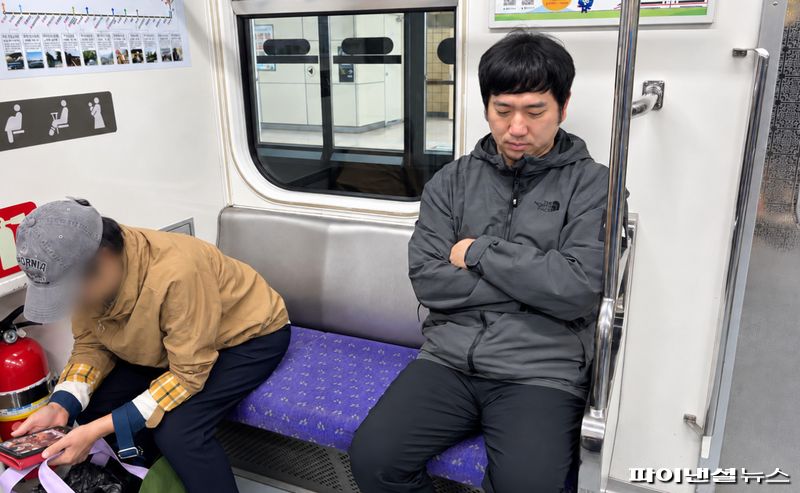
That day, the reporter sat in a priority seat on Seoul Subway Line 7 for about an hour to observe passengers’ reactions. The aim was to see what might happen when an adult man who is 177 cm tall and weighs 90 kg sits in a priority seat.
During the trial, no one asked the reporter to give up the seat. No passengers picked a fight or spoke directly to the reporter. However, since the trial lasted only an hour on one particular line, it is difficult to conclude that the same thing would happen at other times or on other lines.
Assaulted after sitting following surgery... Who are priority seats for?
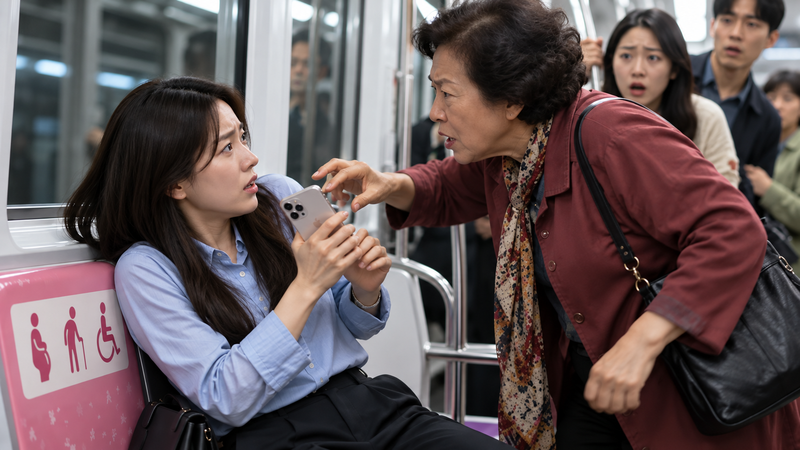
A case recently came to light in which a woman returning home after surgery alleged that an older woman verbally abused and assaulted her after she sat in a priority seat on Seoul Subway Line 2.
According to an account that surfaced on social media on the 27th, a woman identified as B boarded a train bound for Jamsilsaenae Station on Seoul Subway Line 2 after undergoing surgery.While she was sitting in a priority seat because she was feeling unwell, an older woman approached and demanded that she give it up, and an argumentbegan.
The older woman asked B whether she was elderly or pregnant, and made mocking remarks to her husband, who was sitting beside her. Bexplained that she was on her way home after surgery, but the objectionscontinued.
Video also captured the older woman hitting B in the face. When B filmed what was happening on her phone, the older woman took issue with the recording and continued verbally abusing her. Other passengers intervened, and B said she had called the police.
B said that after the incident, the pain at the surgical site worsened and she was also suffering significant emotional distress.
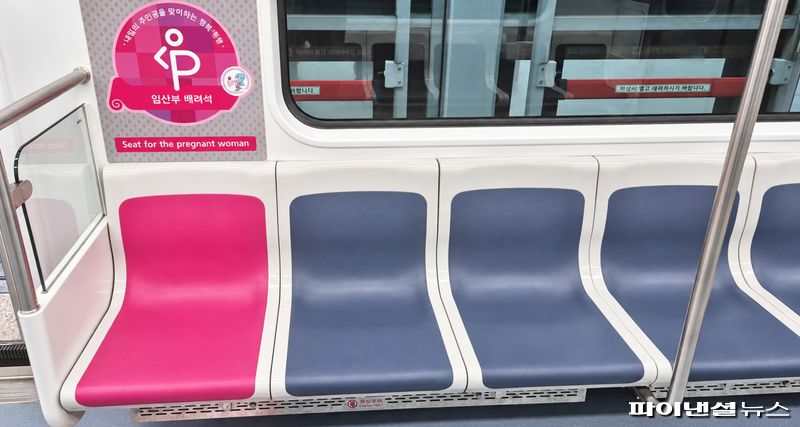
Priority seats are not just for older people. Passengers recovering from surgery or unable to stand for long because of an injury can also use them. Seoul’s subway system previously called them “seats for the elderly and infirm,” but now designates them as “priority seats.”
In this regard, people with disabilities or illnesses that are not apparent may face difficulties using priority seats. Examples include people with internal disabilities affecting organs such as the kidneys or heart, and people whose chronic illnesses make it difficult to stand for long periods. Unless they use assistive devices such as wheelchairs or crutches, it can be difficult for other passengers to notice their health conditions. The same is true of patients recovering from surgery.
“You can’t tell if they’re ill”... Older passengers see it differently
Older passengers interviewed on the subway saidit was difficult to judge the health of someone sitting in a priority seat based on appearance alone.
A man in his 70s, identified as C, said, “People tend to think seats for the elderly and infirm are for older people,” and, “If a young person is sitting there, you might wonder why.” He continued, “But that doesn’t mean it’s right to tell someone to get up no matter what or to hit them”he said, adding, “If someone says they’re sitting because they’re unwell, we should understand.”
A man in his 60s, identified as D, also said, “Someone may be unwell even if they look perfectly fine. If you need a seat, you can ask politely; it’s not something to fight over.”
Young passengers said they may feel uncomfortable having to explain their health conditions to other people. An office worker in their 30s, identified as E, said, “Wouldn’t it be difficult to explain to each person that you’ve had surgery or aren’t feeling well?” They added, “It’s wrong to tell someone to give up a seat just because they’re young.”
Some people with disabilities do not use assistive devices such as wheelchairs or crutches. In particular, when someone has an internal disability affecting organs such as the kidneys or heart, it can be difficult to tell from appearance alone that they have a health condition.
Article 2 of the current Act on the Promotion of Transportation Convenience for Mobility Disadvantaged Persons defines as people with mobility difficulties those who face challenges getting around in daily life, including people with disabilities, older people, pregnant women, people accompanied by infants or young children, and children. People recovering from surgery or unable to stand for long because of an injury may also have difficulty getting around.
Priority seats are provided for passengers who may need consideration while using public transportation. There is no general rule imposing a fine solely because a young person sits in a priority seat, and other passengers have no authority to forcibly make someone get up. Someone who hits another person while demanding that they give up a seat may be punished for assault under the Criminal Act.
Japan has the “Help Mark”... The U.S. and U.K. have their own identification systems, too
Some countries have separate identification systems for people with disabilities or illnesses that are not apparent. These let them signal to nearby passengers on subways or buses that they may need consideration.Japan’s “Help Mark”is a prominent example. Since 2012, the Tokyo Metropolitan Government has distributed a marker featuring a white cross and heart on a red background to people whose need for assistance may not be apparent, including people with internal disabilities, patients with intractable diseases, people with artificial joints, and women in early pregnancy.
The marker can be attached to a bag or other item to request consideration from nearby passengers on subways or buses. The Tokyo Metropolitan Government’s Bureau of Social Welfare says some people receive suspicious looks when they sit in priority seats because they appear healthy. As of October 2024, all of Japan’s prefectures had adopted the Help Mark.The U.K.’s “Hidden Disabilities Sunflower”program involves wearing a lanyard or carrying a card with a yellow sunflower on a green background. According to National Rail, the U.K.’s rail information service, all railway companies recognize the symbol and assist passengers who need help at stations and on trains.Seattle–Tacoma International Airport in the United States also has a sunflower-lanyard programin place. Passengers with disabilities that are not readily apparent, such as autism or chronic illnesses, can wear one, and airport staff provide necessary guidance and assistance.
Singapore has a similar system on its subways and buses. The Land Transport Authority (LTA) piloted “May I have a seat please” stickers in 2019 and expanded the program to include lanyards and cards in 2021. Passengers whose disabilities are not apparent or who are temporarily unwell use them to ask for a seat.In South Korea, the pregnancy badge used by women in early pregnancy and others is a well-known exampleof such a system. However, unlike Japan’s Help Mark or Singapore’s identification system, it does not broadly cover a range of people with mobility needs, such as those with internal disabilities or recovering from surgery.
Markers used abroad do not guarantee the right to use a particular seat, either. They are intended to let nearby passengers or transportation staff know that someone needs help, and individuals decide whether to wear them.
An hour in a priority seat... The trial ended without incident
In conflicts over priority seats, it matters not only when a seat should be offered but also how someone asks for it. Passengers who need a seat because they are having difficulty getting around can ask someone to give theirs up, but the person already seated may also need the seat for health reasons.
In particular, it can be difficult to tell from appearance alone whether someone recovering from surgery or someone with an internal disability is unwell. Consideration markers used in Japan and Singapore, among other places, are designed to let people ask for help without having to explain their circumstances to everyone. But on a subway, you cannot know another person’s health condition, so care is needed to avoid unnecessary misunderstandings or arguments when asking for a seat.
A woman in her 60s, A, whom the reporter met earlier, said, “People can be unwell even when they’re young,”“If someone says they’re unwell, you should believe them; you shouldn’t simply tell them to get up no matter what,”she said.
In any case, nothing happened during the hour the reporter sat in a seat for the elderly and infirm. Maybe it was because of the reporter’s size....
We put earnest stories of everyday life into print. Though sometimes unpolished, we capture the words gathered on the ground as they are. From alleys and markets to someone’s workplace, records of ordinary days we’ve passed by make their way to you, our readers.[Recorder of the Low Places]To follow [Recorder of the Low Places] with ease, subscribe to the reporter’s page.
[email protected] Han Seung-gon Reporter