A Shelter of Capital—or an Occupation by Numbers? Daou Kiwoom Takes ‘Munhakdongne Publishing Group’ Under Its Wing [Park Ji-hyun’s Art World]
- Input
- 2026-10-31 01:40:29
- Updated
- 2026-10-31 01:40:29
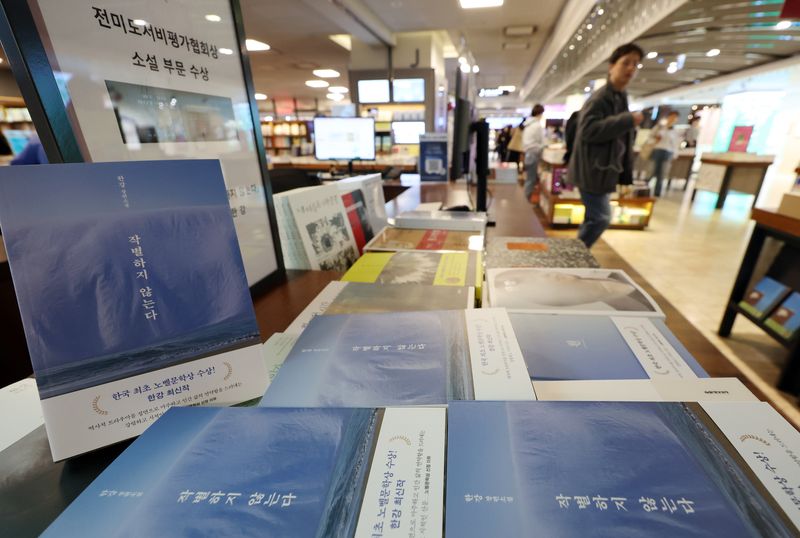
[Financial News] The romance of literature has come face to face with the logic of numbers. Munhakdongne Publishing Group, a major publisher that has driven Korea’s literary ecosystem for more than 30 years since its founding in 1993, is moving toward a sale to the Daou Kiwoom Group, whose business is rooted in IT (information technology) and securities. The publishing industry is watching with a mixture of bewilderment and concern as financial and IT capital from the front lines of capitalism seeks to take over the stronghold of “print books,” one of the most traditional knowledge industries.
On the 31st, a publishing company CEO familiar with the industry said firmly of the deal: “The value of literature, which cannot be measured in numbers, will be pushed into the pressure to deliver results.” He said, “The moment profitability becomes the top priority, publishers will concentrate their capital only on famous bestselling authors who sell right away or short-form hits,” and criticized the likely outcome: “Ultimately, the very soil of pure literature—which has tolerated failure and patiently unearthed hidden gems—will crumble.”
■ Not capitulation but ‘a strategic move to get on board’... Daou Kiwoom, which took in JoongAng Ilbo, dreams of a transmedia empire
But the mood behind the scenes is quite different from the palpable sense of crisis outside. A decisive factor behind Munhakdongne founder Kang Byeong-seon (pen name Kang Tae-hyeong) choosing the Daou Kiwoom Group over four formidable prospective buyers was a bombshell revealed just days earlier. On the 19th, a consortium of the Daou Kiwoom Group, CJ Group and Shinsegae was suddenly named the preferred bidder to acquire control of JoongAng Ilbo. According to industry sources, after hearing the news, Kang instead became confident in the vast “intellectual property (IP) business value chain” envisioned by Daou Kiwoom.
Indeed, on the 23rd, soon after the preferred bidder was selected, founder Kang held a briefing for employees and shared in person the reasons for his final choice of the Daou Kiwoom Group and his vision for the publishing business, speaking for about one hour and 50 minutes. All shareholders also agreed to sell their entire 100% stake, including former CEO Kang’s 41.5% share and the holdings of other shareholders. This suggests the deal is not simply an exit to recoup investment, but a major overhaul carried out with the full support of the first-generation leadership.
This means Munhakdongne Publishing Group was not passively swallowed up by big capital; rather, it proactively got on board to establish itself as the top-tier source-IP repository of a newly emerging “media empire.” It is an unprecedented combination of KidariStudio, Inc.’s webtoon and web-novel platforms, the powerful public-opinion and media channel of JoongAng Ilbo, and the Daou Kiwoom Group’s vast capital and IT infrastructure. The move closely mirrors the global model pursued by French telecom and media giant Vivendi, which acquired France’s largest publisher, Hachette, in an attempt to build a lock-in ecosystem spanning broadcasting and telecommunications networks.
■ Professor Thompson’s chilling warning... The collapse of the ‘midlist’ and the erosion of symbolic capital
Yet behind the grand synergy scenario lies a chilling academic warning: the logic of capital and platforms could destroy the rhythms unique to the literary ecosystem. John B. Thompson, a world-renowned publishing sociologist and professor at the University of Cambridge in the United Kingdom, identified the “collapse of the middle ground (the midlist)” as a devastating consequence of big capital acquiring publishers in his book Merchants of Culture.
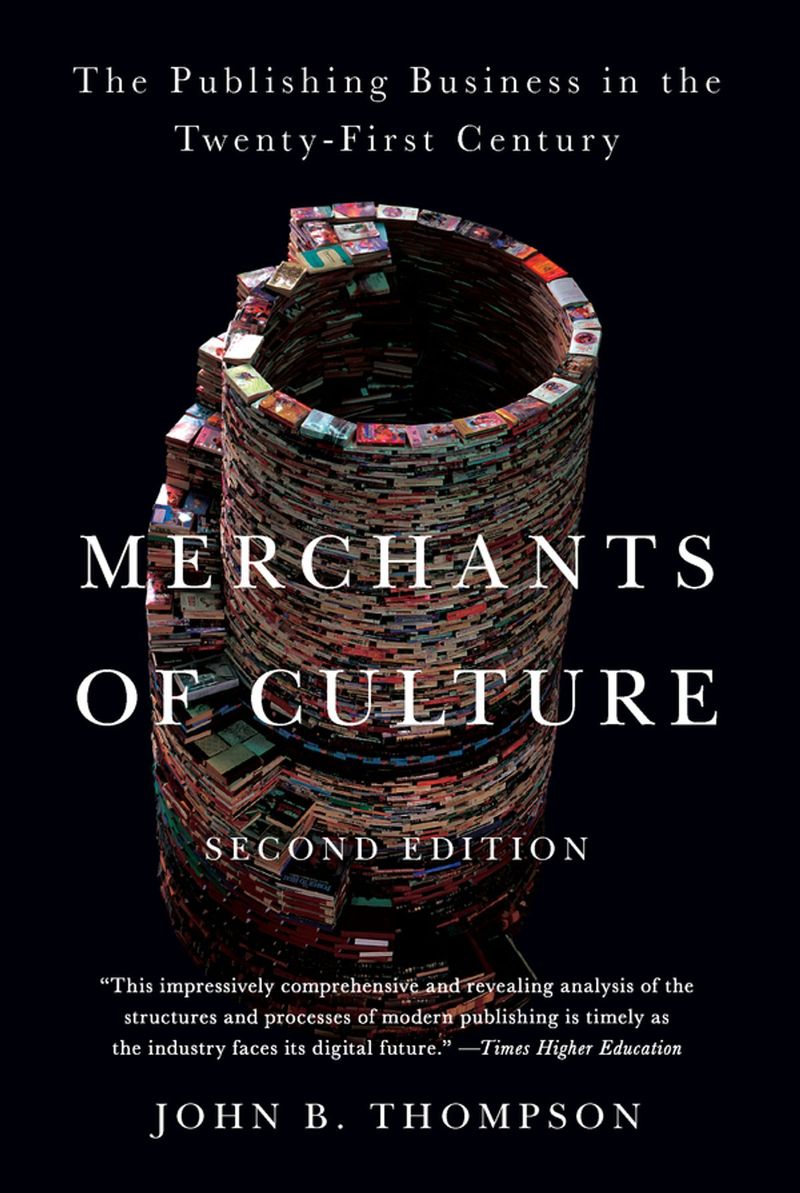
According to Professor Thompson’s empirical research, when executives from financial capital who put return on investment (ROI) first take over, all marketing and investment become concentrated on mega-bestselling authors who can generate immediate profits. Meanwhile, mid-career and new authors—the midlist, who need long-term investment but whose immediate literary value is more highly regarded—are gradually denied opportunities to publish, ultimately breaking the backbone of the publishing ecosystem.
Vivendi, often cited as a model, also failed to avoid this trap. Immediately after acquiring Hachette, Vivendi saw a mass departure of prominent authors and key executives who protested that the parent company’s control-oriented corporate culture was undermining the publisher’s “editorial independence.” In its fixation on economic efficiency, it effectively destroyed the publishing house’s greatest intangible assets: “creative freedom” and “symbolic trust.” More recently, it has found itself at the center of an overt “cultural takeover” controversy. In May, more than 600 figures from France’s cultural community, including Juliette Binoche, jointly denounced Vivendi chairman Vincent Bolloré for using the company’s vast media network to homogenize the cultural sphere. In response, Canal+, a broadcaster under Vivendi, retaliated by effectively declaring a “blacklist” (ending cooperation) against those who signed the statement. The episode laid bare how big capital can violently destroy “creative freedom,” one of the publishing and cultural sectors’ core intangible assets.
This is also connected to the fact that, beginning on the 25th, shortly after Daou Kiwoom’s acquisition had effectively become a done deal, concerns began to surface as an official issue among major South Korean media outlets and within the publishing industry: “Will the post-acquisition management structure be able to protect the publishing industry’s inherent autonomy (editorial independence)?” The market’s instinctive wariness was triggered by the realization that Vivendi’s painful failure was no distant matter.
Concerns about the characteristic governance risks of IT and financial capital, as well as technological dependence, have added further layers to the criticism. At its core is the question of whether capital from the securities industry, which has suffered serious internal-control failures such as major unpaid receivables crises, has the qualifications and ethics to safeguard public discourse and creative freedom. There is even a sense of imminent danger that the vast “primeval forest of texts” accumulated by Munhakdongne Publishing Group and JoongAng Ilbo could be incorporated without permission into large platforms’ datasets for training artificial intelligence (AI). The concern is deepening that, beyond the collapse of the midlist, the very soil of publishing could be reduced to a data warehouse for technology capital.
■ Only ‘patient capital’ can complete an IP empire... It must be a ‘solid breakwater,’ not an occupying force
This major deal between the Daou Kiwoom Group and Munhakdongne Publishing Group marks a historic turning point that will reshape South Korea’s cultural industry. A blueprint has already emerged for a vast ecosystem combining media platforms, IT and platform infrastructure, and top-tier source texts. Yet, paradoxically, the ultimate success or failure of this grand transmedia empire will depend not on the “size of its capital” but on its “patience.”
The moment publishing is judged and pressured by the yardstick of short-term investment returns, the “collapse of the midlist” warned of by Professor Thompson will become a devastating reality. For the Daou Kiwoom Group to achieve genuine synergy, it must not become an occupying force that puts numerical logic first. Instead, drawing on the group’s strong cash-generating capacity, it should take on the role of a powerful “breakwater,” protecting Munhakdongne Publishing Group so it can quietly keep unearthing hidden gems, undisturbed by market trends.
The most potent IP R&D (research and development) ultimately comes from patiently waiting for people and texts. When Daou Kiwoom fully guarantees Munhakdongne Publishing Group’s editorial independence and demonstrates the caliber of “patient capital” by respecting the soil of pure literature, the symbolic capital of Korean literature will finally beat as the brightest heart driving the newly emerging media empire.
[email protected] Park Ji-hyun Reporter