President Lee: Concerns over priority for multicultural families merit consideration; guard against unfairness
- Input
- 2026-10-30 18:49:00
- Updated
- 2026-10-30 18:49:00
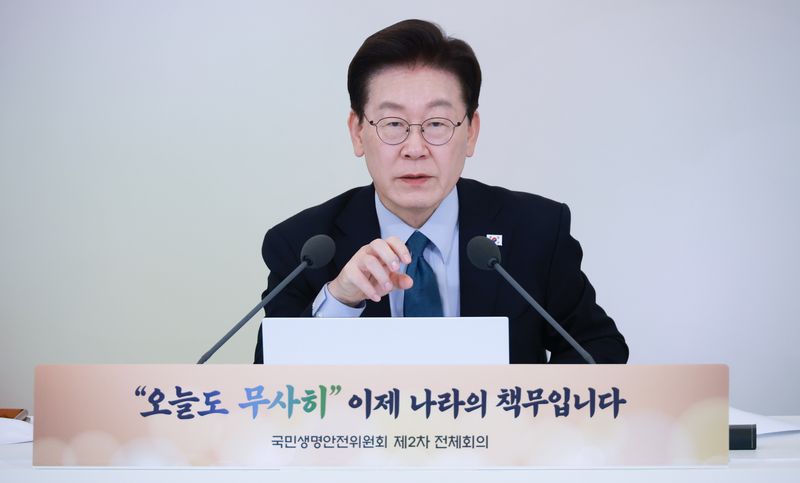
[Financial News] President Lee Jae Myung stressed on the 30th, “Opinions pointing out the problems with giving multicultural families priority over families of Korean nationals without exception, when there is no clear reason to do so—as with bonus points for childcare center admission and priority access to public postpartum care centers—are worth thorough consideration and review.”
Lee shared on X (formerly Twitter) a media report saying that mothers from multicultural families make up only about 2% of those using the preferential-access program at public postpartum care centers for multicultural families, which he had said would be reviewed. He wrote, “Fairness is a core value of public administration, and it does not depend on whether the amount or quantity is large or small. Unfairness is not acceptable just because the amount or quantity is small.”
Lee said, “Support for multicultural families aims to address and correct discriminatory factors arising from the ways multicultural families differ from families of Korean nationals, and to ensure parity with those families.” He added, “The claim that multicultural families should be prioritized or given preferential treatment in welfare and social policies because they are all struggling needs to be checked first to see whether it is supported by the facts.”
He explained, “There are plenty of multicultural families that are not struggling, including those involving marriage to a professional from a developed country. Social and welfare policies are fundamentally a burden shared by the whole community, and some citizens are relatively disadvantaged as a result. So, when policies are formulated and implemented, gaps should be addressed while taking care to avoid excess or unfairness.”
Lee pointed out that not all multicultural families agree with treating every multicultural family as a vulnerable group. He explained that integrating multicultural families into our society is more important than setting them apart, and that treating them all, without exception, as inherently vulnerable puts the emphasis on distinguishing them in itself.
Lee stressed, “To defend and protect multicultural families from far-right incitement deliberately intended to provoke hatred and hostility toward them, we must also minimize the pretexts for attacks and incitement. Any unreasonable or unfair elements, however few or many, or aspects that could draw criticism as excessive or unjust preferential treatment, can provide grounds for far-right incitement and attacks against multicultural families.”
He added, “If unfair preferential treatment that goes beyond restoring parity, or other such measures, becomes controversial, there should be an in-depth review of the criticism, regardless of who raised it. For any social welfare policy to be sustainable, it must remain within a range that those who are harmed or incur losses can accept upon reasonable consideration. I look forward to deeper and more extensive discussion.”
[email protected] Choi Jong-geun Reporter