“Overcoming the limits of hormone therapy with regenerative treatment”... The future of hair-loss treatment envisioned by Professor Park Byung-cheol [Interview with 100 Hair-Loss Experts]
- Input
- 2026-10-31 09:00:00
- Updated
- 2026-10-31 09:00:00
When things that should be there are absent, that absence brings loss. Hair loss, now a defining issue of our times, is something that causes us profound and deep loss. To confront and overcome hair loss head-on, we will meet 100 hair-loss experts, beginning with a physician who pioneered the first generation of hair-loss treatment. Please look forward to the new stories that will unfold beyond the two words “hair loss.” [Editor’s note]
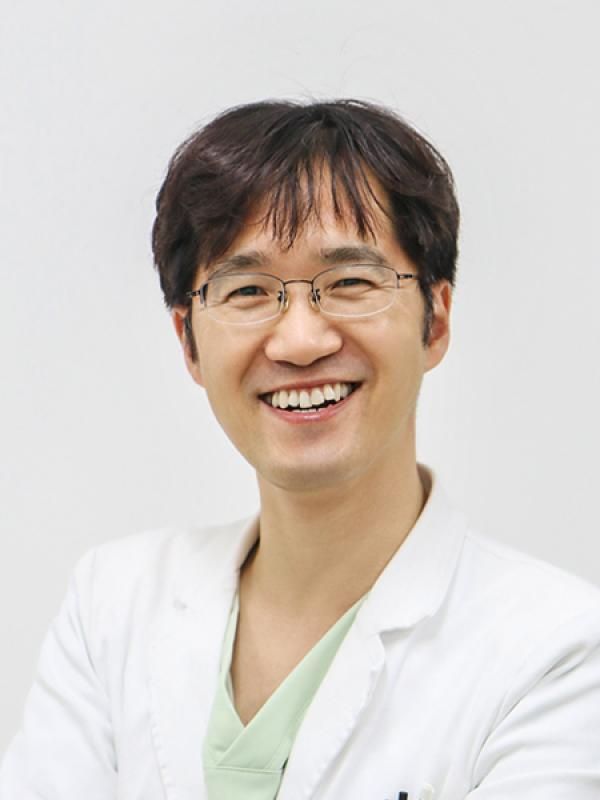
[Financial News] Hair-loss treatments have so far been limited to prescriptions for finasteride and dutasteride, which act on hormones, and minoxidil, which dilates blood vessels. All have proven effective, but hormone-related medications have raised concerns about side effects, and female patients could not use even those drugs, leaving them dependent on vasodilators.
Professor Park Byung-cheol of the Department of Dermatology at Dankook University Hospital expanded treatment beyond existing mechanisms through “regenerative medicine,” which safely and precisely activates signals in hair follicles. He found a starting point for suppressing substances that trigger the hair regression phase in botulinum toxin, widely known as a wrinkle treatment, and activated follicular cells using “stem cell-derived exosomes,” which transmit signals between cells. We spoke with Professor Park, who is opening a new paradigm in treatment by bridging the gap between basic research and clinical practice, about the potential of regenerative medicine in hair-loss treatment.

A surprising use for a wrinkle treatment... Blocking regression-phase signals to awaken hair
— In 2020, you published a study confirming that a botulinum toxin preparation could improve androgenetic alopecia. The drug is usually used to treat wrinkles.▲ Botulinum toxin is widely known as a wrinkle treatment, but in clinical practice it is also used to improve scars after surgery. The key mechanism involved is blocking a signaling molecule called “TGF-β1.” Interestingly, this molecule causes androgenetic alopecia and pushes hair into the regression phase. We therefore began the study to determine whether it would also have a significant effect on hair follicle cells and lesions of androgenetic alopecia.— What were the results?▲ After 24 weeks of treatment, an average of 7–8 new hairs grew per unit area (1 cm2). A visual comparison of clinical photographs taken before and after treatment also showed a clear improvement in hair thickness. Given that the typical area of hair loss in men is about 100 cm2, this amounts to approximately 700–800 hairs growing across the entire area of hair loss.Finasteride regrows about 20–24 hairs per unit area, so this result is smaller by comparison, but still meaningful. The treatment can also be combined with finasteride because the two work through entirely different mechanisms.— What are the limitations of the procedure, or what should be considered clinically?▲ Because this is an injection treatment administered directly into the scalp, it can cause pain, and excessive doses may raise safety concerns. At our university hospital, we typically inject 50 U (units) every 4–6 weeks. According to previous studies, high-dose administration totaling 198 U or more over three months should be strictly avoided. Since the treatment acts locally on the scalp, systemic side effects have rarely been reported.
It is important to note that oral finasteride and dutasteride remain the standard first-line treatments for androgenetic alopecia. Botulinum toxin is recommended as an adjunctive treatment and may be an alternative for patients who cannot take oral medication because of side effects or underlying conditions.— Since it is a nonhormonal treatment, could it also be an option for women with hair loss?▲ TGF-β1, which botulinum toxin suppresses, is a potent trigger of the hair regression phase that acts regardless of sex. The treatment can therefore also be used for patients with female pattern hair loss. It could also be tried in women with hair loss who have few options beyond topical minoxidil, as well as in patients experiencing telogen effluvium after rapid weight loss from recently taking obesity medications in the GLP-1 class.
Turning on the hair-regrowth switch with the signaling molecule “exosomes”
— In 2024, you published a study on hair-loss treatment using “adipose-derived stem cell exosomes” in the International Journal of Dermatology. Why did you choose exosomes rather than stem cells?▲ If stem cells themselves are injected directly into the human body, it is difficult to precisely control how they differentiate, grow and take hold within the body’s microenvironment. Exosomes, by contrast, are substances that transmit signals between cells. They carry only the signaling molecules needed for tissue regeneration and do not trigger an immune rejection response.In experiments, applying exosomes to hair follicle cells damaged by ultraviolet radiation or to isolated, cultured hair follicle tissue promoted the proliferation of follicular cells and hair growth. This is because exosomes activate the “Wnt/β-catenin” signaling pathway, a key switch for hair regeneration.— It is a topical formulation. Wouldn’t it be difficult for it to cross the scalp barrier and reach the hair follicles?▲ One of the technical challenges for topical formulations is how to deliver medication through the scalp’s stratum corneum to hair follicles in the lower dermis. Research is underway on a range of formulations, including nanoparticles and lipophilic liposomes, to address this.
In clinical practice, we use a microneedle therapy system (MTS). Making numerous tiny channels in the scalp’s surface with fine needles and then applying exosomes improves their penetration. This approach takes into account the fact that hair follicles in areas of the scalp affected by hair loss are shallower than healthy follicles, so the physical distance the active substances need to travel is shorter.
Regenerative medicine in the spotlight at the World Congress for Hair Research (WCHR)... The link between wound healing and hair regeneration
— Stem cell therapy was also presented at the World Congress for Hair Research (WCHR), held in Seoul this May.▲ Stem cells and exosomes, the signaling molecules released by stem cells, have excellent anti-inflammatory and wound-healing properties. They help restore the scalp environment, where microinflammation persists due to exposure to ultraviolet radiation, reactive oxygen species and chronic stress.Medically, “wound healing” and “hair regeneration” share many of the same mechanisms. Several basic studies have established that regenerative signaling molecules activated as wounds heal stimulate hair follicle stem cells and promote hair growth.— Does it make a difference whether the source is fat, bone marrow or something else?▲ The source is one consideration, but what matters is how consistently and uniformly the signaling molecules that promote anti-inflammatory effects and regeneration are expressed in the products actually used in clinical practice. It is essential to carefully check whether the products have undergone strict process controls at Good Manufacturing Practice (GMP) facilities and whether the content of their key active ingredients has been standardized.— Are there cases showing meaningful improvement?▲ The potential for meaningful hair improvement has been observed not only in inflammatory scarring alopecia and female pattern hair loss, but also in alopecia areata. In my own recent research, I also confirmed that exosomes helped wounds heal faster and prevented scarring at the follicle-harvesting sites on the back of the scalp after follicular unit extraction (FUE) hair transplantation.
“Not a replacement for hormone therapy, but a precision combination approach”... Aiming to develop objective, AI-based diagnosis
— Can injection treatments such as botulinum toxin, exosomes and platelet-rich plasma (PRP) replace existing oral medications or hair transplants?▲ The medically balanced view is to regard them not as replacements, but as personalized combination therapies. Injection treatments are best used alongside oral medications to enhance their effects, or selectively for patients who have difficulty taking oral medications because of side effects or issues related to reproductive age.We are currently conducting preliminary research to determine whether active ingredients in skin boosters used for facial skin regeneration can help improve scalp aging and hair loss. These biological materials have enormous potential to develop into gene-based precision medicine and personalized treatments in the future.— You have both basic research and clinical practice in your toolkit. What are your goals going forward?▲ To date, I have identified genetic markers that can detect hair loss early and uncovered the signaling systems that cause hair loss and the genetic mechanisms that regulate them. Building on this work, I aim to complete “personalized precision treatment” that integrates diagnosis and treatment.
I have also combined artificial intelligence with the phototrichogram, which quantitatively measures hair count and thickness, to create a diagnostic tool that can demonstrate improvements in hair loss with data. Through this, I hope to create conditions for transparent, trusted hair-loss treatment without exaggerated advertising.
[email protected] Kim Hyun-seon Reporter