“It’s been 15 years since my husband died” ... A woman in her 50s laments having taken on her in-laws’ ancestral rites and kimjang [What do you think?]
- Input
- 2026-10-30 16:23:56
- Updated
- 2026-10-30 16:23:56
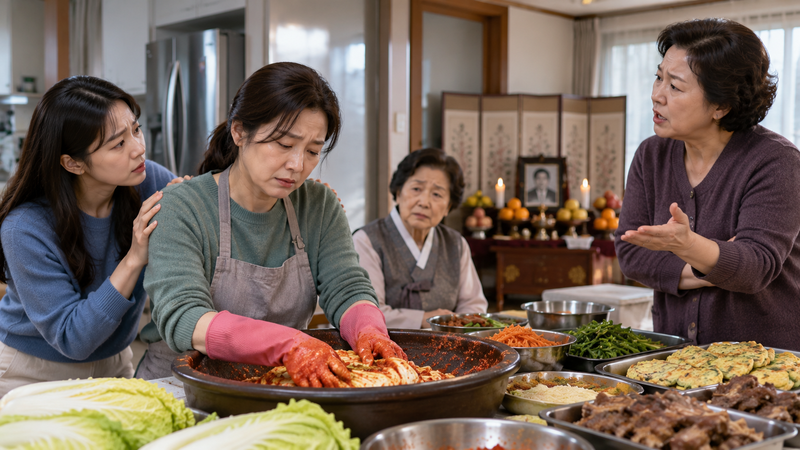
[Financial News] Even though 15 years have passed since her husband died, a woman in her 50s has spoken of her distress at having been responsible for preparing food for her in-laws’ ancestral rites, making kimchi for the winter, and preparing side dishes. She began doing this to repay her mother-in-law for looking after her children in the past, but says her health has also suffered because her husband’s eldest brother’s wife keeps asking her to make food.
According to JTBC’s “Scandal Supervisor” on the 28th, Ms. A, a woman in her 50s who works as a food-service cook, has continued to prepare food for her in-laws even after being widowed, and is now in conflict with her husband’s eldest brother’s wife.
Ms. A’s husband was the second of three brothers, and during their marriage she got along well not only with her husband but also with his family. Because Ms. A lost her mother when she was young, her mother-in-law was like a mother to her. While Ms. A and her husband were both working, her mother-in-law looked after their two children and even took care of meals when Ms. A got home late.
Then her husband suddenly died of a heart attack. Even afterward, Ms. A often visited her mother-in-law, and the two comforted each other as they recalled the time Ms. A had spent with her husband. Out of gratitude for her mother-in-law’s care for the children, Ms. A continued to prepare food for ancestral rites and holidays herself, as she had before.
But her husband’s eldest brother’s wife sometimes expressed dissatisfaction with the food Ms. A prepared. Although Ms. A usually made labor-intensive dishes herself, such as braised short ribs, boiled pork and jeon, when she once put store-bought meat patties on the ancestral-rite table, her sister-in-law said, “Sister-in-law, this doesn’t taste good.” After that, Ms. A even prepared the patties herself, trimming the meat that went into them.
Requests for food continued not only for ancestral rites and holidays but also at other times. During kimjang season, her husband’s eldest brother’s wife would ask Ms. A to make kimchi, saying, “Mother likes your kimchi.” Ms. A had to make kimchi even on her days off. She also asked Ms. A to prepare not only side dishes for their mother-in-law but food for her own family, saying, “Our kids only want your side dishes.”
Over time, Ms. A’s back and knee pain worsened, and preparing food became increasingly difficult. She eventually asked her husband’s eldest brother’s wife to split the work of making food for ancestral rites, but the sister-in-law refused, saying she was unwell too. Instead, she reportedly reproached Ms. A, saying that Ms. A had accepted help when she left her children with their mother-in-law in the past, so why was preparing food a few times such a struggle?
Ms. A said that although her husband’s eldest brother’s wife did not attend the ancestral rites for Ms. A’s husband, Ms. A was expected to attend the rites for her father-in-law without fail.
Even so, Ms. A could not tell her mother-in-law about the conflict with her husband’s eldest brother’s wife. She was worried her mother-in-law would be concerned, and feared being misunderstood as trying to distance herself from her in-laws because her husband had died.
Her daughter, who had watched all this, urged her to cut back on preparing food for her in-laws and focus first on her own health, saying that a long time had already passed since her father died.
Professor Park Sang-hee, a counseling professor who appeared on the program, stressed that Ms. A should clearly explain her situation to her husband’s eldest brother’s wife and reduce the burden of preparing food. “She needs to stand by her position to the end,” Professor Park said.
Lawyer Son Su-ho also said that Ms. A should put her own health and family first. He said, “Isn’t making sure her daughter doesn’t worry actually the most important thing?”
[email protected] Han Seung-gon Reporter