Ahead of government decision on second-round public institution relocations, signatures backing Jeju’s bid top 73,000
- Input
- 2026-10-30 15:28:36
- Updated
- 2026-10-30 15:28:36
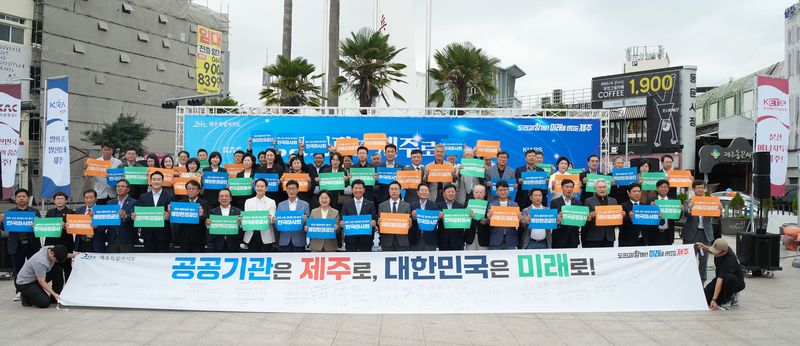
【Financial News Jeju = Reporter Jeong Yong-bok】The number of people signing a petition calling for public institutions to relocate to Jeju has surpassed 73,000, ahead of the government’s finalization of its plan for the second round of public institution relocations to regional areas.
Jeju Special Self-Governing Province said on the 30th that the number of participants in its province-wide petition campaign to attract public institutions to Jeju had topped 73,000 as of that day. The campaign, which began on Aug. 21, has drawn Jeju residents, overseas Jeju residents’ associations, honorary residents, universities, institutions and organizations.
The petition drive is linked to the government’s push for a second round of public institution relocations to regional areas. The policy aims to strengthen regional industries and employment by moving public institutions concentrated in the Seoul metropolitan area to other parts of the country. Local governments nationwide are competing to attract key institutions.
On Sept. 3, the government announced five principles for the relocations, including minimizing the number of institutions remaining in the Seoul metropolitan area, prioritizing existing innovation cities, and linking institutions with regional universities and industries. It plans to review about 350 public institutions based in the Seoul metropolitan area, finalize the relocation plan in the fourth quarter of this year and begin moving leading institutions in 2027.
Jeju Province is targeting six institutions, including the Korea Racing Authority (KRA), Korea Airports Corporation (KAC) and Korea Institute of Energy Technology Evaluation and Planning. Its strategy is to explain the need for relocation by connecting each institution’s functions with Jeju’s horse industry, aviation infrastructure and energy transition policies.
To this end, Jeju Province formed a dedicated attraction team, assigning target institutions to individual offices and bureaus. The team is visiting public institutions and relevant government ministries and delivering agency-specific bid proposals that include the number of people who have signed. The results will also be sent to the government.
Jeju Province is also preparing settlement conditions for employees of relocating institutions and their families. It is reviewing housing, transportation and education and developing specific support measures, while asking the central government to improve systems and provide financial support for issues that are difficult to resolve at the local-government level.
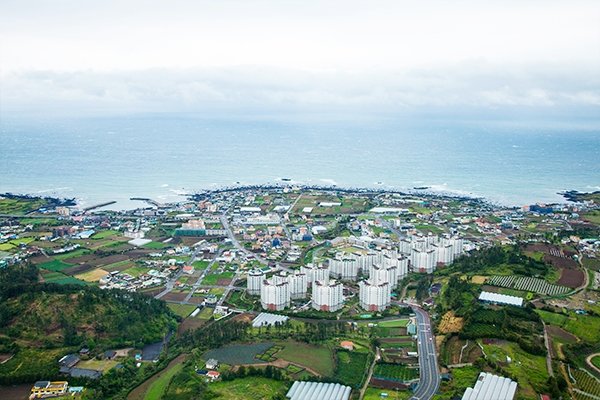
Jeju’s success in attracting institutions depends not only on the number of signatures but also on how concretely it can demonstrate the need for each institution to relocate, its links to regional industries, and settlement conditions for employees and their families. Since the government has set a principle of prioritizing existing innovation cities, the capacity of Jeju Innovation City in Seogwipo to accommodate the institutions is also a key consideration.
Yang Je-yun, director of Jeju Province’s Planning and Coordination Office, said, “I will do everything I can to attract public institutions to Jeju so that the hopes of our residents can become a reality.”
[email protected] Jeong Yong-bok Reporter