Hanwha Systems Co., Ltd. beats KAI to win SAR satellite constellation contract
- Input
- 2026-10-30 15:18:38
- Updated
- 2026-10-30 15:18:38
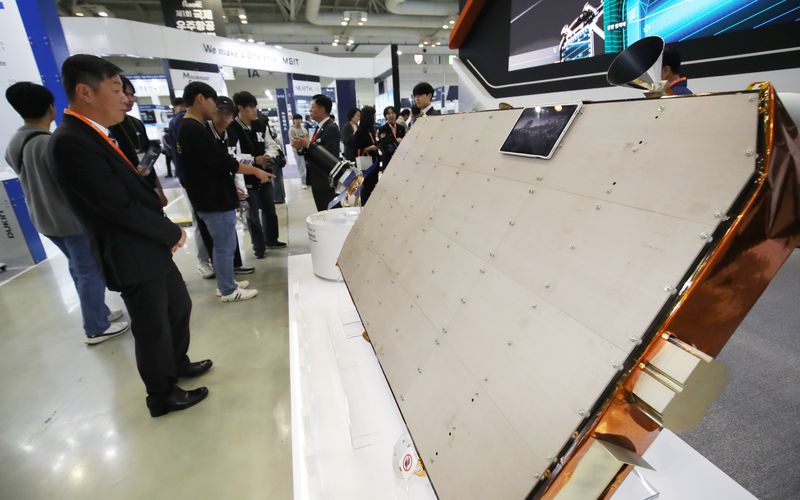
[Financial News] Hanwha Systems Co., Ltd. has beaten Korea Aerospace Industries (KAI) to win a project to develop a constellation of microsatellites equipped with synthetic aperture radar (SAR) for military reconnaissance. It is expected to play a key role in building South Korea’s low Earth orbit satellite constellation system.
According to the Public Procurement Service’s Korea Online e-Procurement System (KONEPS), the bid opening on the 30th for the “Development of an SAR Satellite Constellation for a Microsatellite System” project put Hanwha Systems Co., Ltd. in first place with a bid of 368.4 billion won. That was an aggressive bid, at 65.1% of the estimated price of 565.9 billion won. KAI, which had competed for the contract, submitted a bid of 460.3 billion won.
The microsatellite system development project aims to improve security response capabilities by having relevant agencies, including the Defense Acquisition Program Administration, the Korea AeroSpace Administration (KASA) and the Korea Coast Guard, work together to monitor signs of potential crises on the Korean Peninsula and in surrounding waters. This is why multiple SAR and electro-optical (EO) satellites are needed. SAR satellites in particular can capture images regardless of the time of day or weather conditions, so they need to be operated as a constellation.
Hanwha Systems Co., Ltd. came in first not only because of its bold bid but also because of the technology and experience it has accumulated over the years. A prime example is its participation in developing SAR sensors and data-link systems for the 425 Project, which provided the South Korean military with its first independently developed reconnaissance satellites, and its supply of four payloads. It has also demonstrated its capabilities by becoming the first private company to launch a self-developed small SAR satellite and make images captured by the satellite public.
Consistent performance is important for a satellite constellation system, making mass-production capacity a key factor as well. Hanwha Systems Co., Ltd. has established manufacturing infrastructure at the Jeju Space Center capable of producing up to 100 satellites a year. It is a hub where everything from development and assembly to functional and performance tests and integration testing can be carried out in one place.
Hanwha Systems Co., Ltd. plans to use this project as an opportunity to contribute to securing technology and a mass-production base for South Korea’s satellite industry. It is also determined to target not only upcoming domestic satellite projects but also expanded exports overseas.
There is hope that a somewhat tight bid could instead help boost competitiveness as the company seeks to enter global markets. A Hanwha Systems Co., Ltd. official said, “We will use this as an opportunity to further improve the price competitiveness of K-satellites in global markets by further upgrading our production management system.”
[email protected] Kim Yun-ho Reporter