Trading gains instead of dividends... PLUS 200 Covered Call Active delivers fully tax-exempt distributions for four consecutive months
- Input
- 2026-10-30 15:09:17
- Updated
- 2026-10-30 15:09:17
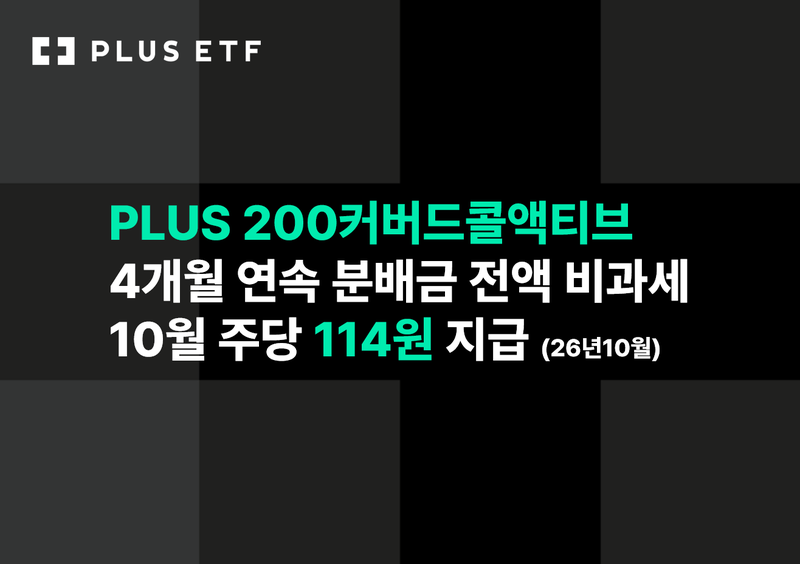
Hanwha Asset Management said on the 30th that it would pay a distribution of 114 won per share for the October distribution of its PLUS 200 Covered Call Active ETF. The monthly distribution rate, based on the closing price on the 28th, the day before the ex-distribution date, is 1.86%. The taxable base amount is zero won per share, making the entire distribution tax-exempt.
The dividend-avoidance strategy applied to Samsung Electronics and other companies is reflected in this distribution. Instead of directly receiving dividends, the strategy seeks trading gains by trading before and after dividend payments, thereby reducing the portion of distributions subject to tax.
At the end of September, the PLUS 200 Covered Call Active ETF applied the dividend-avoidance strategy to Samsung Electronics, Hankuk Carbon and Hyundai Department Store. This month, it used the same strategy for Misto Holdings, Youngone Holdings and KT, among others.
This covered-call ETF invests in stocks included in the KOSPI 200 and sells call options to generate funds for monthly distributions. It also uses an active strategy, adjusting the proportion of options sold, strike prices and expiration dates according to market conditions.
Geum Jeong-seop, head of the ETF Business Division at Hanwha Asset Management, said, “The fact that the taxable base amount for this distribution is zero won reflects how the dividend-avoidance strategy has been incorporated into the actual composition of distribution funds,” adding, “This is a highly useful product for investors seeking monthly cash flow with a lower tax burden.”
[email protected] Bae Han-geul Reporter