Jeju's downward income mobility rate tops the nation at 17.7%, overtaking upward mobility at 17.0%
- Input
- 2026-10-30 15:01:51
- Updated
- 2026-10-30 15:01:51
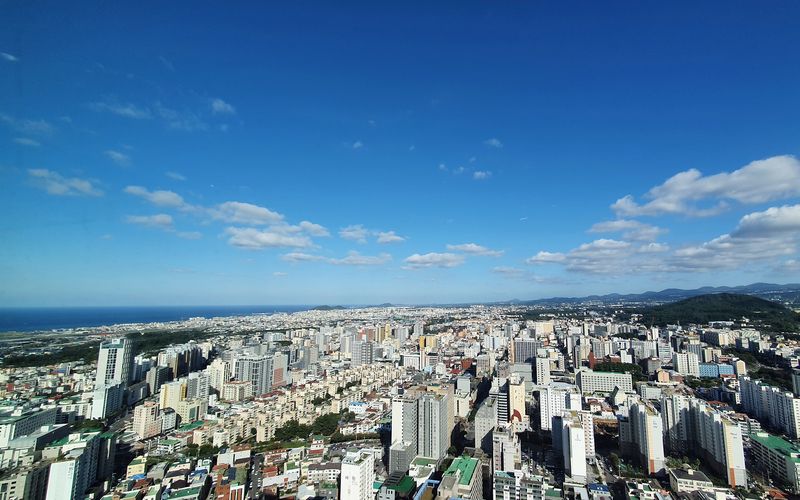
【Financial News Jeju = Jeong Yong-bok, Reporter】 Jeju had the nation's highest rate of downward income mobility, at 17.7%, among the country's 17 provinces and metropolitan cities. The share of people moving up income groups stood at just 17.0%, meaning that, unlike the national trend, more people saw their relative income position fall.
According to the 2024 Income Mobility Statistics released by the National Data Agency on the 30th, Jeju's downward income mobility rate from 2023 to 2024 was 1.6 percentage points above the national average of 16.1%. It was also higher than the rates in Incheon (16.7%) and Gyeonggi (16.5%).
The income mobility rate is the share of people who moved to a different income group over a one-year period, after individual earnings from work and business are divided into five groups, each representing 20% of income earners nationwide. Moving up from the middle, third quintile to the fourth is classified as upward mobility, while moving down to the second is classified as downward mobility.
Jeju also recorded the nation's highest overall income mobility rate, at 34.7%, 1.7 percentage points above the national average of 33.0%. In effect, about 35 of every 100 people in the analysis changed income groups over the course of a year.
The direction of movement was notably different from the national trend. Nationwide, the upward mobility rate (16.9%) was higher than the downward rate (16.1%), but in Jeju the downward rate exceeded the upward rate by 0.7 percentage points. Jeju and Gangwon were the only regions in the country to show this reversal.
In Jeju, the upward mobility rate (17.9%) was also higher than the downward rate (17.6%) the previous year. But in 2024, the upward rate fell by 0.9 percentage points while the downward rate rose by 0.1 percentage points, reversing the direction of movement.
Differences by gender were also evident. In Jeju, the downward mobility rate for men was 18.7%, 2.4 percentage points higher than the upward rate (16.3%). For women, by contrast, the upward rate (17.8%) exceeded the downward rate (16.6%).
Jeju's distinct pattern was also reflected in the income distribution. Among income earners in Jeju, 22.3% were in the bottom 20% nationwide, while only 13.8% were in the top 20%.
However, downward movement between income groups does not necessarily mean that a person's actual income has fallen. Even if someone's income rises, their relative income ranking can fall if other people's incomes rise by more.
The statistics compared Korean nationals aged 15 or older who had income in both 2023 and 2024. They excluded property income, transfer income such as government support payments, and tax-exempt income from agriculture.
Jeju's low income levels have been attributed in part to an industrial structure concentrated in relatively low-wage service sectors, including accommodation and food services, and small-scale self-employment. In 2024, wage workers aged 25 to 39 in Jeju earned an average monthly wage of 2.74 million won, 480,000 won less than the national average; per-capita household gross disposable income was also the lowest nationwide, at 24.61 million won.
The Bank of Korea's Jeju office said that delayed recovery in local consumption, rising operating costs and excessive competition had worsened sales and income conditions for the self-employed.
[email protected] Jeong Yong-bok Reporter