Kia Corporation’s third-quarter revenue rises 10.1% and operating profit 24.3%; record-high market shares in South Korea and the U.S.
- Input
- 2026-10-30 14:10:34
- Updated
- 2026-10-30 14:10:34
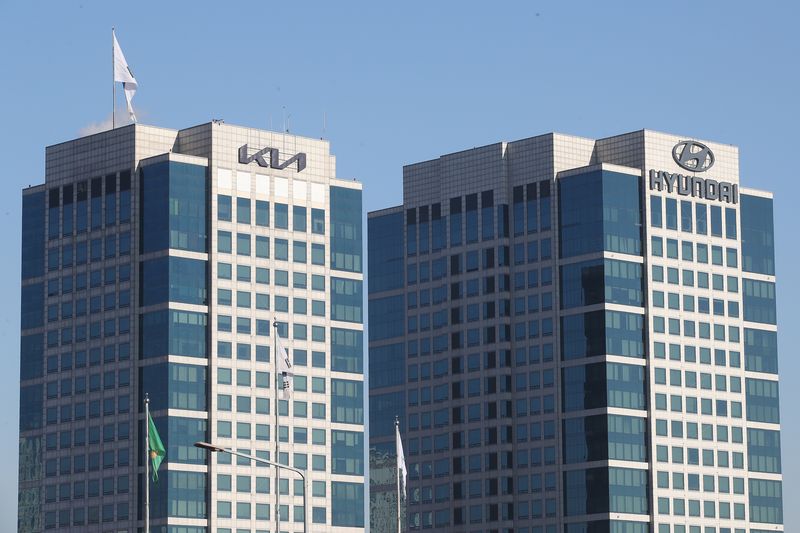
On the 30th, Kia Corporation disclosed its consolidated third-quarter results. According to the announcement, the company recorded wholesale sales of 847,355 vehicles, revenue of 31.5974 trillion won, operating profit of 1.8183 trillion won, pretax profit of 1.8222 trillion won, and net profit of 1.2855 trillion won.
Compared with the third quarter of last year, vehicle sales rose 7.9%, revenue increased 10.1%, and operating profit grew 24.3%. The operating margin rose 0.7 percentage points to 5.8%.
■ Operating profit improves as tariff rates fall... external pressures persist
The biggest contributor to the rise in operating profit was a base effect of 530 billion won resulting from the U.S. government’s adjustment of automobile tariff rates (from 25% to 15%). Higher sales volume added 442 billion won, while the weaker won contributed a foreign-exchange effect of 529 billion won. The average won-dollar exchange rate in the third quarter of this year was 1,423 won, up 2.8% from 1,385 won a year earlier. The company estimated that its operating margin would have been about 8% if there had been no impact from U.S. tariffs.Cost pressures were also substantial. External factors, including higher raw-material prices (368 billion won) and the effects of the prolonged conflict in the Middle East (209 billion won), created factors that reduced operating profit by around 570 billion won, equivalent to a 1.9-percentage-point decline in the operating margin. Operating profit also fell by around 727 billion won as incentives were increased and prices cut to boost EV sales in Western Europe and South Korea.
The cost-of-sales ratio rose 3 percentage points from a year earlier to 84.1%. Higher incentives (1.9 percentage points) and increased material costs (1.2 percentage points) weighed on the ratio. The selling, general and administrative expense ratio improved by 3.7 percentage points to 10.1%, helped by a 920 billion won reduction in warranty expenses.
A Kia Corporation official explained, “The limited improvement in profitability was largely due to external factors, while our underlying earnings-generating capacity remained solid.”
■ Market share hits a record despite shrinking industry demand
Global automobile demand declined amid interest-rate hikes in major countries in response to high inflation and weakening consumer sentiment, but Kia Corporation continued to grow. Of its third-quarter global wholesale sales, 141,013 vehicles (16.6%) were sold domestically and 706,342 (83.4%) overseas. Actual global retail sales totaled 829,000 vehicles, up 6.9%. Sales in Africa and the Middle East fell 23% due to the impact of the regional conflict, but growth in major markets offset the decline.In South Korea, retail sales rose 2.2% to 141,000 vehicles even as overall market demand fell 10.7%. Market share reached a record 36.8%, up 4.6 percentage points from 32.2% a year earlier. In the U.S., local sales rose 7.8% to 234,000 vehicles, while the 5.8% market share was a quarterly record. Sales in Western Europe increased 16.9% to 145,000 vehicles, far outpacing market growth of 3.5%. In India, sales rose 38.5% to 89,000 vehicles, lifting the company’s local market-share ranking one place from the previous quarter to fifth.
Through September this year, cumulative global market share stood at 4%, up 0.4 percentage points from 3.6% in the same period last year. Excluding China, it was 5%.
■ Electrified vehicle sales up 47%
Retail sales of electrified vehicles (xEVs) in the third quarter rose 47% to 300,000, increasing their share of total sales by 9.8 percentage points to 36.2%.EV sales rose 75.4% to 123,000 vehicles. Western Europe accounted for about half of these sales, at 63,000 vehicles, and EVs made up 43.2% of Kia Corporation’s sales in Western Europe, more than double the 19.2% share a year earlier. In South Korea, EV sales totaled 23,000 vehicles, and EVs’ share of sales rose 8.1 percentage points, from 14.9% to 23%.
HEV sales rose 46% to 172,000 vehicles. In the U.S. in particular, sales surged 118% to 69,000, far exceeding market growth of 27%. According to AutoData, Kia Corporation’s share of the U.S. HEV market reached 10.6%, entering double digits for the first time since the company entered the U.S. HEV market in 2011.
■ Expand HEV sales in the fourth quarter... target a recovery in profitability
In the fourth quarter, Kia Corporation will increase sales of high-margin HEVs in South Korea, the U.S. and other markets. In South Korea, it will focus on HEV sales of the new Seltos hybrid and key models such as the Sorento and Carnival. In the U.S., it will launch the Seltos hybrid and expand production capacity for the Telluride hybrid.In Western Europe, Kia Corporation plans to maximize the benefits of its full EV lineup, increasing EV sales this year by 79% from last year and raising EVs’ share of total sales to 33%. In India, it is targeting sales of 330,000 vehicles, up 16% year over year, on the strength of new models.
Jeong Seong-guk, Kia Corporation’s executive vice president in charge of IR and strategic investment, stressed, “If external factors such as rising raw-material prices and instability in the Middle East are resolved, we will quickly restore profitability, underpinned by the solid competitiveness of our finished-vehicle business.”
[email protected] Kim Dong-chan Reporter