BOJ acknowledges inflation target reached for first time in 13 years ... signals further rate hikes
- Input
- 2026-10-30 13:58:42
- Updated
- 2026-10-30 13:58:42
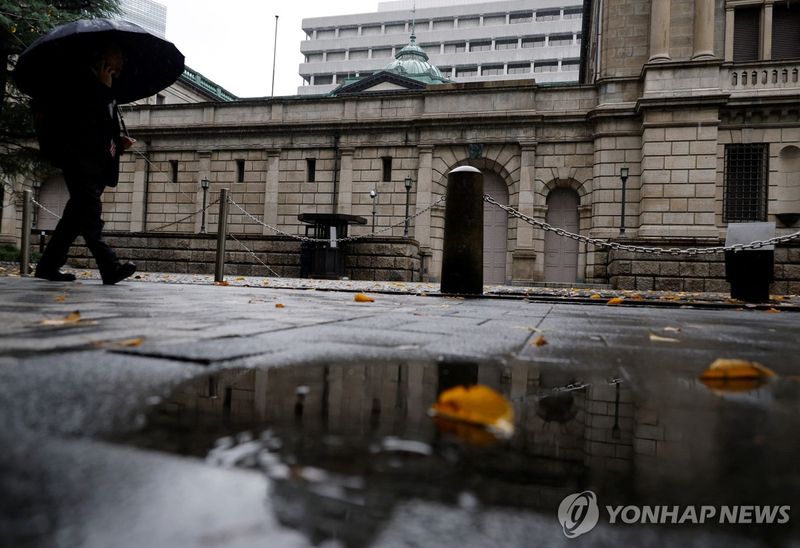
【Financial News correspondent Seo Hyejin in Tokyo】The Bank of Japan (BOJ) acknowledged that underlying inflation had effectively reached its 2% target for the first time in 13 years. It held its benchmark rate at 1.25% but reaffirmed its plans for further rate hikes and decided to increase sales of its holdings of exchange-traded funds (ETFs) by 2.6 times from next year. With the goal of its long-running monetary easing effectively achieved, Japan’s monetary policy appears to be shifting toward price stability and reducing its asset holdings.
Inflation target reached for first time in 13 years ... further rate hikes signaled
According to the Nihon Keizai Shimbun on the 30th, the BOJ said at its monetary policy meeting that underlying inflation, excluding temporary fluctuations, had reached a level “broadly consistent” with its 2% target. This comes about 13 years after the target for price stability was introduced in January 2013.
The BOJ held its benchmark rate at 1.25% that day to assess the effects of September’s rate hike on the economy and prices. It nevertheless reaffirmed its plans for further hikes, saying that financial conditions remain accommodative.
Of the nine policy board members, board member Hajime Takata opposed holding rates steady. He proposed raising the rate to 1.5%, saying that achieving the inflation target meant it was time to accelerate rate hikes, but the proposal was rejected.
In 2013, under then-Governor Haruhiko Kuroda, the BOJ introduced “two-dimensional monetary easing” through large-scale government bond purchases. However, it struggled to meet its inflation target because it could not dispel the deflationary mindset that had persisted for years.
The situation has changed recently as wage increases driven by labor shortages have coincided with rising prices. The BOJ assessed that a virtuous cycle of rising wages and prices is underway and that medium- to long-term inflation expectations have also reached around 2%.
The BOJ also raised its inflation outlook. It lifted its forecast for the increase in the consumer price index (CPI) excluding fresh food in fiscal 2027 (April 2027 to March 2028) to 2.6%, up 0.2 percentage points from its previous forecast. It expects higher international oil prices to be reflected in consumer prices.
The BOJ raised its forecast for real gross domestic product (GDP) growth in fiscal 2026 from 0.6% to 0.7%, expecting growing global demand for artificial intelligence (AI) to have a positive effect on corporate earnings. By contrast, it lowered its growth forecast for fiscal 2027 from 0.8% to 0.7%.
International oil prices, demand for AI investment and yen weakness are expected to be key factors in the timing and pace of future rate hikes.
Japanese Finance Minister Satsuki Katayama said at a press conference that day, “I expect appropriate monetary policy to be conducted so that the 2% price stability target can be achieved in a sustained and stable manner.”
ETF sales to increase 2.6-fold ... time to dispose of holdings cut from 112 years to 43
The BOJ also decided to significantly accelerate the pace of ETF sales. From January 2027, it will increase annual sales by about 2.6 times, from ¥330 billion to ¥860 billion at book value. At market value, the annual amount will be about ¥2.46 trillion.
As a result, the time needed to sell all its ETF holdings is expected to fall from about 112 years to 43 years. As of the end of March this year, the BOJ held ETFs worth about ¥37 trillion at book value and about ¥94 trillion at market value.
The BOJ began buying ETFs in 2010 as a monetary easing tool. In 2013, under then-Governor Kuroda, it increased its annual purchases to ¥1 trillion, and in 2016 raised them further to ¥6 trillion.
After deciding last September to sell ETFs and real estate investment trusts (REITs), the BOJ began actual sales in January this year.
With this move, Annual ETF sales are set to rise from 0.05% to around 0.1% of the total trading value of Japan’s stock market. The move is seen as an effort to speed up the reduction of assets while minimizing the impact on the market. Annual REIT sales will remain at ¥5 billion.
With the BOJ’s official acknowledgment that underlying inflation has reached 2%, the normalization of monetary policy—including further rate hikes and a reduction in asset holdings—is expected to gather pace.
[email protected] Seo Hyejin Reporter