[Financial News Editorial] Real estate: ruling and opposition parties must work together to find solutions
- Input
- 2026-10-30 15:25:46
- Updated
- 2026-10-30 15:25:46
[Financial News] The government has unveiled plans to supply some 100,000 homes, but the market response is a mix of expectations and concerns. On the 29th, the government announced candidate sites for new public housing developments totaling 76,700 homes at six locations across Gimpo, Guri, Hanam-si, Uijeongbu and Goyang in Gyeonggi Province. Including the sites announced earlier in Gangseo District in Seoul, Namyangju and Gwangju Station Area 2, the locations for supplying 100,000 homes in the Seoul metropolitan area have now all taken shape. A signal that such a large volume of housing will be supplied to the market could have a considerable impact on the real estate market. But announcing candidate sites is only the starting line. The government cannot decide much on its own when it comes to designating land for development and providing compensation, funding metropolitan transportation, or adjusting regulations on urban redevelopment. Progress can only be made step by step through cooperation among the many stakeholders and the pooling of new ideas.
Local governments are already pushing back in the wake of the announcement. Local governments whose areas have been designated for housing development are calling for funding to build transportation infrastructure. There are also concerns that these sites could become bedroom communities for people commuting to Seoul. Strong opposition is emerging on various fronts even before the projects break ground. Addressing these demands will require consultations among the government, local governments and the National Assembly. In particular, if ruling and opposition party lawmakers whose constituencies are affected clash over housing supply plans, projects could grind to a halt after the sites have been designated.
Efforts to narrow the gap between the ruling and opposition parties over urban housing supply must also proceed in parallel. Their differences over supply in central Seoul are currently vast. The People Power Party criticizes as ineffective a policy that limits the benefits of higher floor-area ratios for redevelopment and reconstruction to smaller units. It argues that higher floor-area ratios are necessary to deliver housing quickly through redevelopment or reconstruction. The parties are also sharply divided over recouping excess profits from reconstruction projects and lending restrictions. The Democratic Party worries that easing regulations could fuel instability in housing prices. But they must also face the fact that, since all the newly announced sites are in Gyeonggi Province, urban redevelopment projects will have to provide housing in Seoul. It is time to candidly consider whether there really is no compromise between the ruling party’s goal of expanding smaller homes and the opposition’s call to improve project viability.
The immediate uncertainty over jeonse and monthly rents is more urgent. The first residents will move into the newly announced sites in 2033 at the earliest. Before new homes are supplied, the problems of jeonse and monthly rentals—options on which ordinary people mainly rely—cannot be left unaddressed. How can politicians call for better livelihoods while remaining insensitive to measures addressing jeonse and monthly rents? Efforts to pool ideas across party lines are also needed to ease the rental crisis.
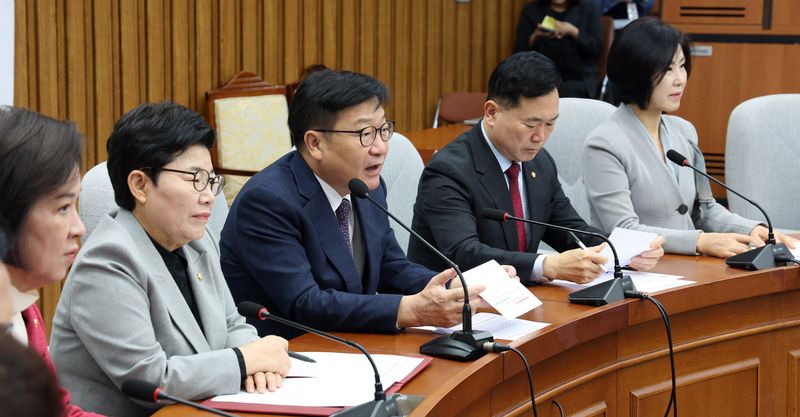
The real estate market is not driven by the government’s will and power alone. It responds to the interplay of supply and demand, interest rates and regulations, and market expectations. Measures that run counter to these forces have repeatedly produced adverse effects. In that light, the People Power Party’s proposal on the 30th to form a “3+3 ruling-opposition real estate consultative body” can be seen as a constructive signal. Regardless of political interests, the parties should explore various ways to consult, including forming a cross-party real estate body. There should be no partisan divide when it comes to easing anxiety over housing prices and jeonse and monthly rents. It is time for political leaders to set aside partisan calculations and pool their wisdom candidly.