“Who will build the Czech nuclear plant amid losses of trillions of won?” ... Daewoo Engineering & Construction consortium rebuts Korea Hydro & Nuclear Power (KHNP)'s claims
- Input
- 2026-10-30 10:49:21
- Updated
- 2026-10-30 10:49:21
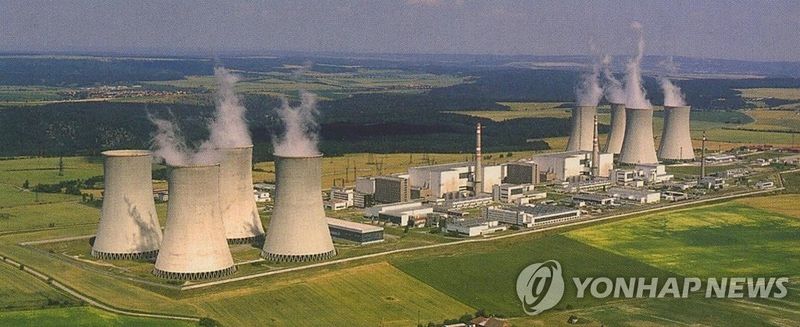
[Financial News] The Daewoo Engineering & Construction–Doosan Enerbility consortium rebutted KHNP’s account of the breakdown in negotiations over the construction contract for the Czech Republic’s Dukovany nuclear power plant in a “Q&A booklet” released on the 30th. It said KHNP had tried to shift “risks beyond its control” onto the consortium. According to the consortium, KHNP proposed quantities above those in the bid without accounting for the resulting increase in cost, and demanded that the contractor lower its unit prices to keep the total contract amount unchanged.
Industry observers believe it will not be easy to find a new contractor. A senior industry official said, “There are effectively only three construction companies with the capability to build nuclear power plants: Hyundai Engineering and Construction, Samsung C&T Corporation, and Daewoo Engineering & Construction,” adding, “It seems unlikely that another construction company would participate in a project expected to incur losses of trillions of won.” Here are the key points from the Q&A.- What caused the negotiations to break down?▲ The two sides differed over price, scope of work, reference quantities, and the incorporation of main contract requirements, among other matters, and they were unable to narrow the gap. To reach a contract promptly, the construction consortium repeatedly proposed concessions and compromises on construction costs, the contract structure, scope of work, and key contract terms, seeking to bridge their differences.
In the process, the construction consortium explained in detail why it could not accept terms that entailed clear potential losses, including design-change risks beyond its control and excessive contractual liability. KHNP, however, continued to demand that the consortium bear those risks unilaterally and effectively pressured it to accept them by warning that negotiations would be terminated if it refused.
Therefore, the failure to reach a final agreement was not due to a lack of willingness to negotiate on the part of the construction consortium. It resulted from KHNP sticking to its original position despite the consortium’s compromise proposals for reasonable risk-sharing.- On the transfer of risks beyond the consortium’s control▲ KHNP claims it proposed adjustments that took the construction consortium’s position into account, but in reality it demanded that the terms of the main EPC contract be incorporated in full into the construction contract. It also demanded unconditional acceptance of the special contract terms it applies as the project owner in domestic nuclear projects.
In particular, KHNP imposed responsibility for reviewing the design and assessing its adequacy on the construction consortium, which had no design responsibility. It also treated “items (Grey Areas)” with an unclear contractual scope of work, as well as unidentified work, as part of the consortium’s scope, while refusing to approve any corresponding increase in the contract amount. It tried to shift risks beyond the consortium’s control onto it unilaterally.- Why did you reject a lump-sum contract?▲ Unlike the APR-1400 reactor design, for which domestic and international experience and design data have accumulated, the Czech Republic is a new market, subject to local Czech and European regulations and licensing requirements. In addition, because the new APR-1000 design is being used, there is no power plant that can serve as a practical reference.
Because this is a new reactor design, no basic design was available at the time of contracting. Since design changes can cause substantial fluctuations in quantities, a contractor that does not carry out the design cannot bear the risk of design-related changes in quantities.— Position on the October 29 negotiation deadline▲ KHNP explained that it set the end of October as the negotiation deadline because delays in signing the construction contract could affect the overall project schedule. However, after KHNP first presented revised terms at the management level in early October, it allowed only about three weeks for review, up to the 29th of that month. Given the significant uncertainties in large European nuclear power projects, including technical complexity and quality and regulatory verification, it is practically impossible to review the contract amount and terms in their entirety within three weeks.- What will happen to the “Team Korea” cooperation framework following the breakdown in negotiations?▲ KHNP’s position is that the change of contractor will not directly undermine the Czech side’s confidence in Team Korea as a whole. The consortium disagrees. The construction consortium has built trust through social contribution activities in the Czech Republic and cooperation with government officials. It is concerned that ending the partnership would inevitably damage its relations with the Czech government and undermine Team Korea’s credibility abroad.
[email protected] Lee Jong-bae Reporter