“Don’t eat foods with fillings like dumplings” ... Chinese food company chief’s absurd advice
- Input
- 2026-10-30 13:10:25
- Updated
- 2026-10-30 13:10:25
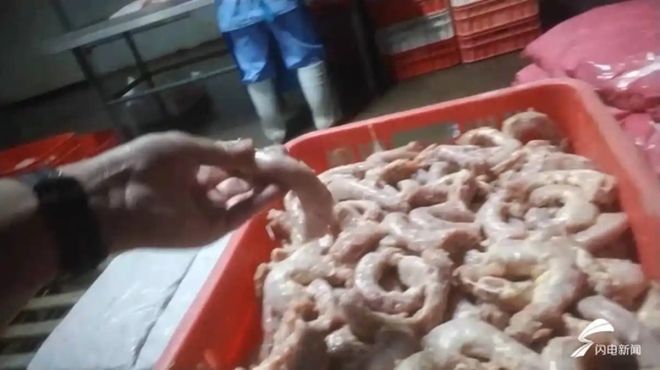
[Financial News] A controversy has erupted in China after it emerged that meat paste made by grinding chicken necks and carcasses stripped of meat was widely distributed as an ingredient in processed foods such as sausages, dumplings and meatballs. Some factories had been producing the ingredient without a license in unsanitary conditions, with wastewater running across the floors. China’s longstanding lax attitude toward food safety is once again under scrutiny, as even the head of a production company advised reporters to “eat less food like dumplings.”
Ground whole with the bones by machine and supplied for 760,000 won per ton ... passed off as “beef-flavored meatballs”
According to local media including Sina Finance on the 30th, Shandian News, which is part of Shandong Broadcasting, recently released findings from an undercover investigation of meat-processing companies in Luohe, Anyang, Hebi and other areas of Henan Province.
The factories filmed by the reporters bought large quantities of chicken carcasses left after the necks and breast meat had been removed, then used machines to separate and press the bones and meat before finely grinding them into a mud-like paste. The resulting meat paste was supplied in large quantities to intermediate meat-processing plants and used as a main ingredient in dumpling filling, sausages and meatballs.
A company in Luohe, Henan Province, said it could produce at least 30 metric tons of chicken-neck paste a day. The supply price was just around 3,800 yuan per ton (about 760,000 won). A person from a meat-processing company tracked by the reporters admitted that the main ingredient in the so-called “beef-flavored meatballs” sold on the market was chicken-neck paste, and that the beef flavor came from added artificial flavoring.
Ingredients left in pools of wastewater ... company chief: “Eat fewer foods with fillings”
An even bigger problem was the poor manufacturing environment and inadequate hygiene management. At a production company in Qixian County, Hebi City, wastewater ran across parts of the workshop floor, while food ingredients such as chicken necks and carcasses were left scattered on the unsanitary floor.
During the on-site reporting, a factory manager even told the reporters in confidence, “Try to eat as little as possible of foods with fillings, like dumplings.” In effect, someone from a production company—who knew better than anyone the hygiene and quality of the ingredients they made—was warning consumers to avoid eating those products.
Inadequate qualifications and gaps in oversight also came to light. A check of the food production licensing system of China’s State Administration for Market Regulation found that some of the companies caught in the investigation had no license at all, with no licensing information available in the system. Even companies with official licenses had virtually no quality control: their declared production methods sometimes bore no resemblance to the actual processing, or they applied their own varying standards. The administrative vacuum caused by market supervision and agriculture and rural affairs departments shifting responsibility was also criticized.
The labeling of ingredients on finished products also came under scrutiny. The ingredient lists of finished products containing the paste identified it only as “chicken,” making it impossible to distinguish from ordinary lean meat; consumers therefore had no way of knowing whether the products contained paste made from ground carcasses. Under current Chinese law, mechanically separated meat (MDM) can be used as a food ingredient in accordance with recommended standards, but critics say this must be subject to strict hygiene and labeling requirements.
From melamine-tainted infant formula to cooking oil hauled in chemical tankers ... the endless food safety scares
Major food safety scandals in China are nothing new. In 2024, it was revealed that cooking oil had been transported in tank trucks used to carry chemicals or petroleum products without the vehicles even being properly cleaned, prompting a government-wide investigation. That same year, companies that made ready-to-eat dishes using poor-quality pig head meat were exposed by an investigative program on state-run CCTV and had their licenses revoked.
Although authorities have stepped up penalties for food safety violations since the 2008 “melamine-tainted infant formula scandal,” in which six infants and young children died and 300,000 people were affected, recurring structural gaps in safety management—from ingredient sourcing through processing and distribution—are deepening distrust and anxiety about Chinese food, both at home and abroad.
[email protected] Moon Young-jin Reporter