Netanyahu's ruling coalition loses majority in Israel but remains the largest bloc in parliament
- Input
- 2026-10-30 10:36:04
- Updated
- 2026-10-30 10:36:04
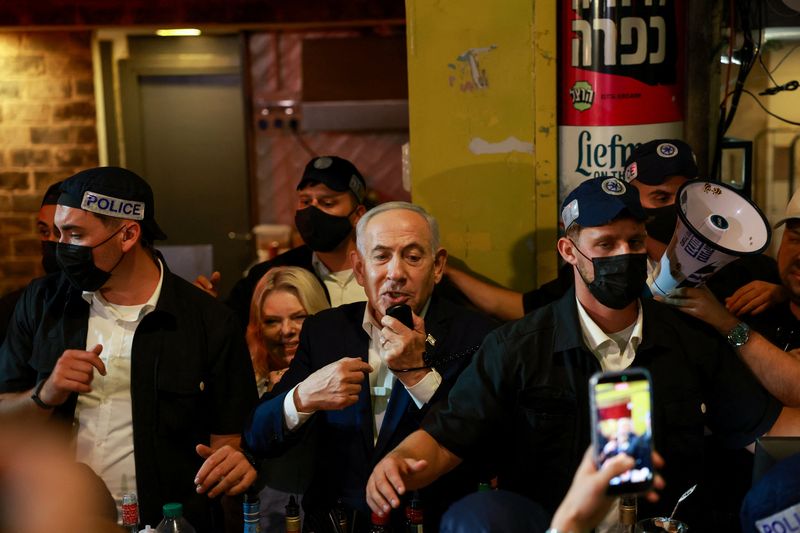
[Financial News] Local parties supporting Israeli Prime Minister Benjamin Netanyahu lost their majority in parliament in this month's election. However, they still recorded the highest vote share, while the opposing camp also failed to secure a majority.
According to local media, including The Times of Israel (TOI), the Israel Central Elections Committee (CEC) announced on the 30th (local time) that it had completed the count for the 26th parliamentary election, held on the 27th.
The results showed that Likud, which Netanyahu personally leads, and the right-wing alliance that had joined forces with Likud to form a coalition government with him together won 53 of the 120 seats. Before the election, they held 68 seats, above the 61-seat threshold for a majority, but lost 15 seats in this election. Likud won the most seats in the right-wing alliance, with 27—the most of any party in parliament. In the same alliance, the far-right Otzma Yehudit won seven seats. Religious Zionism and Shas won six seats each.
The opposition alliance against Netanyahu won 48 seats. Yashar, which leads the opposition alliance, secured 21 seats, while Yisrael Beiteinu, a right-wing party in the opposition camp, won seven. BeYachad and the Democrats won 12 and eight seats, respectively. Yashar leader Gadi Eisenkot drew attention in this election as a challenger to Netanyahu.
But the biggest beneficiaries of the election were the Arab parties, including Joint List (11 seats) and Ra'am (eight seats). In Israel, which is at war with Palestine and Iran, both the Netanyahu camp and the anti-Netanyahu camp said they would not form an alliance with Arab parties. Final turnout in the election was 77.9%, with 5,716,665 voters casting ballots.
After completing its final review of errors and objections, the CEC plans to submit the official election results to Israeli President Isaac Herzog on November 4. Herzog will then meet with the leaders of each party to hear their recommendations on who should be tasked with forming the next government.
The 26th Israeli parliament is scheduled to convene on November 10, regardless of the progress of negotiations to form the next coalition government. The coalition talks are expected to be difficult, as neither camp came close to a majority, and could last for two months or longer.
The U.S. newspaper The New York Times (NYT) described the election this way: “Many Netanyahu supporters are relieved that he has a chance to remain in power, but those who expected him to suffer a clear defeat are deeply frustrated by the possibility of a renewed political deadlock.”
On the 29th, Herzog urged party leaders to work to avoid a situation in which the failure to form a government leads to another election. “We must do everything we can to avoid another election,” he said. “I expect everyone who comes here to negotiate with an open mind.”
[email protected] Park Jong-won Reporter