“Stopping the transfer was the right choice” ... Police move to curb teen gambling
- Input
- 2026-10-30 12:00:00
- Updated
- 2026-10-30 12:00:00

According to police on the 30th, the Seoul Metropolitan Police Agency signed an agreement the previous day with KakaoBank Corp and Toss Bank to prevent cyber gambling among teenagers. The “Youth Digital Safety System” will begin operating on Nov. 2.
The agreement focuses on using the financial apps teenagers use in their daily lives as a means of crime prevention. Rather than cracking down on gambling sites or waiting for teenagers to report gambling themselves, the goal is to detect risks through accounts used to move gambling money.
The system starts with information on suspected gambling accounts collected by police. The Seoul Metropolitan Police Agency obtains information on relevant accounts through interviews between school police officers (SPOs) and teenagers and during investigations, then verifies the accounts using evidence such as gambling sites and transfer records. The verified account information is shared with KakaoBank Corp and Toss Bank. The agency plans to notify the banks to remove accounts later found to have been flagged by mistake or no longer to pose a risk.
Banks do not simply act on the information provided by police. They recheck the accounts using their own fraud detection systems (FDS), and if an account is confirmed to be held at their bank, they ask the account holder to explain the source of the funds and the purpose of the transactions before suspending deposits and withdrawals. Accounts flagged by police will be prioritized, with verification and action planned within a week of receiving the information.
Each bank’s prevention measures come into play when a teenager tries to transfer money to an account at another bank. Toss Bank displays a warning if a teenager tries to send money to a high-risk account, regardless of whether the account is personal or corporate. If a teenager under 17 proceeds with the transfer despite the warning, their guardian is notified of the risky transaction by text message. KakaoBank Corp blocks teenagers from sending money to corporate accounts that its own checks have flagged for suspicious transactions.
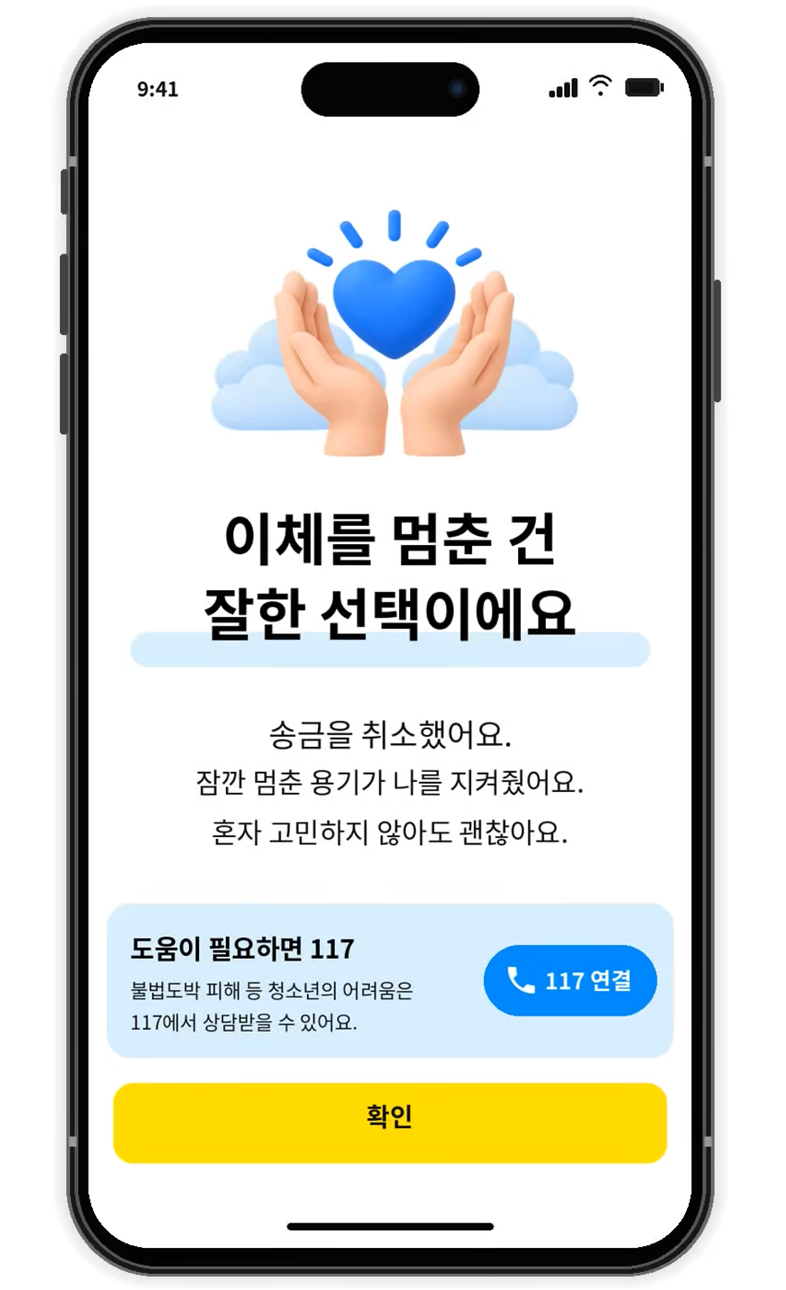
The messages shown to teenagers also vary depending on the situation. For an account whose transactions have been suspended, the message reads, “You can’t transfer money to this account.” For a high-risk account at another bank, it reads, “Wait, this transaction could be risky.” Teenagers who cancel a transfer see the message, “Stopping the transfer was the right choice.” Each pop-up also includes a button to contact 117 for counseling or help.
The response by police in partnership with financial institutions comes amid a rise in gambling among teenagers. In a survey of about 35,000 students in Seoul conducted by the Seoul Metropolitan Police Agency from Oct. 27 to Dec. 9 last year, 20.9% said they had seen friends around them gamble. That was more than double the 10.1% recorded the previous year.
The Korea Center on Gambling Problems Prevention and Healing’s 2025 survey on gambling among teenagers also estimated that about 157,000 teenagers, or 4%, had gambled. The average age at which they first encountered gambling was 12.5. There are also concerns that teenagers drawn into gambling are exposed to other crimes, including fraud, theft, violence and threats, as they try to raise money.
The Seoul Metropolitan Police Agency plans to discuss ways to respond to accounts at other banks through regular working-level meetings with the two banks. It will also improve the system by, for example, adding relevant information to financial app pop-ups during the voluntary self-report period for youth gambling.
Seoul Metropolitan Police Agency Commissioner Go Beom-seok said, “Responding to teenage gambling only after it has been reported or detected is not enough.” He added, “We will ensure that protection is activated first at the very moment teenagers encounter risk and establish a sustainable protection system that supports them from the suspension of financial transactions through counseling, treatment and recovery.”
[email protected] Seo Ji-yoon Reporter