Despite surprise earnings of 2.7 trillion won, why Hyundai Motor's target price was cut from 550,000 won to 450,000 won
- Input
- 2026-10-30 08:22:21
- Updated
- 2026-10-30 08:22:21
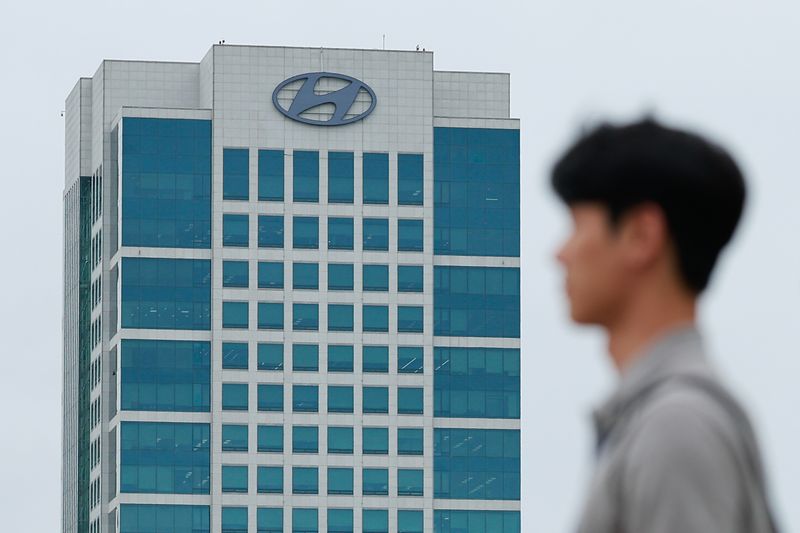
[Financial News] Heungkuk Securities lowered its target price for Hyundai Motor Company from 550,000 won to 450,000 won. It maintained its 'Buy' rating but cut the target price by about 18.2% to reflect lower earnings estimates for 2027.
On the 30th, Heungkuk Securities lowered its target price for Hyundai Motor Company from 550,000 won to 450,000 won while maintaining its 'Buy' rating.
That represents 53.8% upside from the previous day's closing price of 292,500 won. Gunwoo Ma, an analyst at Heungkuk Securities, described the investment thesis for Hyundai Motor Company as “sales have passed their trough; profitability is the key issue going forward.”
Hyundai Motor Company's third-quarter results came in better than market expectations. Revenue fell 3.4% year on year to 45.1 trillion won, while operating profit rose 5.5% to 2.7 trillion won.
Operating profit beat the market consensus of 2.4 trillion won by about 10%. Operating profit in the automotive division also came in well above Heungkuk Securities' estimate of 1.6 trillion won, at 2.1 trillion won.
Currency effects helped shore up earnings. Profitability had initially been expected to suffer from the stronger won, but the average exchange rate rose year on year, while the end-of-period rate fell from the previous quarter, also reducing warranty costs. Analyst Ma attributed this to “the impact of favorable exchange-rate effects.”
Heungkuk Securities, however, believes these results alone are not enough to be optimistic about future profitability. Hyundai Motor Company cut its wholesale sales target for this year by 160,000 units, from 4.16 million to 4 million. It also lowered its target for the consolidated operating margin by 0.8 percentage points, from 6.3–7.3% to 5.5–6.5%. Its investment plan for the automotive division was also reduced from 17.8 trillion won to 16 trillion won.
“Despite defending profitability this quarter, meeting the targets set at the beginning of the year will be difficult,” Analyst Ma explained, adding that “the full-year guidance has been lowered.” Ma also noted, “This is a time to assess whether increased sales will translate into improved profitability.”
Sales are expected to recover starting in the fourth quarter. Hyundai Motor Company can make up for production disruptions in the third quarter, and the facelifted Tucson, a high-volume model, is scheduled to launch in South Korea in the fourth quarter of this year before going on sale in earnest in the U.S. market next year. Sales growth may continue through the new-model cycle, according to the outlook.
However, it is unclear whether a sales recovery will immediately translate into higher profits. The currency burden from the stronger won, combined with a weaker yen that boosts the price competitiveness of Japanese rivals, could increase the burden of incentives in the U.S. market.
In Europe, electric-vehicle sales are expected to expand and market share to recover, led by the IONIQ 3. But intensifying competition amid Chinese automakers' push into low-cost EVs has also raised concerns about a deterioration in product mix.
Analyst Ma said it is “difficult to expect a sharp improvement in earnings in the short term as unfavorable market conditions persist.” As a potential future driver of the share price, however, Ma cited “the possibility of multiple expansion as the robotics strategy takes shape.”
[email protected] Kang Jung-mo Reporter