“I maxed out my borrowing to buy a home, and now I can barely breathe” — Mortgage rates hit a 14-year high, topping 5%
- Input
- 2026-10-30 06:47:48
- Updated
- 2026-10-30 06:47:48
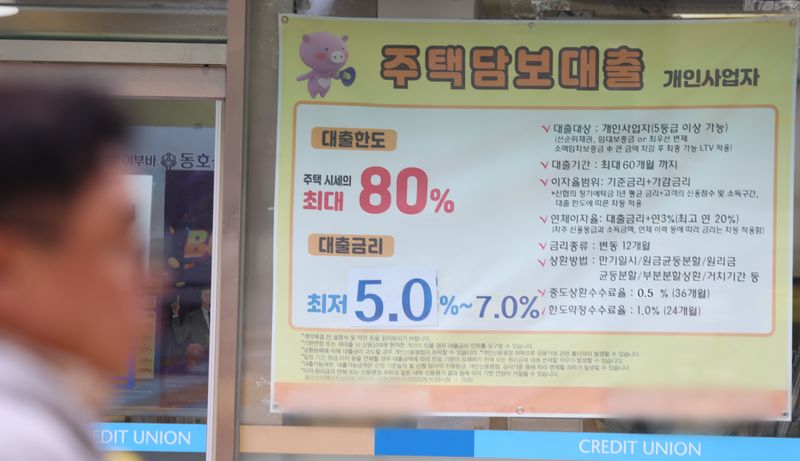
[Financial News] September bank mortgage rates reached their highest level in more than 14 years. For the first time ever, the average rate on newly issued fixed-rate mortgages also topped 5% a year. With mortgage rates rising for five consecutive months, borrowers who bought homes by maxing out their borrowing are facing an even heavier interest burden.
Fixed-rate mortgages at 5.11%; variable-rate mortgages also at 4.76%
According to the Bank of Korea’s “September 2026 Weighted Average Interest Rates at Financial Institutions,” released on the 29th, the mortgage rate at deposit-taking banks, based on newly issued loans, rose to 4.88% a year last month, up 0.22 percentage points (pp) from 4.66% the previous month. Mortgage rates have risen for five consecutive months since May, surpassing the level recorded in October 2022 (4.82%).
The rate on fixed-rate mortgages jumped 0.23 pp, from 4.88% to 5.11%. This was the highest level since related statistics began in 2013 and the first time the rate had reached the 5% range. It has been trending upward for 12 consecutive months since October last year. The rate on variable-rate mortgages also rose 0.23 pp, from 4.53% to 4.76%.
The overall rate on household loans rose 0.20 pp, from 4.76% to 4.96%. Rates on general-purpose credit loans increased from 6.33% to 6.49%, while rates on jeonse deposit loans rose from 4.35% to 4.57%; the share of loans carrying a heavier interest burden also increased sharply. In particular, the share of newly issued household loans with rates of 5% or higher rose by 11.6 pp, from 20.0% in August to 31.6% in September. The share of loans with rates of 4.5% or higher jumped from 53.6% to 70.1% over the same period.
Borrowers for whom the variable-rate “five-year cycle” has come around likely to face heavier interest burdens
There are concerns that interest burdens may grow, particularly for borrowers with variable-rate loans or whose interest-rate reset dates have arrived. The rate on household loans, including existing loans and measured by outstanding balances, rose 0.06 pp from 4.52% to 4.58%, while the rate on mortgages measured by outstanding balances also increased, from 4.22% to 4.26%.
The overall rate on new bank loans rose 0.17 pp, from 4.40% to 4.57%. Corporate lending rates increased 0.19 pp to 4.49%; rates on loans to large corporations jumped 0.16 pp to 4.37%, while those on loans to small and medium-sized enterprises rose 0.25 pp to 4.63%.
The rate on savings deposits at deposit-taking banks, based on newly received deposits, rose 0.24 pp, from 3.21% to 3.45%. Rates on pure savings deposits increased 0.25 pp to 3.39%, while those on marketable financial products rose 0.16 pp to 3.69%. The share of newly issued time deposits carrying rates of 4% or higher expanded from 0.5% to 10.6%.
As deposit rates rose more than lending rates, the spread between deposit and lending rates on newly issued business narrowed by 0.07 pp, from 1.19 pp to 1.12 pp. By contrast, the spread measured by outstanding balances widened by 0.01 pp, from 2.20 pp to 2.21 pp.
[email protected] Kim Hee-sun Reporter