Everyday stories shared hand in hand ... Calls to “guarantee the right to enjoy culture, including barrier-free films” [Weekend Culture]
- Input
- 2026-10-29 19:47:00
- Updated
- 2026-10-29 19:47:00
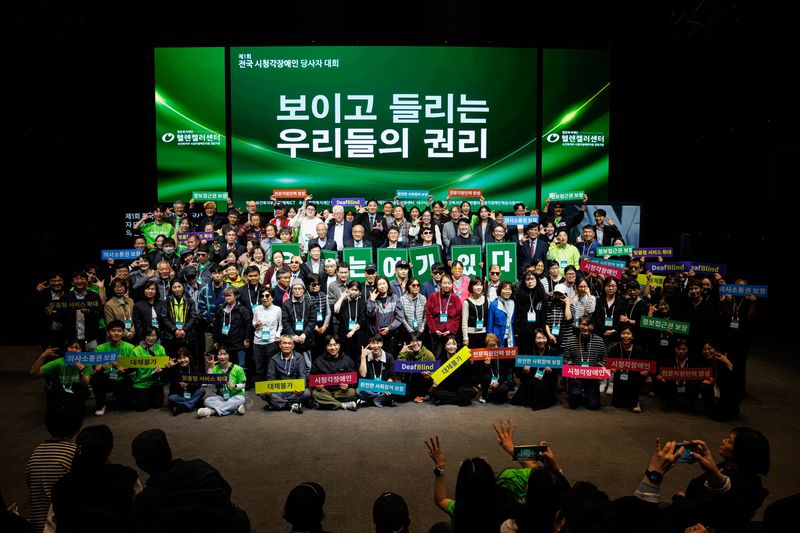
Yoon said, “There are still many deafblind people who cannot leave their homes.” He added, “I hope this gathering will help expand groups and activities in more places across the country where deafblind people can meet and communicate with one another.”
Ahn Ae-suk, 75, the mother of Lee Yeong-eun, 49, who is deafblind, said her son had stayed at home for seven to eight years after losing his sight, but began taking part in activities outside the home with the center’s help. He now attends weekly meetings and has also been able to take part in the national gathering.
Ahn said, “I am especially grateful to see my son respected and treated as a person in his own right.” She also said she hopes he will be able to live a stable life while spending time with others.
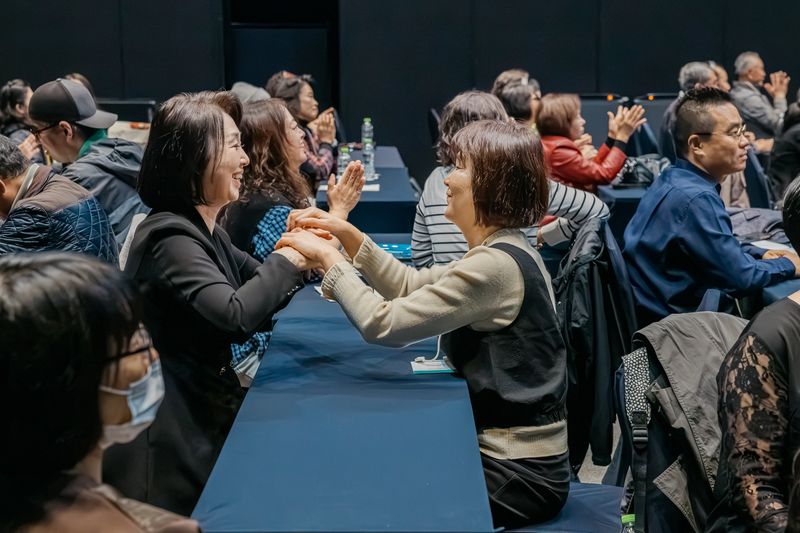
The connections also extended to performances and hands-on activities. On the first day, participants responded to a performance by six members of Bridge On Ensemble, an arts group for people with developmental disabilities, swaying their bodies or moving their hands. On the 28th, at the Eoullim Festival, they connected with participants from other regions through activities including basketball, Jenga, curling, perfume-making, and hand massages.
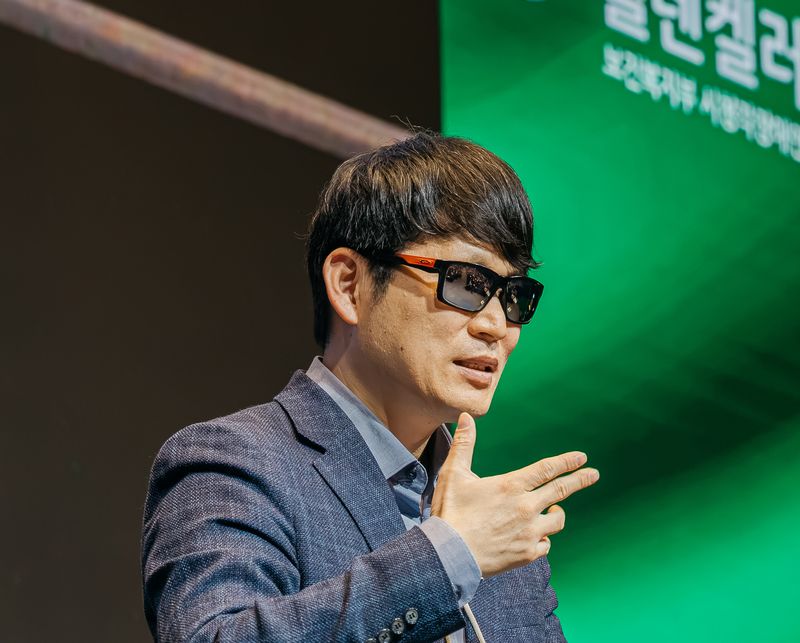
Open remarks included calls to guarantee the right to enjoy culture, including through barrier-free films; improve damaged or incorrectly installed tactile paving; and introduce a system that alerts passengers when boarding and alighting from public transportation. Speakers called for concrete support so people can enjoy culture and travel to the places they choose.
Participants read a joint declaration and held placards. They called for an inclusive social environment and systems that enable them to take part in education, work, and everyday life; guarantees of the right to access information; expanded access to personalized assistive devices, tactile-sign interpreters, and professional support workers; and guarantees that deafblind people can participate in related policymaking and decision-making.
The message “Nothing about us without us” conveyed their determination to take part directly in decisions on policies affecting their lives. Participants also expressed their resolve to build a nationwide alliance centered on deafblind people themselves.
Center Director Hong Yu-mi described the gathering as a starting point for building community networks. He said, “I will continue to give my full support to creating an environment where these individuals can receive tailored services and communicate with society anytime, anywhere.”
[email protected] Jang In-seo Reporter