Renewable Energy Production Surges at Buildings Reviewed by Seoul, Reaching 1.5 Times Seoul Thermal Power Plant’s Output
- Input
- 2026-10-30 06:00:00
- Updated
- 2026-10-30 06:00:00
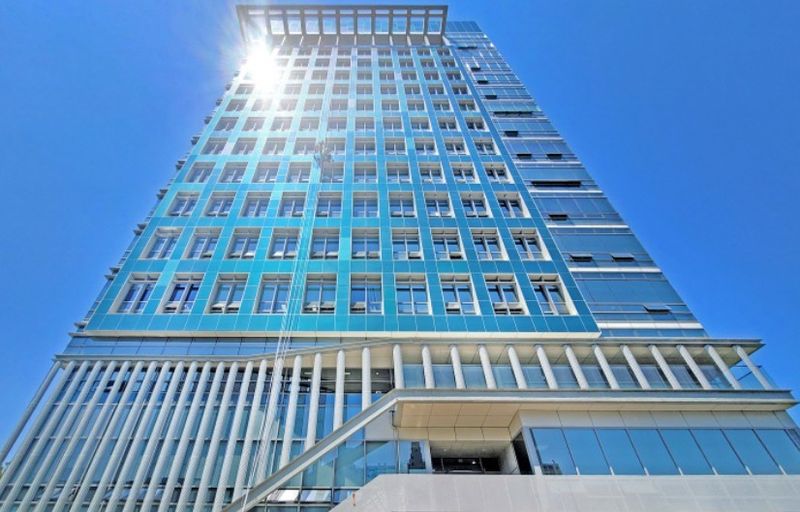
According to the Seoul Metropolitan Government on the 29th, the estimated annual renewable energy production of buildings that underwent the city’s architectural review from 2022 to 2026 was about 3,811 GWh. That is equivalent to 85% of the 4,506 GWh of annual renewable energy production from systems installed in buildings across Seoul over the previous 17 years (2008–2024). It is also about 8% of the city’s total electricity consumption and 1.5 times the annual output of Seoul Thermal Power Plant (formerly Danginri Power Plant) in 2025, estimated at about 2,538 GWh.
By energy source, estimated production was highest for solar power at 1,916 GWh, followed by other sources at 1,107 GWh and geothermal energy at 788 GWh.
The results are attributed to the Seoul Metropolitan Government’s revisions to its policies to improve buildings’ energy performance. In January last year, the city revised the Seoul Green Building Design Standards, strengthening requirements for installing renewable thermal energy systems, such as geothermal and hydrothermal systems, in non-residential buildings with a total gross floor area of at least 30,000 square meters. The city is also embedding its environmentally friendly design approach by expanding the use of building-integrated photovoltaics (BIPV), which generate electricity without detracting from a building’s appearance, and discouraging curtain-wall-look finishes that contribute to the urban heat-island effect.
Geothermal systems maximize heating and cooling energy efficiency by releasing indoor heat into the ground in summer and absorbing heat from underground in winter, while BIPV provides a basis for buildings to produce their own environmentally friendly energy using exterior walls and other surfaces.
Seoul Metropolitan Government Housing Office Director Myeong No-jun stressed, “The estimated renewable energy production incorporated into architectural reviews over the past five years will provide a strong foundation for Seoul’s urban energy transition in the years ahead,” adding, “We will continue to actively expand the use of renewable energy, including geothermal and building-integrated photovoltaics (BIPV), from the building design stage, reducing greenhouse gas emissions and proactively responding to the climate crisis.”
[email protected] Jeon Min-kyung Reporter