“It’s plastic used in disposable cups, too” ... It causes more lung inflammation than diesel exhaust [Health LAB]
- Input
- 2026-10-30 05:00:00
- Updated
- 2026-10-30 05:00:00
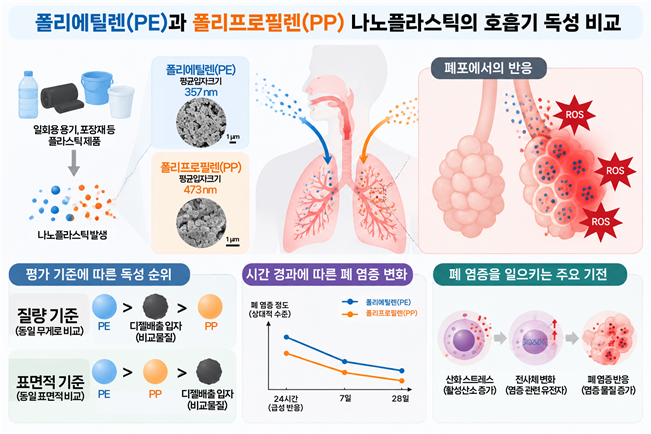
[Financial News] Bottles of drinking water, disposable cups, plastic packaging and other items we use every day gradually break down into particles so tiny they are virtually invisible, becoming “nanoplastics.” These tiny plastic fragments, smaller than one part in tens of thousands of the thickness of a human hair, float in the air and, when we breathe, pass through the nose and bronchial tubes without being filtered out, penetrating deep into the lungs. Their effects on the lungs have now been identified.
According to the Korea Research Institute of Bioscience and Biotechnology (KRIBB) on the 30th, a research team led by Dr. Jung Jin-young at KRIBB’s Environmental Disease Research Center, working with a team led by Professor Jo Wan-seop of Dong-A University, conducted a detailed comparison and identified the pulmonary toxicity and molecular mechanisms of inflammatory responses caused when nanoparticles of polyethylene (PE) and polypropylene (PP)—two of the most commonly used plastics in daily life—penetrate deep into the alveoli through the respiratory tract.
The research team produced nanoplastics made from polyethylene (PE) and polypropylene (PP), the materials most widely used in everyday life, and conducted experiments comparing them with diesel exhaust particles. The results showed that both plastics caused acute lung inflammation when they entered the lungs through the respiratory tract. In particular, by weight, polyethylene (PE) caused more inflammation than diesel exhaust particles. When measured by the actual surface area of particles in contact with the body, both polyethylene (PE) and polypropylene (PP) were found to have far greater potential to cause inflammation than diesel particles.
When nanoplastics enter the lungs, large amounts of harmful reactive oxygen species (ROS) are produced inside immune cells that act as the lungs’ cleanup crew (alveolar macrophages). The study found that these ROS are the main culprit, continually drawing in surrounding immune cells, damaging lung tissue and triggering severe inflammation.
Gene analysis also showed that when plastic enters the body, the activity of genes responsible for immune regulation and inflammation changes.
This study is significant because it demonstrated that nanoplastics in the air we breathe every day are not merely foreign particles, but a risk factor that disrupts the immune system in the lungs and triggers serious inflammation. In particular, current regulations on fine particulate matter and air quality rely solely on mass-based standards, raising concerns that they may greatly underestimate the actual risks posed to human health by airborne nanoplastics.
Dr. Jung Jin-young, who led the research, said, “This study demonstrated that nanoparticles of polyethylene and polypropylene, the plastics most widely used in daily life, cause lung inflammation when inhaled into the lungs, primarily through the generation of reactive oxygen species and their surface reactivity.” He added, “I hope this will provide useful scientific evidence for overcoming the limitations of existing mass-based assessments of hazardous air pollutants and developing more comprehensive environmental and health standards that take the properties of nanoparticles into account.”
The findings were published in the September 30 online edition of the international journal Journal of Hazardous Materials Advances (IF 9.6), which covers hazardous materials.
[email protected] Yeon Ji-an Reporter