Will It Recommend That the Probe Into the Wirye Case Involving Lee Was Unlawful? Transparency a Challenge Ahead of Prosecutorial Future Committee’s Decision
- Input
- 2026-10-29 15:25:25
- Updated
- 2026-10-29 15:25:25
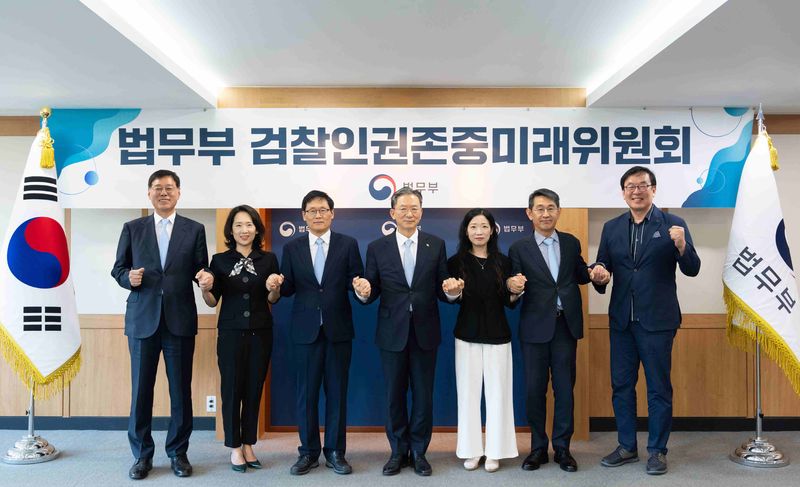
[Financial News] The Ministry of Justice’s Committee on Respect for Human Rights in Prosecution and the Future (the Future Committee), which is examining alleged illegality in the investigations into cases involving President Lee Jae Myung, will review the fact-finding team’s supplemental investigation findings on the 29th. The team previously reported that it had not found serious illegality, and attention is now focused on whether the committee will recommend separate measures, such as referring matters for investigation. With political controversy likely whatever the findings, some say the basis for the committee’s decisions and its deliberative process should be made public transparently.
According to the legal community, the Future Committee will meet behind closed doors this afternoon to receive reports on supplemental investigations into three cases: corruption in the development of Wirye New Town, the shooting of a civil servant in the West Sea, and alleged statistical manipulation under the Moon Jae-in administration.
The fact-finding team reportedly concluded in its first report on the 15th that, although it had found some procedural errors, there was insufficient basis to conclude that the prosecution had deliberately fabricated cases or unlawfully investigated or prosecuted them. After the Future Committee requested further verification, the team reportedly conducted written inquiries and telephone interviews with the investigation team at the time.
The key question is whether the Future Committee will accept the previous findings or call for further investigation or other follow-up measures. In particular, if it recommends that there were problems with the investigation into the Wirye case involving President Lee, the controversy could develop into what has been called a “build-up” to dropping the charges against the president.
Under the current directive governing the Committee on Respect for Human Rights in Prosecution and the Future, the committee may review the fact-finding results and recommend supplemental investigations or measures to provide redress to victims to the justice minister. The minister must respect the recommendations as much as possible, but the recommendations themselves do not compel subsequent measures such as withdrawing an indictment.
Meetings are closed to the public in principle. However, the committee may vote to open a meeting, and it may also announce its deliberation results and recommendations publicly. Matters requiring a vote are decided with a majority of the committee’s full membership present and the approval of a majority of those attending.
The Future Committee’s activities and follow-up measures also became points of contention during parliamentary audits. Asked about the impact the fact-finding results could have on maintaining prosecutions, Justice Ministry Vice Minister Lee Jin-su said on the 9th, “The Future Committee can offer opinions based on the facts established, and follow-up measures will depend on what those findings say.” Seoul Central District Public Prosecution Office chief Park Cheol-woo said on the 19th that he was not involved in the fact-finding team’s work, while maintaining that the team’s activities themselves could not be considered illegal.
Members of the legal community stress that the Future Committee should fully explain its investigation process and the basis for its decisions, whatever conclusion it reaches. A professor at a law school in the Seoul metropolitan area said, “Because the propriety of an investigation involving the president is politically significant, the committee should disclose at least a summary of its report, explaining whom the team investigated, what kind of investigation it conducted, and what changed in the supplemental investigation.”
The professor added, “If the committee recommends a separate referral for investigation even though the team concluded that it was difficult to find illegality, it should explain specifically where the investigation had shortcomings,” and said, “Making public the deliberative process that led to the conclusion and the details of the vote would help reduce unnecessary controversy.”
[email protected] Choi Eun-sol Reporter