Father Kills Son After Being Beaten for an Hour ... Supreme Court: “Not Excessive Self-Defense”
- Input
- 2026-10-29 15:19:17
- Updated
- 2026-10-29 15:19:17
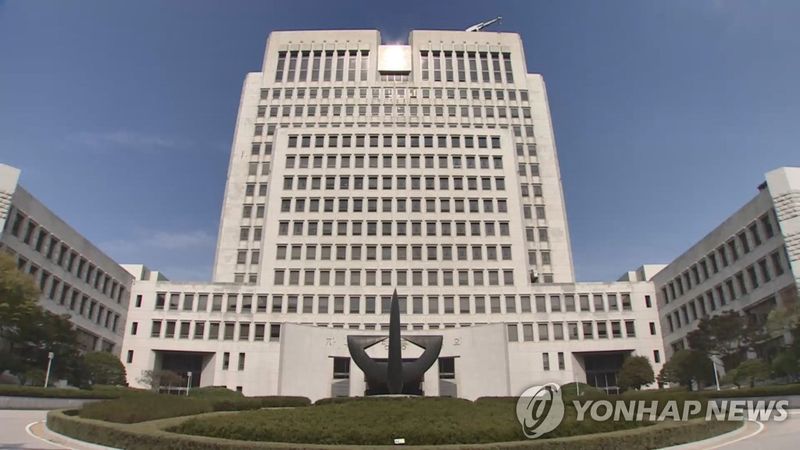
[Financial News] A father in his 60s who killed his son after being assaulted and threatened by him for an hour has had his four-year prison sentence upheld. The Supreme Court of Korea ruled that, once the physical struggle turned into a situation in which both sides were attacking each other, the father’s actions could not be viewed solely as defensive, and therefore did not constitute excessive self-defense.
According to legal sources on the 29th, the Supreme Court of Korea’s Third Division, with Justice Eom Sang-pil presiding, upheld on the 8th the lower court’s sentence of four years in prison for A, 64, who was indicted on a murder charge. A was put on trial on charges of killing his biological son, B, 32, by stabbing and pressing a shard of a broken ceramic bowl into the left side of his neck at their home in Ilsandong-gu, Goyang City, Gyeonggi Province, at around 12:05 a.m. on September 23 last year.
The two had been estranged for a long time. After B’s mother died in March last year, B repeatedly expressed anger toward A over inheritance and other issues. At around 10:22 p.m. on September 22 last year, the day before the incident, B went to A’s home and asked why he was not replying on KakaoTalk. He punched A several times, then picked up a kitchen knife and threatened, “I’ll kill you.” The beating continued for about an hour before briefly stopping. When B tried to hit A again, A knocked him down and got on top of him. During the struggle, A hit B on the head twice with an iron and pressed hard on his neck, fracturing his thyroid cartilage. He then stabbed the left side of B’s neck with a 19-centimeter-wide shard from a ceramic bowl that had fallen to the floor and broken.
The issue was whether A’s actions constituted nonpunishable excessive self-defense under Article 21, Paragraph 3 of the Criminal Act. The Criminal Act provides that a person shall not be punished if an act to prevent an unlawful infringement exceeded the necessary limits but was committed because of fear, shock, excitement, or confusion at night or while in an anxious state. For this provision to apply, however, the act must first be one of “defense.” The Supreme Court’s legal principle, set out in rulings including one from March 2000, is that neither legitimate self-defense nor excessive self-defense applies when someone inflicts harm while fighting with the intent to attack the other person, such that the conduct is both defensive and offensive.
The trial court sentenced A to four years in prison. It found that he had intended to kill, citing the fact that he stabbed a vital area—the neck—with a shard of broken crockery and then pressed it in to a depth of 5–6 centimeters, as well as the fact that A was on top for most of the physical struggle. As mitigating factors, however, it considered that B’s long-standing verbal abuse and physical assaults, along with his threat with a weapon on the day of the crime, had caused A to act impulsively out of sudden fear; that A had no prior convictions; and that the daughter, the only surviving family member, had consistently said from the investigation stage onward that she did not want him punished. The court rejected the request for a probation order, saying the risk of reoffending had not been established.
At the second trial, A acknowledged that he had acted intentionally but argued that his actions amounted to nonpunishable excessive self-defense. The Seoul High Court rejected the argument. It pointed out that B’s one-sided assault had subsided and was not continuing at the time of the crime; that A had actively attacked from a generally dominant position in the struggle, hitting B on the head with an iron and pressing his neck hard enough to fracture the thyroid cartilage; and that B merely reaching toward the knife could not be considered a new infringement surpassing the mutual attacks that had taken place up to that point. The court concluded that A’s harmful conduct was both defensive and offensive in nature, and therefore did not constitute excessive self-defense.
The Supreme Court of Korea upheld the same conclusion. The panel stated, “The lower court did not commit an error that affected the judgment by violating the rules of logic and experience and exceeding the limits of the principle of free evaluation of evidence, or by misapprehending the law on nonpunishable excessive self-defense.”
[email protected] Kim Dong-kyu Reporter