“All-out effort to produce high-quality seedlings”... Korea Forest Service holds 52nd National Forest Nursery Technology Seminar in Yeoju
- Input
- 2026-10-29 15:19:01
- Updated
- 2026-10-29 15:19:01
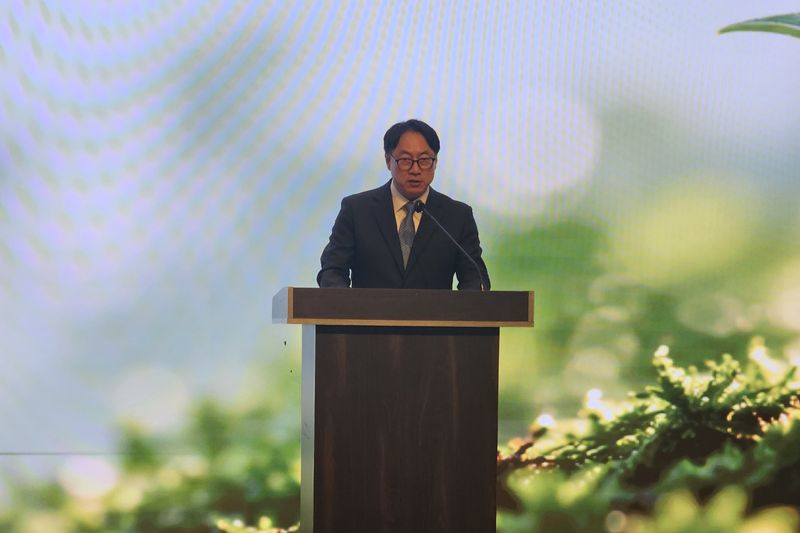
The Korea Forest Service said on the 29th that it had held the 52nd National Forest Nursery Technology Seminar in Yeoju, Gyeonggi Province. Participants included Korea Forest Service Deputy Administrator Im Ha-su, members of the Korea Seedling Association and field experts in tree nursery operations. They shared recent trends in nursery technology and field experience, and explored ways to develop the nursery industry.
While encouraging local stakeholders that day, Korea Forest Service Deputy Administrator Im Ha-su said, “The role of forests is becoming more important than ever amid the increase in forest disasters caused by climate change, efforts to enhance biodiversity, and the expansion of carbon sinks.”
Im went on to say, “I hope the nursery industry will play a key role in reshaping future forests through the stable production and supply of high-quality seedlings, and in providing strong support for sustainable forest management.”
The seminar focused on ways to establish smart nurseries and introduce automation technologies to address labor shortages in rural areas caused by an aging population. Participants agreed that, by moving away from existing labor-dependent seedling production methods and expanding the use of ICT-based systems for automatic temperature and humidity control, irrigation, and growth management, the industry should reduce labor needs while improving consistency in seedling quality.
[email protected] Kim Won-jun Reporter