“Making money with AI, but nothing left over?”...Big Tech’s profitability put to the test [IT Item of the Day]
- Input
- 2026-10-30 06:00:00
- Updated
- 2026-10-30 06:00:00

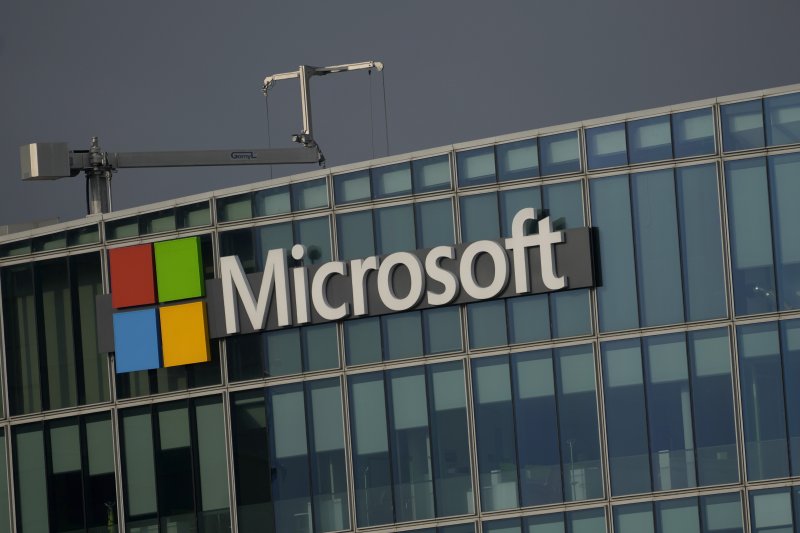
[Financial News] Big Tech companies are increasingly concerned about the returns on their AI investments. Demand for AI is driving a sharp rise in cloud revenue and operating profit, but the companies’ ability to generate cash is diverging as vast sums are poured into data centers and AI chips. With the burden of AI investment emerging as a key factor shaking share prices, third-quarter results from Google and Microsoft (MS) showed that the ability to recoup investment has become as important as revenue growth.
■Google’s cash flow turns negative despite surging AI revenue According to industry sources on the 30th, Google parent Alphabet Inc. reported revenue of $127.6 billion (about 183 trillion won) in its third-quarter results, announced on the 28th (local time). Revenue rose 25% from a year earlier but fell short of market expectations of $128.2 billion. Driven by growing demand for AI infrastructure, Google Cloud revenue surged 103% to $30.709 billion, while operating profit more than tripled from $3.594 billion a year earlier to $11.121 billion.
The problem is that investment costs are rising faster than revenue and profit. Alphabet Inc.’s capital expenditures in the third quarter more than doubled from a year earlier to $51.355 billion. Cash generated from operating activities in the same period amounted to only about $42.3 billion. In other words, capital spending exceeded operating cash flow by about $9.1 billion.
As a result, Alphabet Inc. posted negative free cash flow (FCF) of $9.065 billion. Despite generating record revenue and operating profit in its cloud business, it spent even more on data centers, servers and other infrastructure, leaving it with less cash in hand.
Even so, the company is continuing to expand investment. Alphabet Inc. projected annual capital expenditures of $195 billion to $205 billion this year and expects them to rise further next year. The company says it has no choice but to expand capacity as demand grows rapidly for enterprise AI infrastructure and its in-house AI chips, Tensor Processing Units (TPUs). Google Cloud’s backlog has reached $561 billion. Contracts that will translate into future revenue are piling up, but so is the upfront investment needed to meet that demand.
Alphabet Inc.’s cash flow has not worsened solely because of AI investment. The company said that building up inventory in preparation for sales of TPU systems and cash payments related to European Union (EU) fines also affected cash flow this quarter. However, as large-scale capital spending continues, one-off expenses have added to concerns about how quickly the investments can be recouped.
Slower growth in the existing advertising business is another factor. Google Search and other revenue increased 12% year over year, but its growth rate eased from 19% in the first quarter and 17% in the second quarter of this year. Total advertising revenue also came in below market expectations. How the expansion of AI search services will affect the revenue model of traditional search advertising is another challenge Alphabet Inc. must address.
■Microsoft also ramps up investment...Securing profitability from AI is key Microsoft, which reported results the same day, stood apart in that it generated cash despite large-scale AI investment. Its revenue for the first quarter of fiscal 2027 rose 19% year over year to $92.279 billion. Microsoft Azure revenue increased 48% to $33.165 billion. Azure is MS’s cloud service and offers a way to gauge whether investment in AI infrastructure is translating into actual revenue. The scale of revenue from its core cloud business, previously presented mainly in terms of growth rates, can now be seen.
MS is also not immune to the burden of investing in AI infrastructure. Cash capital expenditures this quarter rose about 103% from a year earlier to $39.367 billion. Capital expenditures, including finance leases and other items, reached $45.2 billion. However, operating cash flow was $58 billion, leaving about $18.6 billion even after cash capital expenditures.
AI model developers, too, face the challenge of narrowing the gap between growth and profitability. Anthropic, which is pursuing an initial public offering (IPO), disclosed steep revenue growth alongside substantial losses in recently released financial documents. Rapidly rising demand for enterprise AI has fueled expectations for business expansion, but how quickly the company can recoup the costs of model development and computing infrastructure has emerged as a key factor in assessing its value.
With Korean companies also increasing investment in AI data centers and graphics processing units (GPUs), securing actual profitability is a top priority. They are reducing the financial burden and accelerating efforts to secure AI infrastructure by sharing investment costs with partners or restructuring their affiliates’ businesses.
NAVER has signed a $9 billion agreement with Brookfield to secure computing infrastructure, using external capital to reduce its upfront investment burden. SK Telecom Co., Ltd. (SKT) has attracted outside investment for SK Horizon, a newly established company formed by separating the data center and subsea cable businesses of its subsidiary, SK Broadband. It will bring in 3.08 trillion won by selling part of SK Horizon’s stake to global investment firm Kohlberg Kravis Roberts (KKR) and the IMM Investment–Stonebridge consortium, and by issuing new shares. An industry official said, “Sustainable competitiveness will depend on how many enterprise customers that use AI infrastructure and paid services companies can secure to recoup their investments.”
[email protected] Jang Min-kwon Reporter