Nuclear-conventional integration (CNI) tabletop exercise ‘Iron Mace’ confirmed as held; system for implementing NCG joint guidelines activated
- Input
- 2026-10-29 15:10:52
- Updated
- 2026-10-29 15:10:52
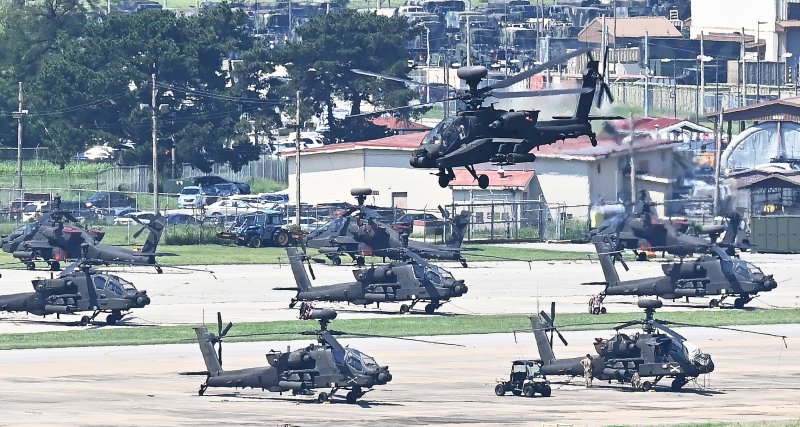
Whereas the U.S. extended deterrence (nuclear umbrella) of the past was a ‘passive structure’ reliant on unilateral U.S. decisions and provision as a favor, CNI is a framework in which the two countries jointly plan and carry out ‘how to organically integrate and support U.S. nuclear operations with South Korea’s advanced conventional forces in the event of a contingency.’
Amid a grave security environment in which North Korea is advancing its nuclear capabilities and, with tacit acquiescence from forces backing it, driving regional asymmetric threats to their highest levels, this is a uniquely practical security mechanism that has opened the way for South Korea, a non-nuclear state, to actively participate at the bilateral level in the operational processes for U.S. nuclear forces.■ The military mechanics and significance of the ‘Iron Mace’ tabletop exercise (TTX)The ‘Iron Mace’ exercise, conducted confidentially by the Joint Chiefs of Staff over four days from the 29th of last month through the 2nd of this month, is an annual, discussion-based tabletop exercise (TTX) that tests the NCG joint guidelines at a realistic operational level. Since it was first held in August 2024, it has become a key component of the alliance’s annual deterrence infrastructure.
From a military perspective, the mechanics of a CNI TTX are highly specific. It precisely coordinates procedures for ROK Air Force fighter formations, including F-15K Slam Eagles and KF-16s, to provide escort flights (conventional support) when U.S. nuclear-capable strategic bombers such as the B-52H or B-2 Spirit, or nuclear-powered submarines, deploy across the Korean Peninsula in a contingency. The exercise also serves to rehearse integrated ‘detect-decide-strike’ scenarios that link South Korea’s advanced, high-power missiles (the Hyunmoo series) and ground assets with U.S. strategic assets to neutralize North Korea’s key nuclear infrastructure in real time.
This demonstrates that, even if political shifts lead to adjustments in whether combined exercises are publicly disclosed, the practical joint operations codes and data-link processes between the military authorities continue to be updated without disruption.■ Activation of USFK’s dedicated ‘J10’ unit, challenges for the alliance, and the enhancement of nuclear deterrenceAnother behind-the-scenes player in this exercise is the ‘J10 Strategic Integration Element,’ a unit newly established within United States Forces Korea (USFK) to focus exclusively on CNI planning. The activation of this unit, which is closely linked to U.S. Strategic Command and the joint chiefs of staff of both countries, is concrete evidence that ROK-U.S. CNI has been fully embedded as a core framework of USFK operational plans (OPLANs), rather than remaining temporary diplomatic rhetoric.
The alliance’s military specialists and working-level personnel had been quietly refining a practical, independent deterrence infrastructure under the institutional framework for implementing the Washington Declaration as promised. This is also borne out by the smooth conduct of key combined exercises, including ‘2026 Freedom Edge,’ a joint ROK-U.S.-Japan multidomain exercise recently held in international waters east and south of Jeju, and ‘Freedom Flag,’ a large-scale ROK-U.S. air exercise currently underway. Going forward, a key challenge for the ROK-U.S. Alliance will be to firmly establish this CNI system at the next level, extending it to field training exercises (FTX), and to continue demonstrating the effectiveness of regional deterrence.
[email protected] Lee Jong-yoon Reporter