Next year's disaster and safety budget: 25.4 trillion won ... 16.5 trillion won to go to prevention
- Input
- 2026-10-29 14:30:45
- Updated
- 2026-10-29 14:30:45
[Financial News] The government has drawn up a budget proposal allocating 25.4 trillion won to 451 projects in disaster and safety management next year. About 65% of that, or 16.5 trillion won, has been earmarked for disaster prevention. The plan will establish an AI-powered disaster prediction and monitoring system and institutionalize the creation of local-government bodies dedicated to supporting disaster victims and their families. The government will also pursue enactment of the Social Disaster Countermeasures Act and the introduction of conditional driver's licenses for high-risk drivers.
The Ministry of the Interior and Safety (MOIS) announced that it had finalized the 2027 National Safety Management Implementation Plan after deliberation by the 66th Safety Policy Coordination Committee on the 29th. Twenty-nine central administrative agencies will participate in carrying out five strategic tasks focused on disaster prevention, on-site response and recovery from damage.
The government's proposal sets next year's major fiscal investment in disaster and safety management at 25.4 trillion won. Of that, 16.5 trillion won has been allocated to prevention, accounting for about 65% of total fiscal investment.
The government will strengthen measures to prepare for abnormal weather, including extreme downpours and heat waves, and bolster tailored measures to prevent accidents among vulnerable groups. It will also establish an AI-powered disaster management system. MOIS plans to set up an intelligent CCTV monitoring system and build an integrated data platform based on AI and the Internet of Things (IoT) to support everything from disaster prediction and situational monitoring to decision-making. The Ministry of Trade, Industry and Energy will support the development of solutions using digital technology to prevent accidents in hazardous areas of industrial complexes. The Korea AeroSpace Administration (KASA) will pursue development of an AI-based Korean integrated space situational awareness system.
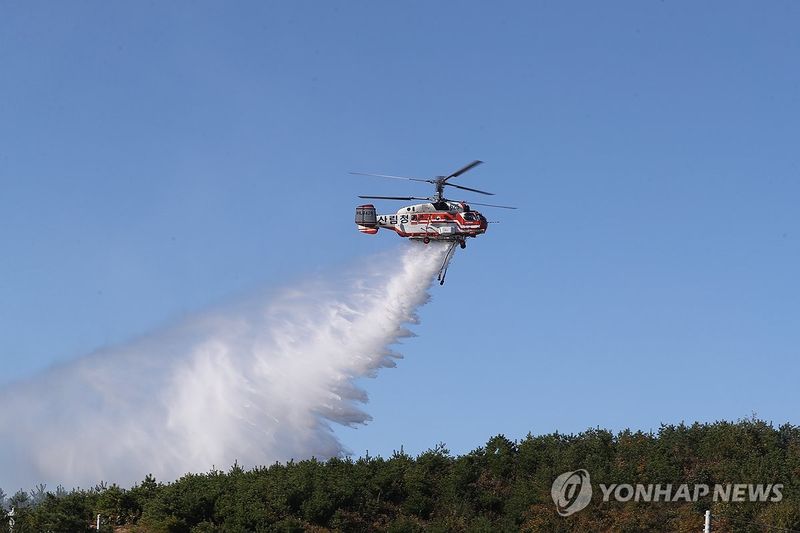
The government will also strengthen response capabilities at disaster sites. The Korea Forest Service will add one large and one medium-sized firefighting helicopter for wildfires. The National Fire Agency (NFA) will expand the operating area of doctor-staffed firefighting helicopters (Heli-EMS) to Gangwon. The Ministry of Health and Welfare will pursue the deployment and operation of air ambulance helicopters and the construction of helicopter landing sites.
MOIS plans to operate Resident Evacuation Support Teams nationwide and require local governments to draw up resident evacuation plans in areas at risk of landslides.
The government will also improve support systems for victims after disasters occur. It plans to institutionalize the establishment of dedicated local-government bodies to provide tailored, integrated support to disaster victims and their families. It will also pursue enactment of the Social Disaster Countermeasures Act and the creation of the First Comprehensive Life Safety Plan. The plan will be designated as the top-level plan, with specific targets for reducing fatalities to be monitored. The existing Framework Plan for National Safety Management will be reorganized to focus on disaster management.
The government will also revise systems related to workplace and traffic safety. The Ministry of Employment and Labor will pursue mandatory basic occupational safety and health training for foreign workers, while the National Police Agency will pursue the introduction of conditional driver's licenses for high-risk drivers. The Ministry of SMEs and Startups plans to improve fire mutual aid premium rates for traditional markets to increase participation.
The government will also draw up safety management plans for each local government based on this implementation plan. Cities and provinces are expected to establish their plans by the end of December this year, and cities, counties and districts by the end of February next year.
Kim Kwang-yong, head of MOIS's Disaster and Safety Management Headquarters, said, "We will actively adopt advanced technologies such as AI to predict disasters in advance and build a disaster and safety management system that responds swiftly in the field."
[email protected] Lee Bomi Reporter